Buraczki, Polish Grated Beets
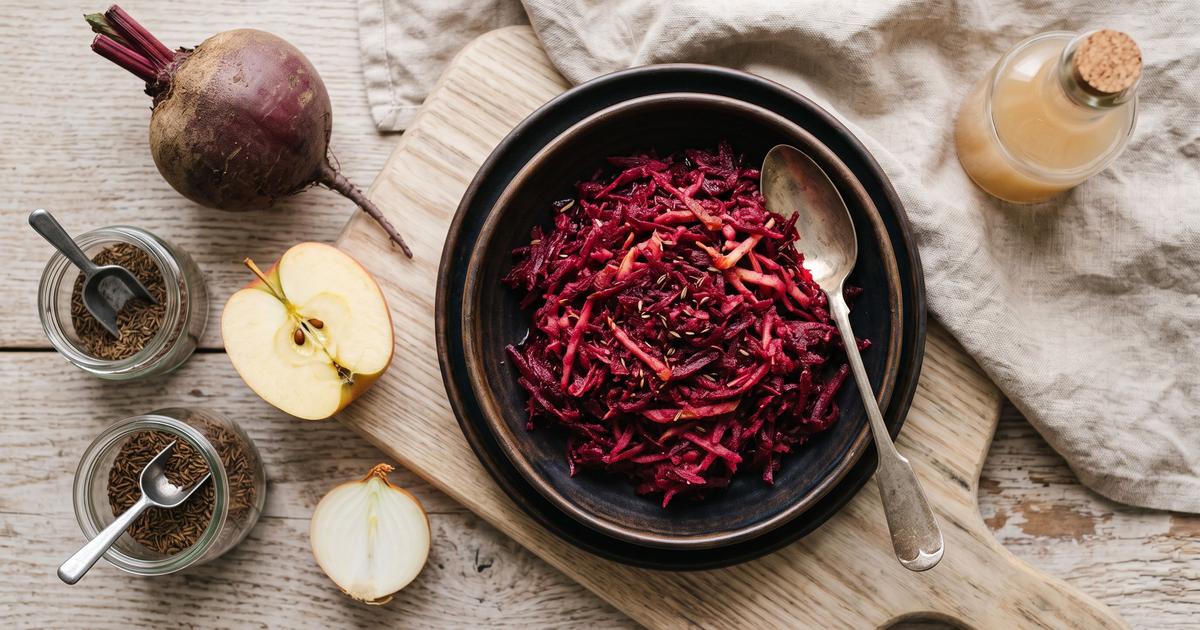
Buraczki, sometimes called buraczki zasmażane, are the grated beets that turn up warm beside a Polish Sunday dinner, sweet and sour and vividly red. Grating the beets raw is the move that makes it a weeknight side rather than an afternoon project: the fine shreds soften in under twenty minutes and soak up everything around them. The sweet-and-sour balance is built without sugar, from an onion sweated soft, a whole grated apple cooked down into the beets, and cider vinegar stirred in at the end. Caraway and marjoram anchor it firmly in Central European cooking. It is cheap, it keeps for days, and its color alone earns it a place on the plate.
Ingredients
- 1 1/2 lb Beets, peeled
- 1 whole Yellow onions, finely diced
- 1 whole Apples, grated
- 2 tbsp Apple cider vinegar
- 1 tsp Caraway, crushed
- 1/2 tsp Dried marjoram
- 1 tbsp Lemon juice
- 1/2 tsp Black peppercorns, freshly ground
Method
- Coarsely grate the raw beets on a box grater or in a food processor. Grating them raw means they cook in minutes instead of the hour a whole beet takes, and the fine shreds drink up the vinegar and onion far better than chunks would.
- Sweat the onion in a wide pan in a splash of water until soft and translucent, about 6 minutes. Cooking the onion down first builds a sweet savory base under the beets so the dish is not just sour and earthy.
- Add the grated beets, the grated apple, the caraway, marjoram, and a half cup (120 ml) water. Cover and cook over medium-low, stirring now and then, until the beets are tender and the pan is nearly dry, 15 to 20 minutes. The apple cooks down into the beets as a gentle, whole-food sweetness that balances the earth, doing the work the traditional spoon of sugar does.
- Stir in the vinegar and cook uncovered 2 minutes more so the raw bite blows off. Adding the acid at the end keeps it bright; cook it too long and it goes flat. Beets and vinegar also hold each other's deep red color.
- Turn off the heat and finish with lemon juice and black pepper. Serve warm or at room temperature. It keeps four days and the flavor deepens overnight, so it is worth making ahead.
Nutrition
Estimated per serving: 90 calories, 3 g protein, 5 g fiber, 90 mg sodium. Computed from USDA FoodData Central reference values for the main ingredients. This is an approximation, not a laboratory measurement. How these are computed.
Cost per serving is estimated from US national-average retail prices for cheap staple forms, using BLS dried-bean prices and USDA produce prices. Prices vary by store and season, so treat it as a guide, not a receipt. How this is computed.