Pisto Manchego, Spanish Stewed Vegetables
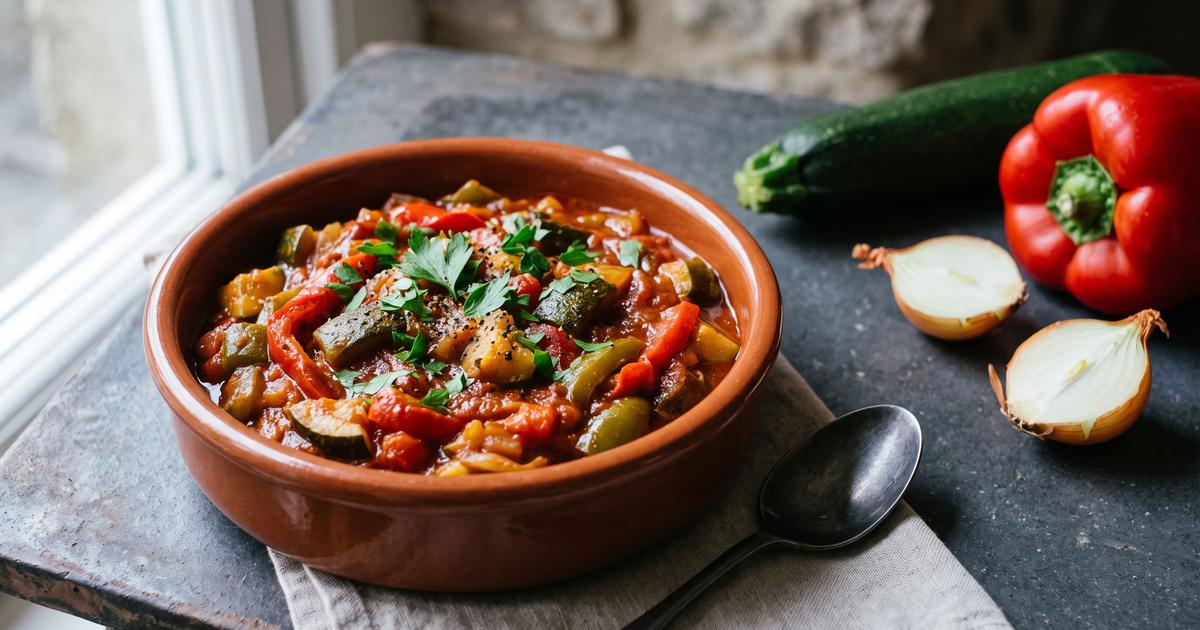
Pisto is the vegetable stew of La Mancha, the dry central plateau of Spain, cooked down until zucchini, peppers, onion, and tomato lose their edges and turn into one soft, sweet thing. It is close kin to ratatouille but leans Spanish with smoked paprika and a finishing splash of sherry vinegar. Cooked in its own moisture rather than oil it stays bright instead of heavy, and like most stews of this kind it is better the next day. Serve it as a side, fold it through grains, or pile it into a bowl and top it with beans to make it a meal. Cut the vegetables the same size so they cook down together.
Ingredients
- 2 Zucchinis, diced
- 2 Bell peppers, one red and one green, diced
- 1 Yellow onion, diced
- 3 cloves Garlic, sliced
- 2 cups Canned crushed tomatoes
- 1 tsp Smoked paprika
- 1 Bay leave
- 1 tbsp Sherry vinegar
- 1/2 tsp Black peppercorns, ground
Method
- Sweat the onion in a wide pan with a splash of water over medium heat until soft and translucent, about 8 minutes, adding water whenever it dries. You want it sweet and collapsed, not browned, so keep the heat gentle.
- Add the peppers and garlic and cook 8 minutes until the peppers soften. Peppers and onion are the base of pisto, and cooking them until they slump builds the sweetness that stands in for salt.
- Stir in the zucchini and the smoked paprika and cook 5 minutes. Adding the zucchini after the peppers keeps it from turning to mush, and toasting the paprika for a moment in the dry pan wakes up its smoke.
- Pour in the crushed tomatoes, drop in the bay leaf, and stew uncovered 20 to 25 minutes until thick and jammy and the vegetables have melted together. Pisto is meant to be soft and concentrated, so let it cook down past the point where it looks like a salad.
- Take out the bay leaf, stir in the sherry vinegar off the heat, and grind over the black pepper. The vinegar is the Spanish signature that brings the sweet stew back into focus. Serve it warm, at room temperature, or spooned cold over grains the next day.
Nutrition
Estimated per serving: 110 calories, 4 g protein, 6 g fiber, 60 mg sodium. Computed from USDA FoodData Central reference values for the main ingredients. This is an approximation, not a laboratory measurement. How these are computed.
Cost per serving is estimated from US national-average retail prices for cheap staple forms, using BLS dried-bean prices and USDA produce prices. Prices vary by store and season, so treat it as a guide, not a receipt. How this is computed.