Patatas a lo Pobre
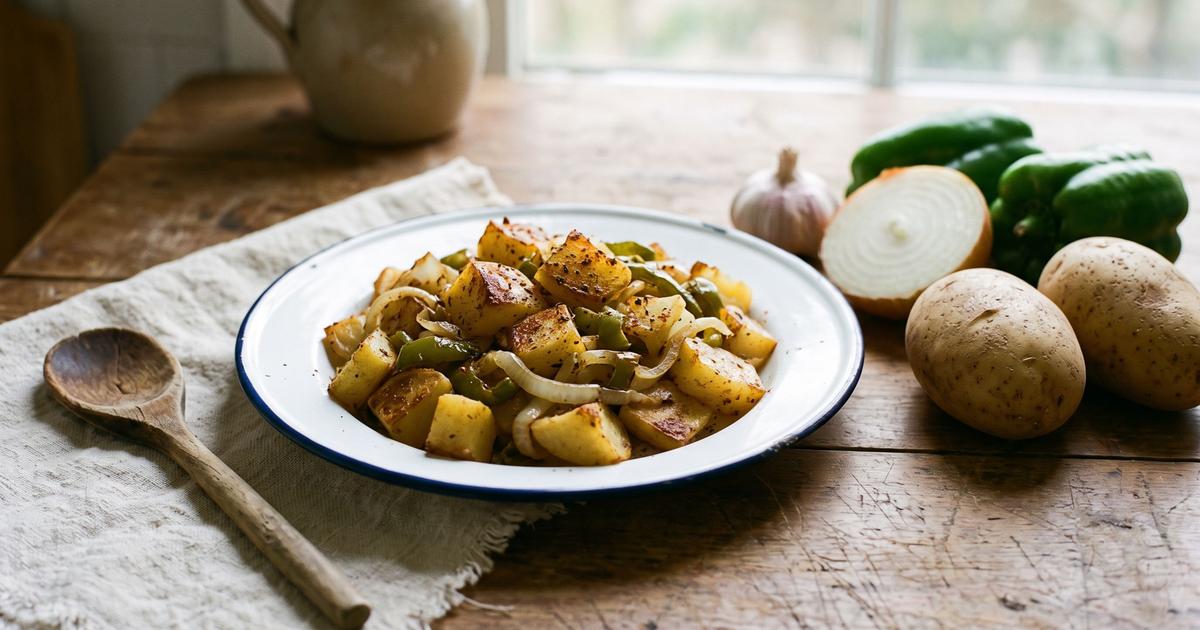
Patatas a lo pobre, poor man's potatoes, is one of the most honest dishes in Andalusia: potatoes, onion, and green pepper cooked down slow until everything is soft and sweet and tangled together. The traditional method confits the lot in a great deal of olive oil over low heat, which is lovely and also unnecessary. Here the vegetables braise under a lid on nothing but their own moisture and a splash of water, then finish uncovered over higher heat so they brown and catch at the edges. A late hit of vinegar and smoked paprika carries the flavor that salt and oil usually would. It is a side, a base for almost anything, or a plate on its own with a green salad.
Ingredients
- 1 1/2 lb Potatoes, peeled and sliced thin
- 1 whole Yellow onions, sliced
- 1 whole Bell peppers, green, sliced
- 3 cloves Garlic, sliced
- 1 whole Bay leaves
- 1/2 tsp Smoked paprika
- 1 tbsp White wine vinegar
- 2 tbsp Flat-leaf parsley, chopped
- 1/2 tsp Black peppercorns, freshly ground
Method
- Layer the potatoes, onion, green pepper, garlic, and bay in a wide pan with 0.5 cup (120 ml) water, cover, and braise over medium heat until the potatoes are tender, about 20 minutes. The dish is traditionally poached slowly in a lake of oil; steaming under a lid cooks the potatoes just as soft and lets the onions turn sweet, all on water.
- Uncover, raise the heat, and let the last of the water cook off so the potatoes and onions catch on the base and brown, turning them gently every few minutes. That dry contact with the hot pan is where the caramelized edges come from, so resist stirring too often or the soft potatoes will break apart.
- Off the heat, add the smoked paprika, a splash of white wine vinegar, the black pepper, and the parsley. The vinegar wakes the sweet onion and pepper and stands in for the salt, and the pimenton settles the whole pan into something that tastes far richer than its short ingredient list.
Nutrition
Estimated per serving: 220 calories, 5 g protein, 5 g fiber, 40 mg sodium. Computed from USDA FoodData Central reference values for the main ingredients. This is an approximation, not a laboratory measurement. How these are computed.
Cost per serving is estimated from US national-average retail prices for cheap staple forms, using BLS dried-bean prices and USDA produce prices. Prices vary by store and season, so treat it as a guide, not a receipt. How this is computed.