Baked Beet Crisps with Caraway
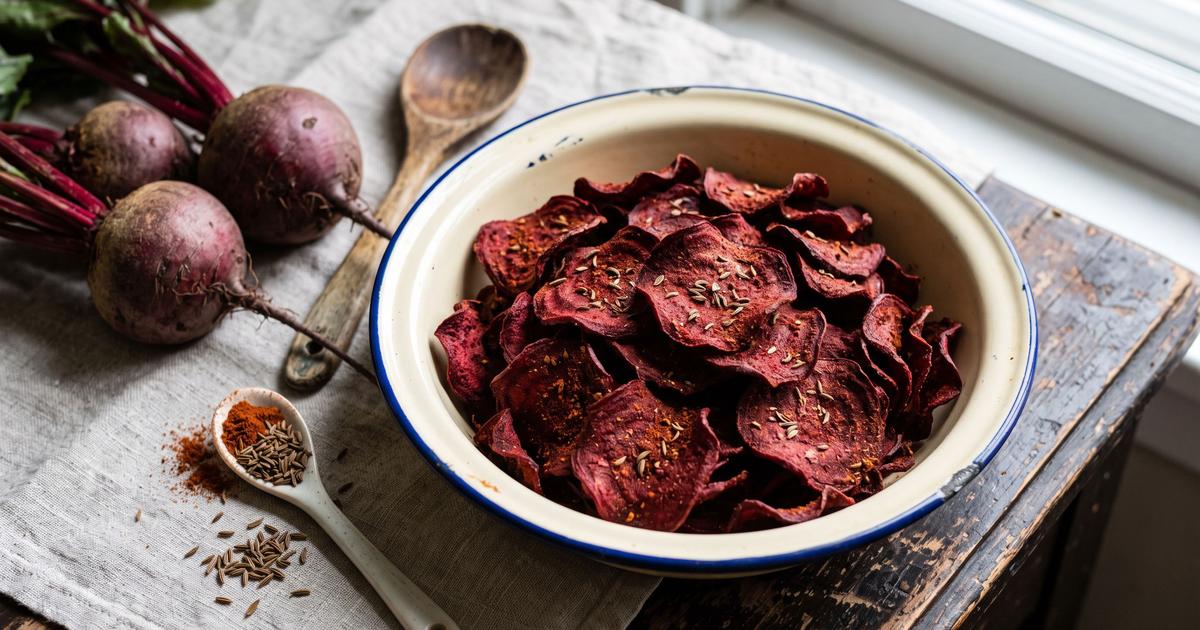
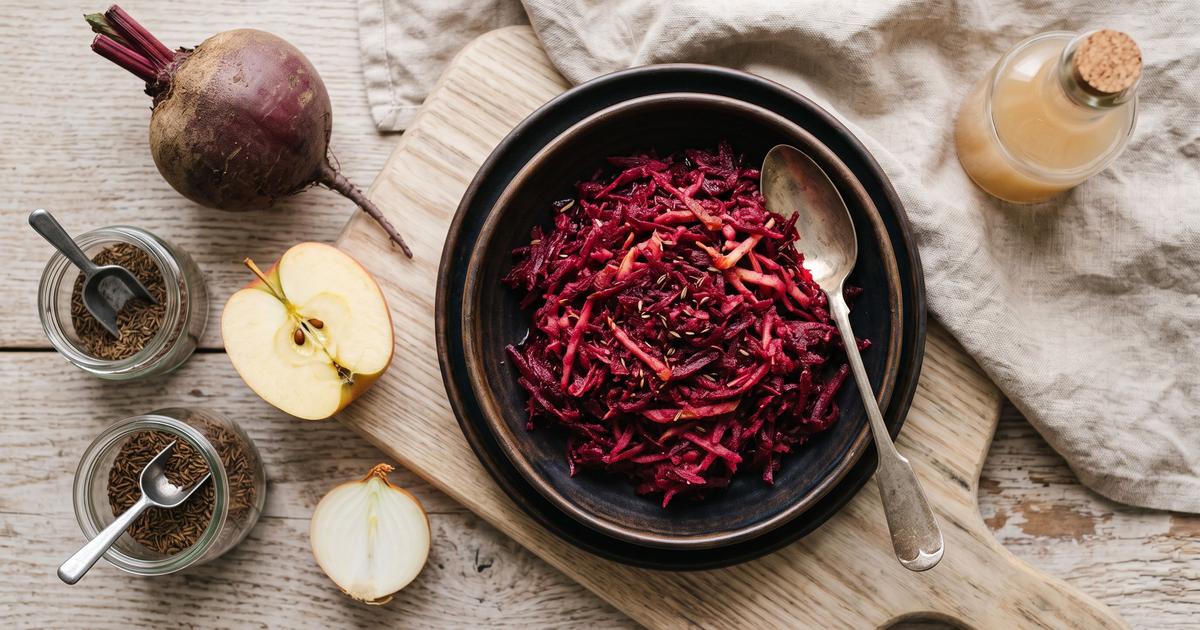
Beets are the cheapest sweet vegetable in the produce aisle, and roasting them thin turns that sugar into a crackly snack. Sliced paper-thin and dried in a low oven, they collapse into deep-red crisps with no oil at all, and the trick is only thickness and patience. Toasted caraway, the seed that flavors rye bread and sauerkraut across Eastern Europe, does the seasoning that salt would, and a little sweet paprika deepens the color. Keep the slices even, keep them dry, and give them room on the tray. They are best the day they are made, straight from the cooling rack.
Ingredients
- 1 1/2 lb Beets, scrubbed, not peeled
- 1 tsp Caraway, toasted and coarsely ground
- 1/2 tsp Sweet paprika
- 1/2 tsp Black peppercorns, freshly ground
Method
- Slice the beets as thin as you can, ideally on a mandoline at about 1/16 inch (1.5 mm). Even, paper-thin slices are the whole game: thick spots stay leathery while thin ones burn, so uniformity is what gives you a tray of crisps that finish together.
- Pat the slices bone dry between two towels. Surface water is the enemy of crisping, and every drop you remove now is time you save in the oven and a snap you gain at the end.
- Lay them in a single layer on parchment, not touching, and bake at 300°F (150°C) for 25 to 35 minutes. The low oven dehydrates the beets slowly so their sugars concentrate without scorching, which is how you get sweet and crisp instead of burnt and bitter.
- Toast the caraway in a dry pan until fragrant, then grind it coarse. Toasting wakes up the seed's oils so a small amount perfumes the whole batch, letting it carry the flavor that salt usually would.
- Pull the crisps when they look dry and slightly curled, since they firm up further as they cool. Toss the warm chips with the caraway, paprika, and black pepper, and eat within a day, because beet crisps go soft in humid air.
Nutrition
Estimated per serving: 70 calories, 2 g protein, 4 g fiber, 90 mg sodium. Computed from USDA FoodData Central reference values for the main ingredients. This is an approximation, not a laboratory measurement. How these are computed.
Cost per serving is estimated from US national-average retail prices for cheap staple forms, using BLS dried-bean prices and USDA produce prices. Prices vary by store and season, so treat it as a guide, not a receipt. How this is computed.