Kapuśniak, Polish Fresh Cabbage Soup
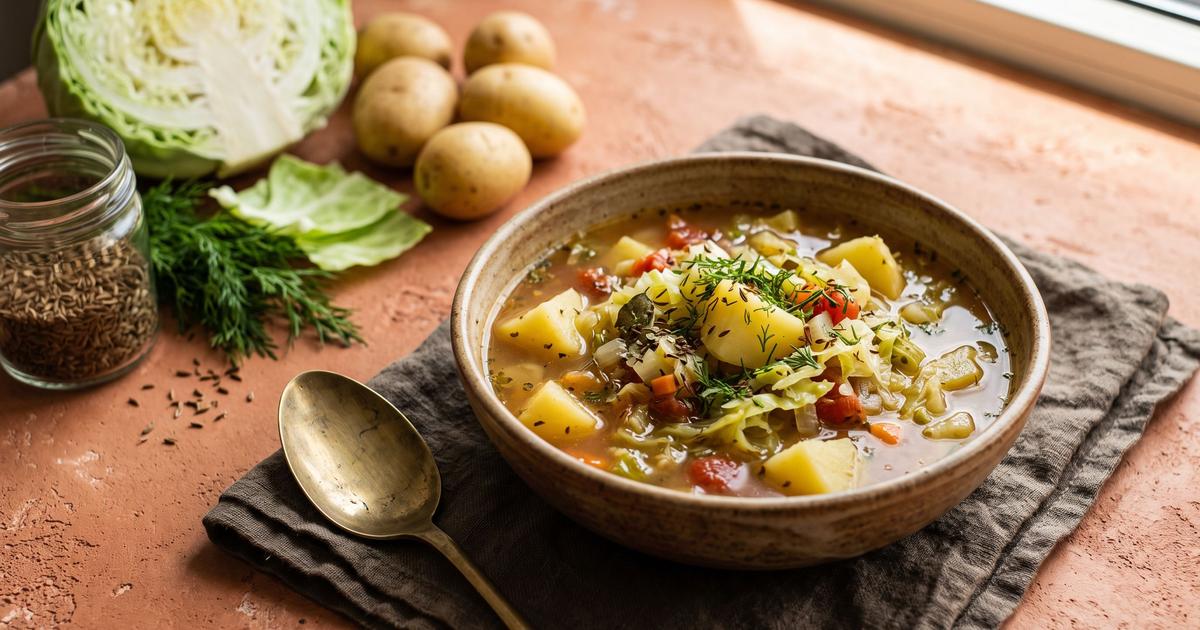
Kapuśniak is a Polish cabbage soup, and there are two of them: the winter pot built on sauerkraut and its brine, and the lighter summer one made from a fresh head of cabbage. This is the fresh version. Without the ferment doing the seasoning, the flavor comes from the vegetables themselves and from the two herbs a Polish kitchen never leaves out of a cabbage pot, marjoram and caraway. Crack the caraway seed to open it up, sweat the base low and slow, and let the cabbage cook all the way to silky rather than stopping at crisp. A spoon of cider vinegar at the end supplies the sourness the sauerkraut would have brought. It is cheap, it freezes, and it is better the second day. Serve it with dark rye bread.
Ingredients
- 6 cups green cabbage, shredded
- 1 lb Potatoes, diced
- 2 wholes Carrots, diced
- 1 whole Yellow onions, diced
- 2 stalks Celery, diced
- 1 cup Canned crushed tomatoes
- 1 tsp Dried marjoram
- 1 tsp Caraway
- 2 wholes Bay leaves
- 1 tbsp no-salt vegetable bouillon
- 1/2 tsp Black peppercorns, freshly ground
- 1 tbsp Apple cider vinegar
- 3 tbsp Dill, chopped
Method
- Sweat the onion, carrot, and celery in 3 tbsp water (45 ml) until soft, about 8 minutes. This trio is the quiet base of the soup, and cooking it slowly in water draws out the sweetness that a salt-free pot needs to lean on.
- Add the cabbage, potato, tomato, marjoram, caraway, bay, bouillon, and 6 cups water (1.4 L). This is the summer version made with a fresh young head of cabbage rather than the sour winter one built on sauerkraut, so it is lighter and greener. Simmer, covered, until the cabbage is silky and the potato is tender, about 30 minutes.
- Crush the caraway a little before it goes in if you can, since the seed is the signature of a Polish cabbage pot and cracking it opens up its sharp, faintly citrus scent. Marjoram is its constant partner and the two define the soup.
- Finish off the heat with the vinegar, pepper, and dill. The splash of vinegar stands in for the sourness the sauerkraut version gets for free, and it is what makes the bowl taste finished rather than merely warm. It thickens and deepens overnight, so make it ahead if you can.
Nutrition
Estimated per serving: 120 calories, 4 g protein, 6 g fiber, 70 mg sodium. Computed from USDA FoodData Central reference values for the main ingredients. This is an approximation, not a laboratory measurement. How these are computed.
Cost per serving is estimated from US national-average retail prices for cheap staple forms, using BLS dried-bean prices and USDA produce prices. Prices vary by store and season, so treat it as a guide, not a receipt. How this is computed.