Arakas Laderos, Greek Braised Peas
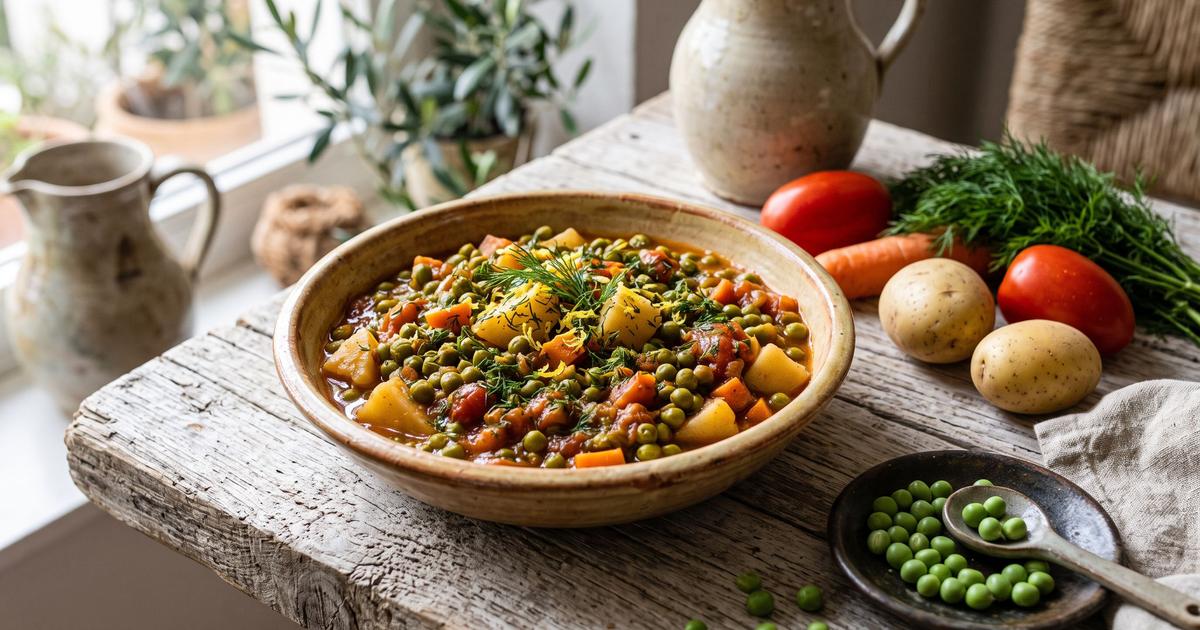
Arakas laderos is spring on a Greek table, a loose braise of peas that leans on the vegetables' own sweetness rather than on stock or salt. The ladera dishes are traditionally cooked in a generous pool of olive oil, which does the work of carrying flavor and turning everything glossy; here a toasted spoon of tomato paste and a slow water sweat build that depth instead. Potatoes and carrots stretch the peas into something filling, and a genuinely large amount of dill is the point, not a garnish. The only real rule is to add the peas late so they stay bright and tender. It is as good cold the next day as it is warm from the pot.
Ingredients
- 1 lb Frozen peas
- 2 wholes Potatoes, peeled, cut into 1 inch chunks
- 2 wholes Carrots (cooking), cut into thick coins
- 1 whole Yellow onions, diced
- 3 wholes Scallions, sliced
- 2 cloves Garlic, minced
- 1 tbsp Tomato paste
- 1 cup Canned crushed tomatoes
- 1/2 cup Dill, chopped
- 1/4 cup Flat-leaf parsley, chopped
- 2 tbsp Lemon juice
- 1/2 tsp Black peppercorns, freshly ground
Method
- Sweat the onion and scallion whites in a pot with 1/4 cup (60 ml) water, covered, over medium heat until soft, about 8 minutes. This is a ladera dish, named for the olive oil it is usually swimming in; the slow sweat in water builds the same sweet base without it.
- Push the onions aside and add the tomato paste to the bare part of the pot. Toast it for 2 minutes until it darkens to brick red. Cooking the paste dry like this concentrates it and gives the braise a deep, savory background that raw paste never would.
- Add the carrots, potatoes, crushed tomatoes, garlic, and 1 cup (240 ml) water. Simmer, partly covered, for 12 minutes, until the potatoes are nearly tender. Starting the root vegetables first means everything finishes at once.
- Stir in the peas and cook 8 to 10 minutes more, until they are tender and the sauce has thickened around them. Frozen peas are picked and frozen at their peak, so they go in near the end and only need to heat through; overcooking turns them gray and flat.
- Off the heat, fold in the dill, parsley, lemon juice, and black pepper. The dill goes in by the handful the Greek way, and the lemon sharpens the sweet peas and tomato in place of salt. Let it rest 10 minutes so the flavors settle, and serve warm or at room temperature.
Nutrition
Estimated per serving: 210 calories, 8 g protein, 9 g fiber, 60 mg sodium. Computed from USDA FoodData Central reference values for the main ingredients. This is an approximation, not a laboratory measurement. How these are computed.
Cost per serving is estimated from US national-average retail prices for cheap staple forms, using BLS dried-bean prices and USDA produce prices. Prices vary by store and season, so treat it as a guide, not a receipt. How this is computed.