Prasorizo, Greek Leeks and Rice
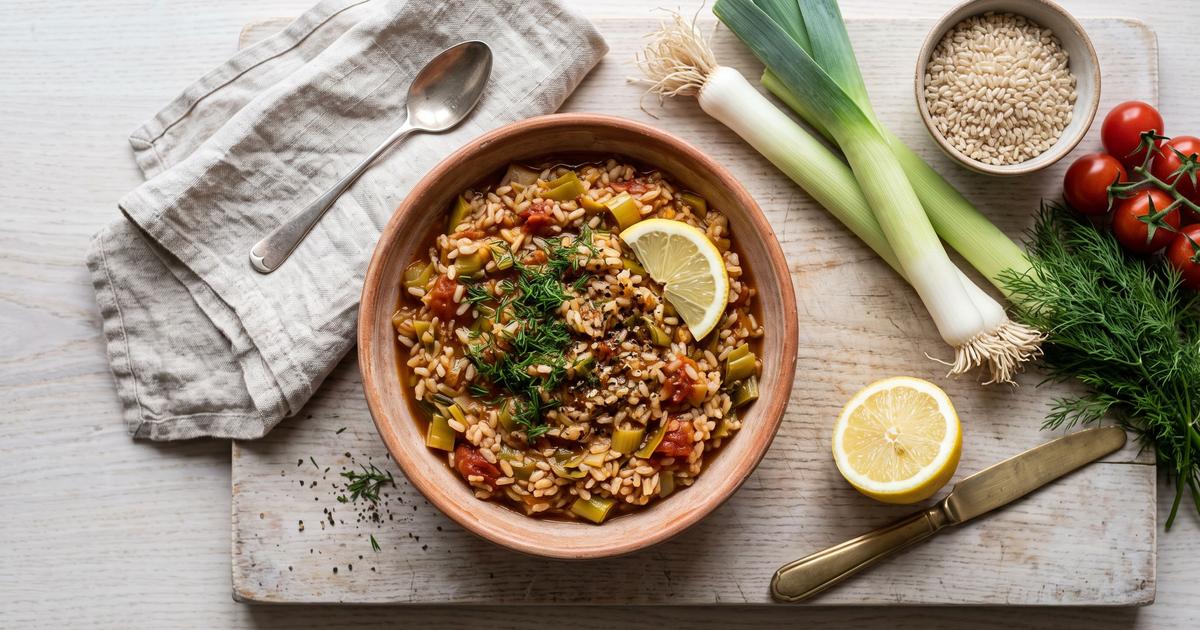
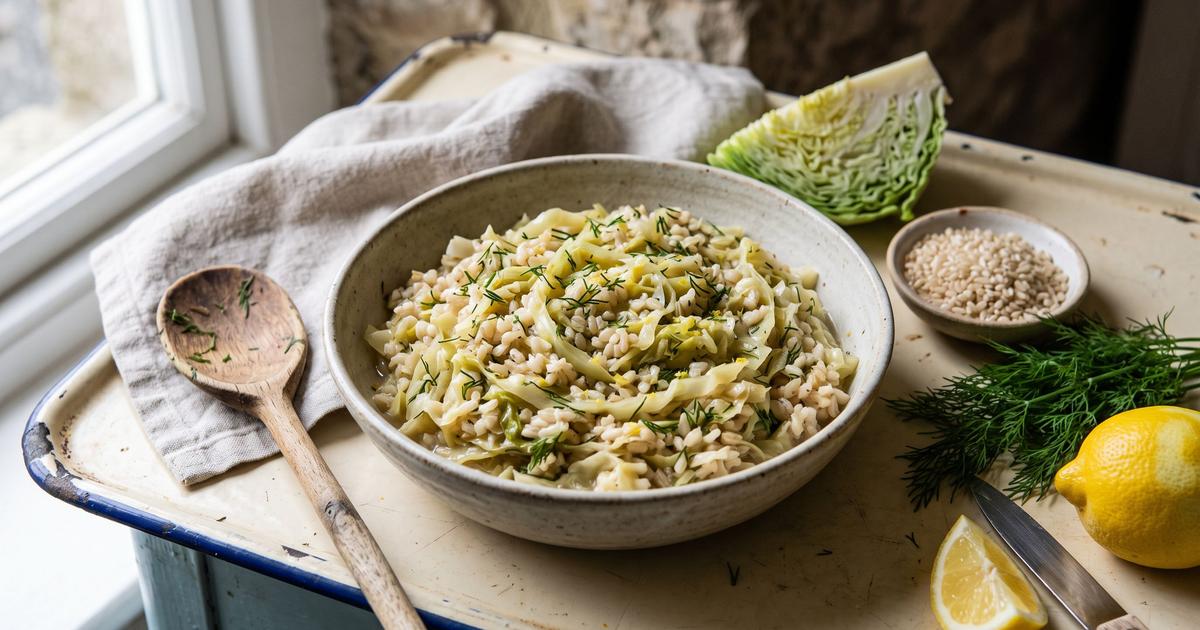
Prasorizo is winter food from the Greek mainland, made when leeks are cheap and sweet and there is little else in the garden. The name is simply leek and rice, and the dish is exactly that, a pilaf where the leeks outweigh the grain and cook down to a soft, sweet tangle. Some cooks keep it white and finish it with lemon, others build in tomato for a red version; this one takes the tomato route and leans on dill to lift it. The single technique that matters is the unhurried sweat at the start, because leeks that are rushed stay sharp and leeks that are browned turn bitter, while leeks coaxed slowly in a little water give up a sweetness that makes salt feel beside the point. Brown short-grain rice takes longer than the white rice a Greek yiayia would use, but it holds its shape and keeps the bran. Serve it warm, with a wedge of lemon.
Ingredients
- 3 larges Leeks, white and pale green, sliced and washed
- 2 cloves Garlic, minced
- 1/2 cup Canned crushed tomatoes
- 1 cup short grain brown rice
- 1/3 cup Dill, chopped
- 3 wholes Scallions, sliced
- 2 tbsp Lemon juice
- 1/2 tsp Black peppercorns, ground
Method
- Sweat the leeks and the scallion whites in a wide pot with 1/3 cup water (80 ml), covered, over medium-low heat until they collapse and turn sweet, about 12 minutes. Leeks are the dish, not a background note, so this slow melt is where the flavor is built. Water keeps them from browning, which would turn them harsh.
- Stir in the garlic and the crushed tomato and cook 3 minutes until the tomato loses its raw edge. This is the red, or kokkino, style of prasorizo; the tomato gives color and a gentle acidity.
- Add the rice and 2 1/2 cups water (600 ml), bring to a simmer, then cover and cook low for 35 to 40 minutes until the rice is tender and the liquid absorbed. Short-grain brown rice stays intact and turns creamy at the edges, where white rice would go to mush and give up its bran.
- Kill the heat and let it stand 10 minutes, covered. The rest lets the last of the steam finish the grains and firm them up so the dish is not gluey.
- Fold in the dill, the scallion greens, the lemon juice, and black pepper. Dill and lemon are the finish that makes it read as Greek, and the acid stands in for the salt the dish never gets.
Nutrition
Estimated per serving: 230 calories, 5 g protein, 5 g fiber, 60 mg sodium. Computed from USDA FoodData Central reference values for the main ingredients. This is an approximation, not a laboratory measurement. How these are computed.
Cost per serving is estimated from US national-average retail prices for cheap staple forms, using BLS dried-bean prices and USDA produce prices. Prices vary by store and season, so treat it as a guide, not a receipt. How this is computed.