Fasolakia, Braised Green Beans
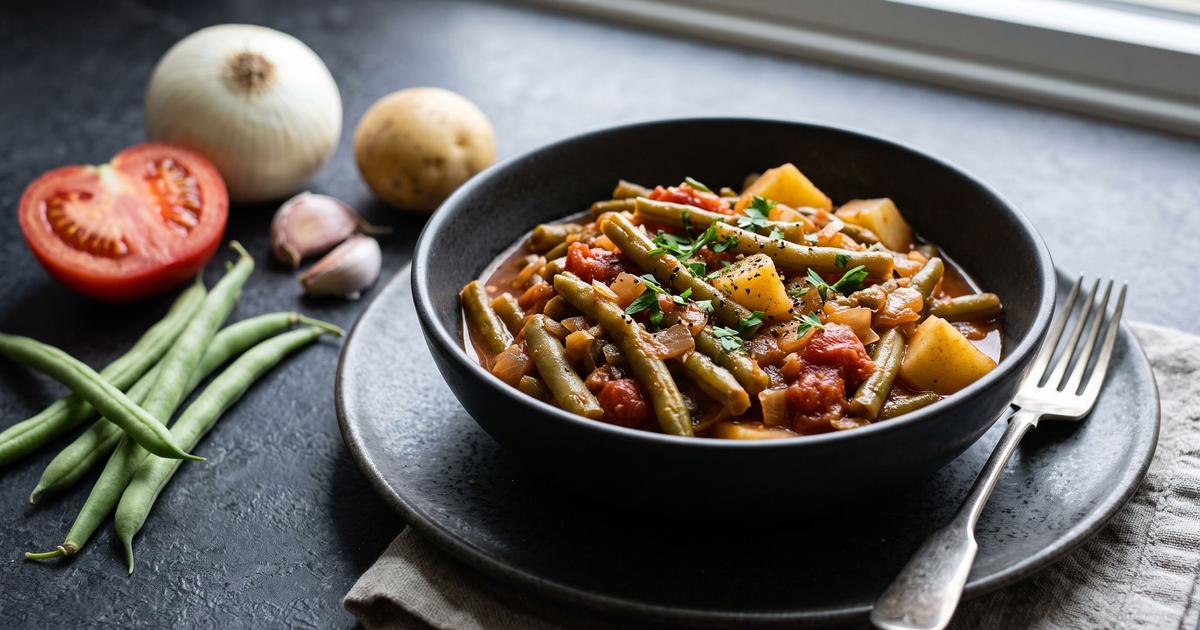
Fasolakia belongs to the Greek family of dishes called ladera, meaning cooked in oil, usually a lot of it. The trick to making them without is patience: braise the beans long and slow in tomato and they release their own sweetness, softening into something that needs no fat to taste rich. The potato is not filler. It thickens the sauce as its starch leaches out and rounds off the tomato's acidity. Served at room temperature with bread and beans, this is a whole summer meal in Greece, not a side.
Ingredients
- 1 lb Green beans, trimmed
- 1 Yellow onion, diced
- 3 cloves Garlic, sliced
- 1 1/2 cups Canned crushed tomatoes
- 1 Potatoe, cut into chunks
- 1/4 cup Flat-leaf parsley, chopped
- 1/2 tsp Dried oregano
- 1/4 tsp Black peppercorns, freshly ground
Method
- Sweat the onion in a wide pot with 1/4 cup (60 ml) water over medium heat until soft and translucent, about 8 minutes. Add the garlic and cook one minute more, just until it smells sweet rather than raw.
- Stir in the crushed tomatoes, oregano, black pepper, and half the parsley. Simmer for 5 minutes so the tomato loses its tinny edge and starts to taste cooked.
- Add the green beans and potato chunks and enough water to come halfway up, about 1 cup (240 ml). Ladera dishes are braised, not steamed, so the beans should sit in liquid, not above it.
- Cover and simmer gently, stirring occasionally, until the beans are completely tender and no longer squeaky, 25 to 30 minutes. Greek cooks braise them well past the bright-green stage on purpose. Soft is the goal, and the beans turn sweet as they go.
- Uncover and let the sauce reduce for a few minutes until it clings. Stir in the rest of the parsley off the heat. Serve warm or at room temperature, which is how it is eaten in summer.
Nutrition
Estimated per serving: 150 calories, 5 g protein, 7 g fiber, 45 mg sodium. Computed from USDA FoodData Central reference values for the main ingredients. This is an approximation, not a laboratory measurement. How these are computed.
Cost per serving is estimated from US national-average retail prices for cheap staple forms, using BLS dried-bean prices and USDA produce prices. Prices vary by store and season, so treat it as a guide, not a receipt. How this is computed.