Wu Xiang Mao Dou, Five-Spice Edamame in the Pod
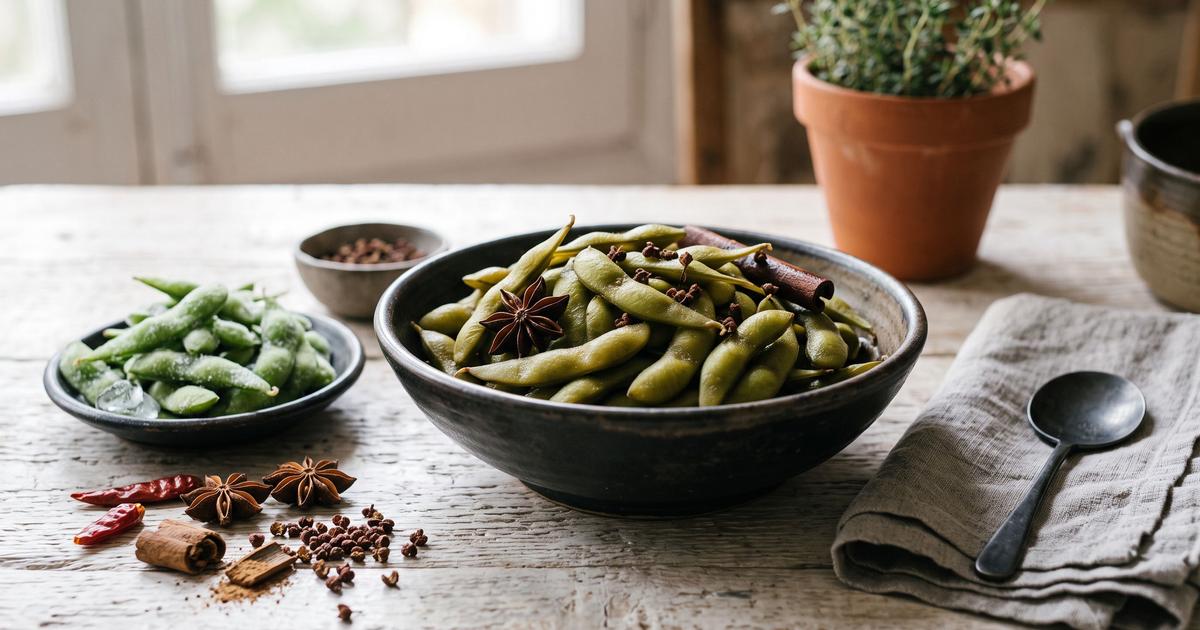
Salt-water edamame is the familiar bar snack, but wu xiang mao dou, five-spice edamame, is the fragrant Chinese version, simmered and steeped with the warm spices of a red-braise: star anise, Sichuan peppercorn, five-spice, dried chile, and ginger. Snipping the ends of the pods is the small step that makes it work, opening the shell so the spiced brine can reach the beans. A single tablespoon of tamari seasons the whole pot, and because you eat only the beans and discard the pod, most of that sodium never reaches the plate. It is best made ahead and chilled, giving the pods hours to drink up the brine.
Ingredients
- 1 lb Edamame, about 450 g, in the pod, frozen; snip a little off both ends with scissors
- 2 pieces Star anise
- 1 tsp Sichuan peppercorn
- 1/2 tsp Chinese five-spice
- 2 pieces Dried Thai chile, snipped, optional
- 3 slices Ginger
- 1 tbsp Low-sodium tamari
Method
- Snip a sliver off both ends of each pod, then bring 4 cups (960 ml) water to a boil with the star anise, Sichuan peppercorn, five-spice, chile, ginger, and tamari. Trimming the pods opens a channel for the spiced brine to seep in, since the beans inside are what you taste but the pod is all it touches.
- Add the frozen edamame and simmer 8 to 10 minutes, until the beans are tender but still bright and firm. Frozen edamame is already blanched, so it needs only long enough to heat through and start taking on flavor.
- Turn off the heat and let the pods steep in the hot brine at least 20 minutes, or up to overnight in the fridge. Steeping does the real seasoning: the flavor has to travel through the shell, and time does that far better than a longer, hotter boil that would leave the beans mushy.
- Drain and pile into a bowl, served warm or cold. Eat by pinching the pod so the beans pop into your mouth; the shell is not eaten, which is why the pod carries the seasoning and the beans stay low in sodium.
Nutrition
Estimated per serving: 120 calories, 10 g protein, 5 g fiber, 160 mg sodium. Computed from USDA FoodData Central reference values for the main ingredients. This is an approximation, not a laboratory measurement. How these are computed.
Cost per serving is estimated from US national-average retail prices for cheap staple forms, using BLS dried-bean prices and USDA produce prices. Prices vary by store and season, so treat it as a guide, not a receipt. How this is computed.