Five-Spice Simmered Peanuts
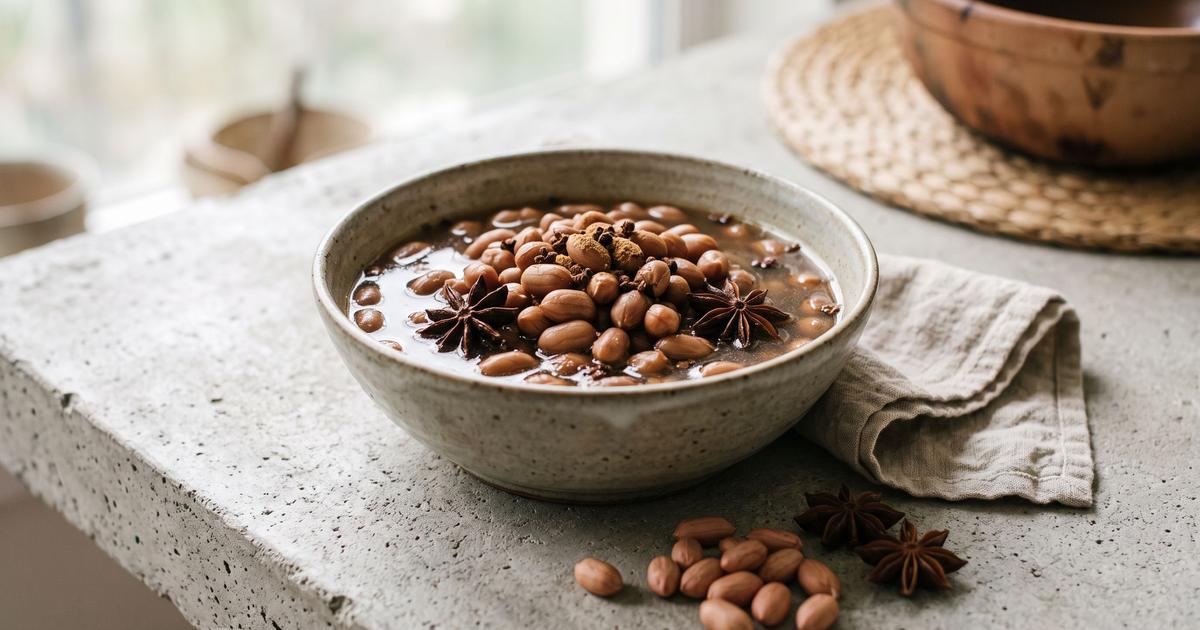
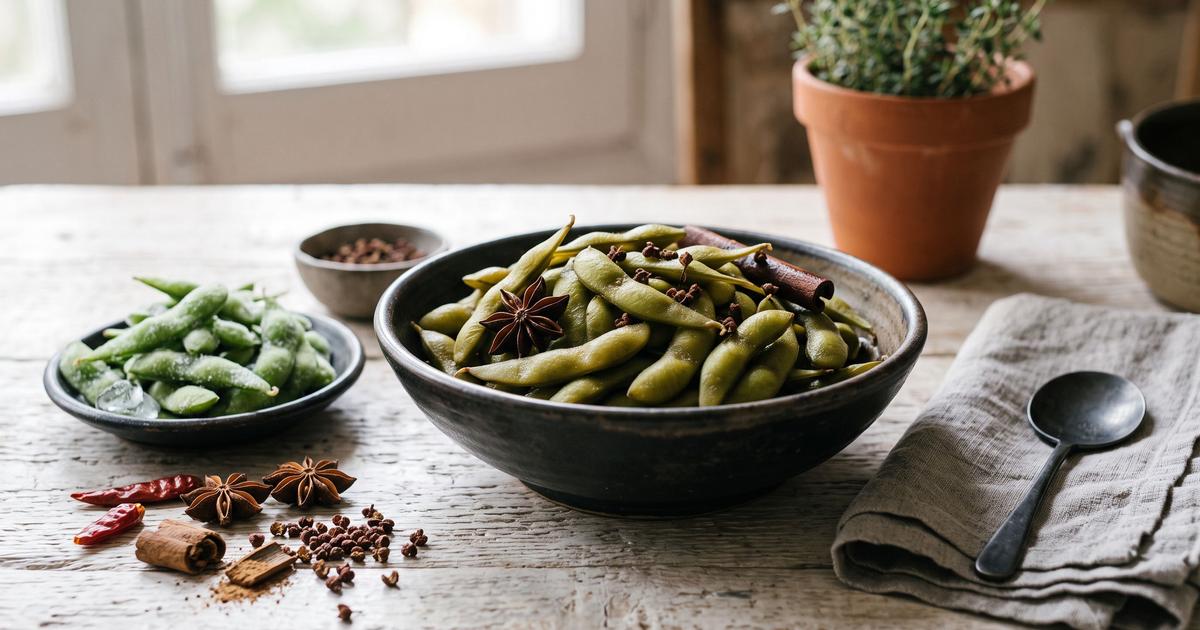
Boiled peanuts are a standing snack across southern China, set out in their broth at tea houses and sold warm in paper cones on the street. The version most people know is heavily salted, but the salt is doing less than it seems. What makes the snack is the aromatic bath: star anise and Sichuan peppercorn steeping into the soft nut, five-spice and cassia rounding it out. Raw peanuts are among the cheapest protein in the store, and this treats them as the whole food they are, botanically a legume, simmered until creamy and left to drink up the spices as they cool.
Ingredients
- 1 1/2 cups Peanuts, raw, skins on
- 2 wholes Star anise
- 1 tsp Sichuan peppercorn
- 1 tsp Chinese five-spice
- 1 stick cassia cinnamon
- 2 Bay leaves
- 4 slices Ginger
- 1 whole Dried Thai chile, optional
Method
- Rinse the raw peanuts and cover them with 4 cups (950 ml) cool water in a pot. Raw peanuts start dense and chalky, so they need a long soak-and-simmer to turn creamy all the way through; skip this and the centers stay hard.
- Add the star anise, Sichuan peppercorn, five-spice, cinnamon stick, bay leaves, ginger, and the chile if using. The peppercorn and star anise are the two loudest voices here, so they go in whole to steep rather than ground, where they would turn the broth gritty and bitter.
- Bring to a boil, then drop to a low simmer, cover, and cook 45 minutes, until a peanut squeezes soft between two fingers. Keep the heat gentle: a hard boil splits the skins and leaves the peanuts waterlogged instead of tender.
- Turn off the heat and let the peanuts sit in the hot spiced broth at least 30 minutes, or overnight in the fridge. This off-heat rest is where the flavor actually moves into the nut, so the longer they steep the deeper they taste.
- Drain, discard the whole spices, and serve at room temperature or cold. The broth did the seasoning, which is why no salt is needed: the anise and peppercorn read as savory on their own.
Nutrition
Estimated per serving: 180 calories, 8 g protein, 3 g fiber, 10 mg sodium. Computed from USDA FoodData Central reference values for the main ingredients. This is an approximation, not a laboratory measurement. How these are computed.
Cost per serving is estimated from US national-average retail prices for cheap staple forms, using BLS dried-bean prices and USDA produce prices. Prices vary by store and season, so treat it as a guide, not a receipt. How this is computed.