Douchi Jiang, Fermented Black Bean and Ginger Relish
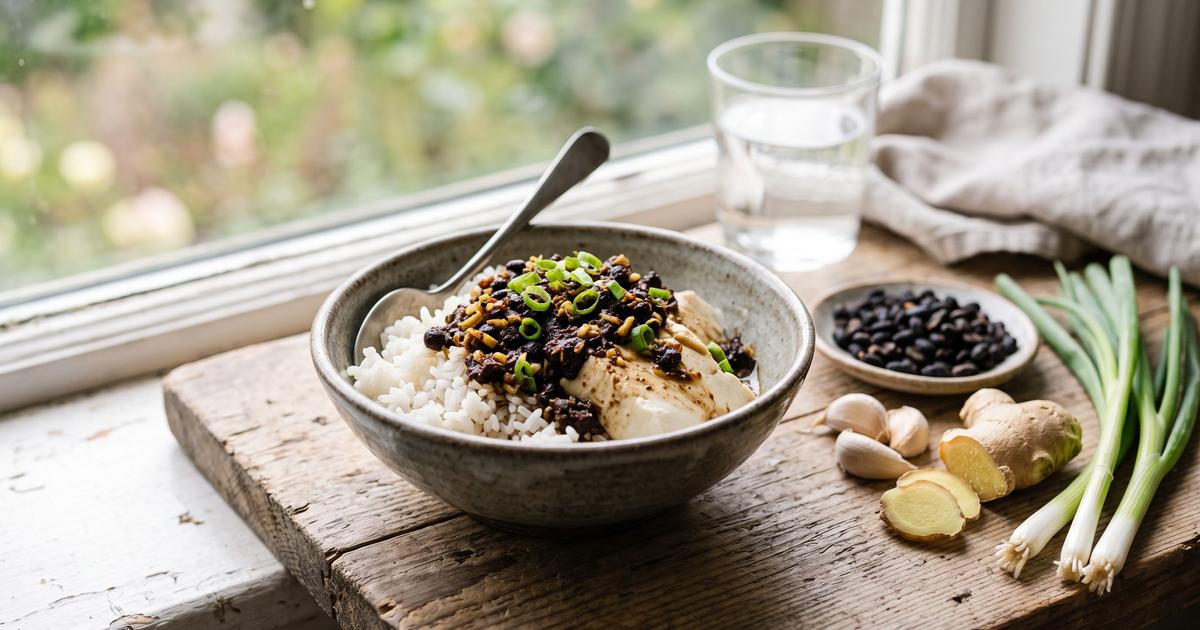
Douchi are soybeans that have been salted and fermented until they turn black, soft, and intensely savory, one of the oldest seasonings in Chinese cooking. On their own they are too strong and too salty to eat by the spoon, which is exactly why they make such a useful relish: mashed with ginger, garlic, and chile, a very little goes a long way. Rinsing the beans first tames the surface salt so their glutamate-rich funk can do the seasoning without overwhelming it, and a mashed date stands in for the small hit of sugar these sauces usually carry. Spoon it sparingly over steamed tofu, plain rice, or blanched greens and let it be the salt on the plate.
Ingredients
- 3 tbsp Fermented black beans, rinsed and roughly chopped
- 1 tbsp Ginger, grated
- 3 cloves Garlic, minced
- 3 pieces Scallions, finely sliced
- 2 pieces Dried Thai chile, soaked soft and minced
- 1 piece Medjool dates, pitted, mashed with 1 tbsp (15 ml) hot water into a paste
- 1 tbsp Chinese black vinegar
Method
- Rinse the fermented black beans in a strainer for 30 seconds, then chop them roughly. They are cured and packed in salt, so a quick rinse pulls off the harshest edge while keeping the deep, funky ferment; these beans are the only salt in the relish, so rinsing is what lets you use them without oversalting.
- Warm the ginger, garlic, and minced chile in 3 tbsp (45 ml) water in a dry pan until fragrant, about a minute. Blooming the aromatics in water instead of oil opens them up and takes the raw bite off the garlic.
- Add the beans, mashing about half of them against the pan with a spoon, along with the date paste, and cook 2 minutes. Crushing part of the beans spreads their savoriness through the whole relish, and the date rounds off the salt the way a pinch of sugar traditionally does.
- Off the heat, stir in the black vinegar and the sliced scallions. The vinegar lifts everything and keeps it bright, so add it away from the heat rather than cooking it in.
- Cool before serving. It keeps 2 weeks in the fridge, and a single teaspoon seasons a whole bowl, so treat it as the salt in a meal rather than a topping piled on one.
Nutrition
Estimated per serving: 30 calories, 2 g protein, 1 g fiber, 200 mg sodium. Computed from USDA FoodData Central reference values for the main ingredients. This is an approximation, not a laboratory measurement. How these are computed.
Cost per serving is estimated from US national-average retail prices for cheap staple forms, using BLS dried-bean prices and USDA produce prices. Prices vary by store and season, so treat it as a guide, not a receipt. How this is computed.