Ma Jiang, Chinese Sesame Dipping Sauce
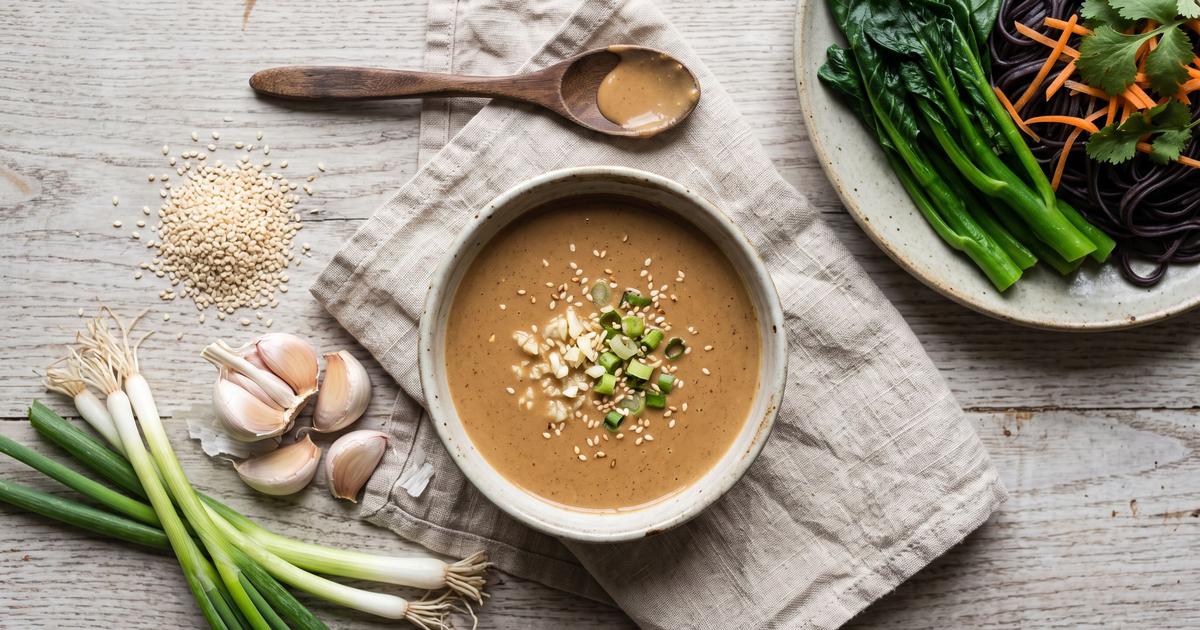
Ma jiang is the sesame sauce that turns up over cold noodles, spooned into hot pot bowls, and poured across blanched greens all over China. Its body is sesame paste, which behaves like no other ingredient: it seizes and stiffens the instant you stir it, then loosens into a pourable cream once you beat in liquid a little at a time. Chinese black vinegar gives it the malty tang that balances the richness, and a single date rounds the edge that sugar would usually soften. A small measure of tamari carries the savory note. Spread by the teaspoon across the whole batch, it seasons the sauce without tipping it into salty.
Ingredients
- 1/3 cup Tahini
- 2 tbsp Chinese black vinegar
- 2 tsp Low-sodium tamari
- 1 clove Garlic, grated to a paste
- 1 piece Deglet noor dates, pitted, mashed with 1 tbsp (15 ml) hot water into a paste
- 1/2 tsp Red pepper flakes
- 1 tbsp Sesame seeds, toasted
- 1 tsp Ginger, grated
Method
- Whisk the tahini by itself first. Sesame paste seizes and stiffens the moment you work it, so beat it thick and pale before any liquid goes in, or it will stay lumpy later.
- Add the black vinegar, tamari, and date paste one spoonful at a time, whisking hard after each, then thin with 3 to 4 tbsp (45 to 60 ml) warm water until it pours like cream. Adding the liquid slowly lets the paste emulsify smooth instead of splitting into oil and water.
- Stir in the garlic, ginger, and pepper flakes and let the sauce rest 10 minutes. The raw garlic mellows and the flavors marry in that short wait.
- Fold in the sesame and serve over cold noodles or as a dip for blanched greens. The sauce tightens as it stands, so loosen it with a spoon of water whenever it thickens.
Nutrition
Estimated per serving: 100 calories, 3 g protein, 2 g fiber, 110 mg sodium. Computed from USDA FoodData Central reference values for the main ingredients. This is an approximation, not a laboratory measurement. How these are computed.
Cost per serving is estimated from US national-average retail prices for cheap staple forms, using BLS dried-bean prices and USDA produce prices. Prices vary by store and season, so treat it as a guide, not a receipt. How this is computed.