Waakye
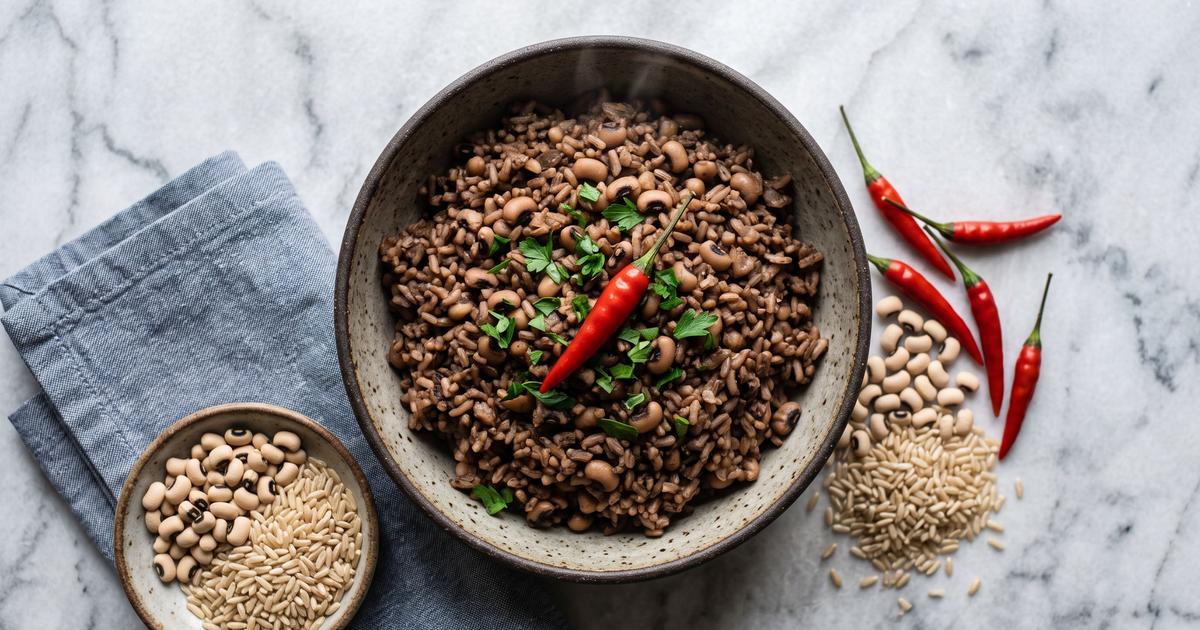
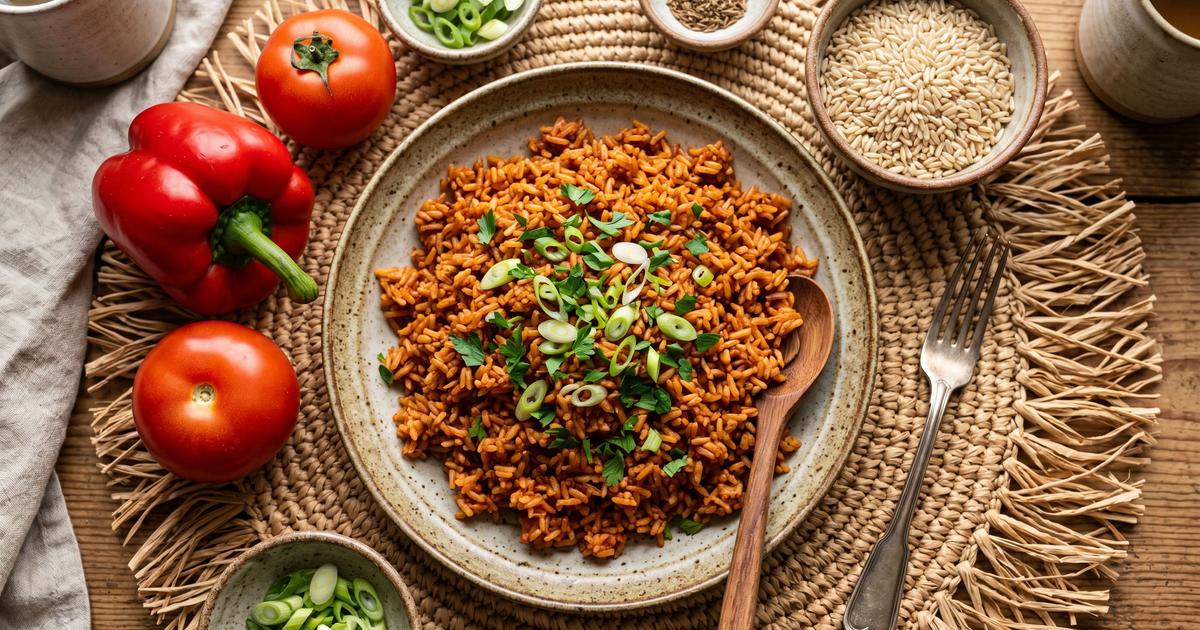
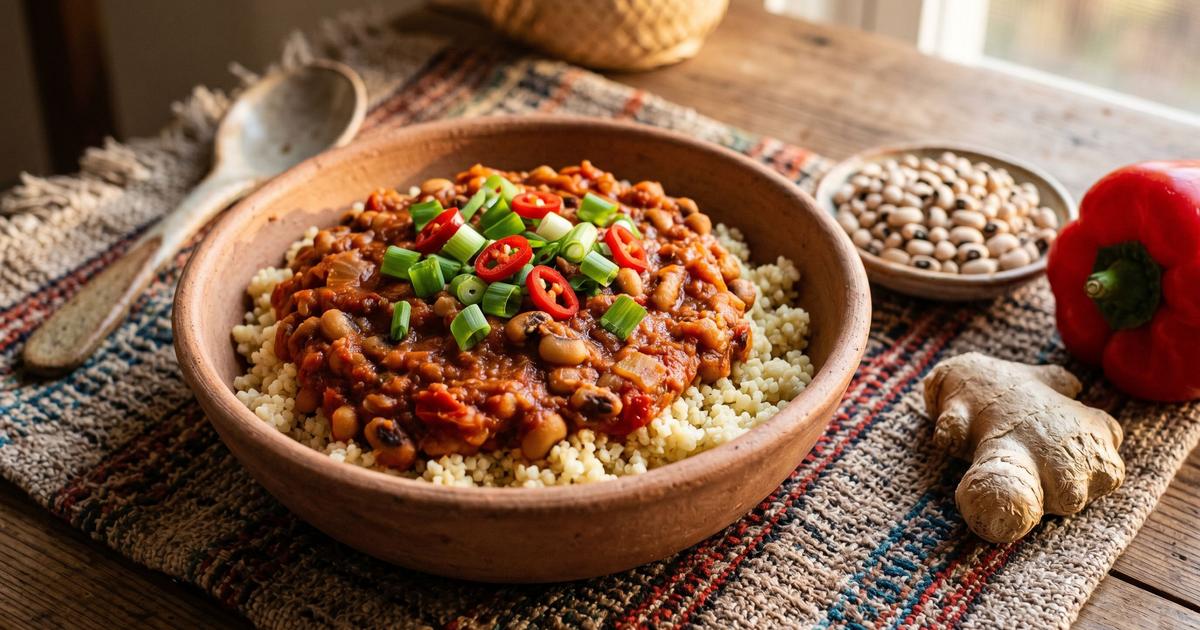
Waakye, from the Hausa word for beans, is the Ghanaian rice and cowpea dish sold from morning stalls across the country, usually built on white rice tinted deep red-brown with dried sorghum or millet leaves. Brown rice makes that coloring step unnecessary and adds fiber and chew in the bargain. It is a plain, sturdy base meant to be piled with sides, so keep the pot itself simple: onion, bay, and a whole chile do the seasoning, and the beans and rice cook down together into something more than the sum of two cheap ingredients.
Ingredients
- 1 cup Black-eyed peas, dried, soaked
- 1 1/2 cups long grain brown rice, rinsed
- 1 Yellow onion, quartered
- 2 Bay leaves
- 1 Habanero, left whole
Method
- Put the soaked black-eyed peas in a pot with the quartered onion, bay leaves, and 5 cups (1.2 liters) water. Bring to a boil, then simmer, partly covered, for 20 minutes to give the peas a head start, since they take longer than the rice.
- Stir in the rinsed brown rice and the whole habanero. Keep the chile intact. A whole pepper releases aroma and a slow trickle of heat into the pot without turning the whole dish fiery, which is the point of cooking it this way.
- The water should sit about 1 inch (2.5 cm) above the rice. Add a little more if needed, then bring back to a simmer, cover, and cook over low heat until the rice is tender and the liquid is absorbed, 35 to 40 minutes.
- Turn off the heat and let the pot stand, covered, for 10 minutes. Resting lets the grains finish on their own steam and firm up, so they stay separate rather than gluey.
- Fish out the bay leaves, onion, and whole chile. Fluff with a fork. Traditional waakye gets its reddish tint from dried sorghum leaves simmered in the pot, but brown rice brings its own earthy color and a nuttiness white rice never has. Serve with a tomato stew and greens.
Nutrition
Estimated per serving: 290 calories, 11 g protein, 9 g fiber, 20 mg sodium. Computed from USDA FoodData Central reference values for the main ingredients. This is an approximation, not a laboratory measurement. How these are computed.
Cost per serving is estimated from US national-average retail prices for cheap staple forms, using BLS dried-bean prices and USDA produce prices. Prices vary by store and season, so treat it as a guide, not a receipt. How this is computed.