West African Groundnut Stew
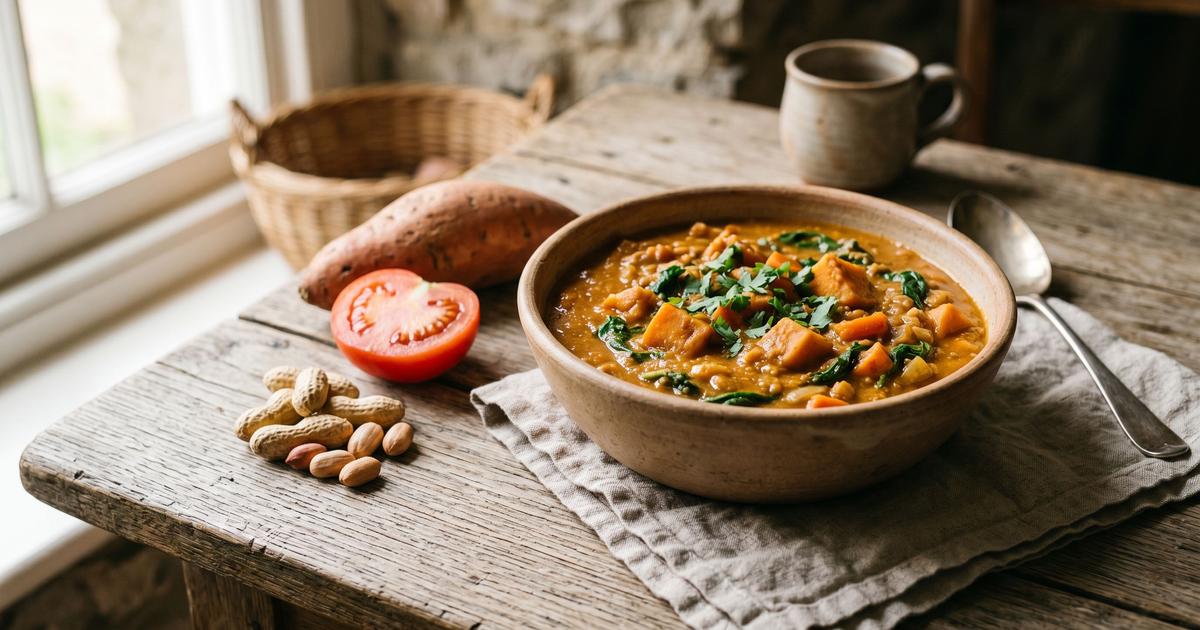
Groundnut stew, or maafe, runs across West Africa in countless versions, almost all built on peanuts, tomato, and something starchy. It needs no oil: the peanut butter is the richness and the thickener at once. Whisk it with hot broth before it goes in, keep the heat gentle, and finish with lime to cut through.
Ingredients
- 1 Yellow onion, diced
- 4 cloves Garlic, minced
- 1 tbsp Ginger, grated
- 1 Thai bird chile, minced, or 1/2 habanero
- 2 tbsp Tomato paste
- 1 cup Canned crushed tomatoes
- 1 lb Sweet potatoes, peeled and cubed
- 1/2 cup unsweetened peanut butter, unsalted
- 1 tsp no-salt vegetable bouillon
- 4 cups Collard greens, stemmed and chopped
- 1 Lime, juiced
Method
- Sweat the onion in a pot with 3 tablespoons (45 ml) water until soft, about 8 minutes. Add the garlic, ginger, and chile and cook 1 minute more.
- Add the tomato paste and cook for 2 minutes, until it darkens. Stir in the crushed tomatoes and cook 3 minutes.
- Add the sweet potatoes, the no-salt bouillon, and 3 cups (720 ml) water. Simmer until the sweet potatoes are nearly tender, about 15 minutes.
- Whisk the peanut butter with a ladle of the hot broth in a bowl until smooth, then stir it back into the pot. Adding it this way stops it from seizing into clumps. Use an unsalted, unsweetened peanut butter so the stew stays clean.
- Simmer gently, uncovered, for 15 minutes, stirring now and then, until the stew thickens and the surface turns glossy and deep orange. The peanut butter is the thickener, so no starch is needed.
- Stir in the collard greens and cook until tender, 5 to 7 minutes.
- Turn off the heat and stir in the lime juice. Taste, and add more lime or chile to balance the richness. Serve over an intact grain like brown rice or millet.
Nutrition
Estimated per serving: 345 calories, 13 g protein, 9 g fiber, 140 mg sodium. Computed from USDA FoodData Central reference values for the main ingredients. This is an approximation, not a laboratory measurement. How these are computed.
Cost per serving is estimated from US national-average retail prices for cheap staple forms, using BLS dried-bean prices and USDA produce prices. Prices vary by store and season, so treat it as a guide, not a receipt. How this is computed.