Ugali
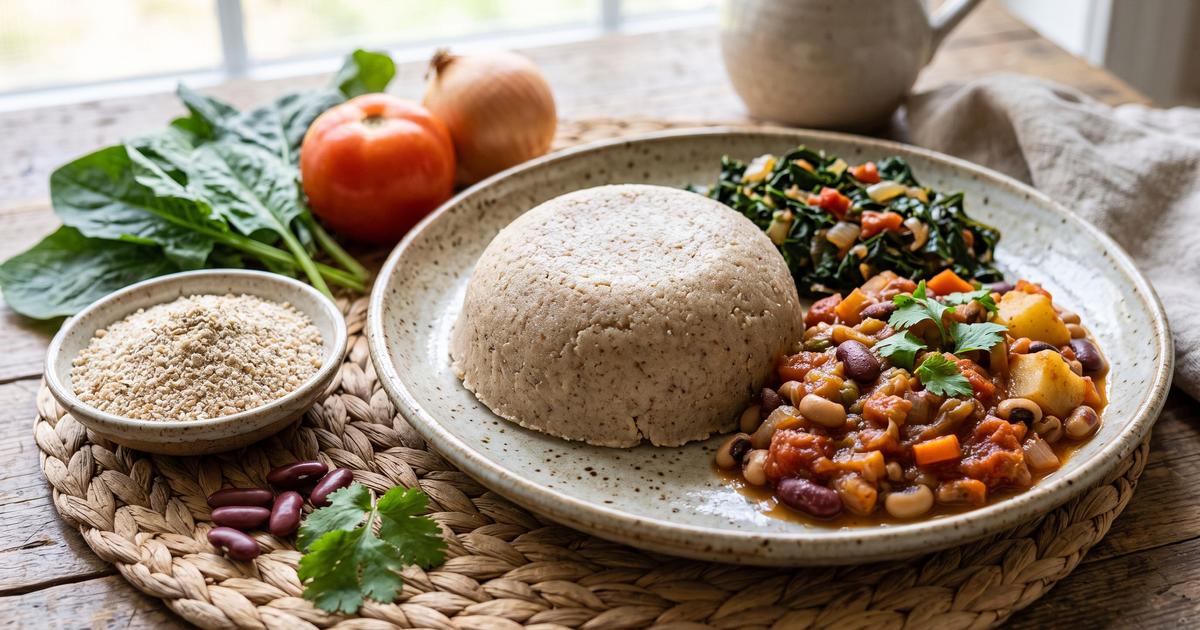
Ugali is the everyday starch of East Africa, stiff maize meal cooked with nothing but water until it holds a shape you can tear with your hand. In Kenya and Tanzania it is on the table most days, the base that a plate of sukuma wiki or a bean stew is built around. It looks like the simplest thing in the world, and the technique is all in the wrist: meal added slowly to boiling water, then folded hard until it firms. Using whole-grain, stone-ground maize instead of degermed cornmeal keeps the fiber and the corn flavor. It is meant to be plain, the quiet counterweight to everything spiced beside it.
Ingredients
- 1 1/2 cups Polenta / coarse cornmeal
Method
- Bring 4 cups (950 ml) water to a rolling boil in a heavy pot. A wide, sturdy pot matters here, because the dough gets stiff enough to fight back and a thin pan will scorch.
- Rain the cornmeal in slowly with one hand while stirring hard with the other. Adding the meal in a thin stream into moving water is the only way to keep it from seizing into lumps, which cannot be stirred out later.
- Once it thickens, switch to a strong wooden spoon and fold the mass against the sides of the pot over medium heat for 8 to 10 minutes. This constant folding, the koroga, cooks the raw starch out and builds the firm, sliceable body that separates ugali from loose porridge.
- When the ugali pulls cleanly away from the sides and holds its shape, press it into a mound and turn it out onto a plate. It carries no salt on purpose, since it is the plain, filling base you tear and dip into seasoned greens and stew.
Nutrition
Estimated per serving: 160 calories, 4 g protein, 4 g fiber, 5 mg sodium. Computed from USDA FoodData Central reference values for the main ingredients. This is an approximation, not a laboratory measurement. How these are computed.
Cost per serving is estimated from US national-average retail prices for cheap staple forms, using BLS dried-bean prices and USDA produce prices. Prices vary by store and season, so treat it as a guide, not a receipt. How this is computed.