Torshi Left, Egyptian Pink Pickled Turnips
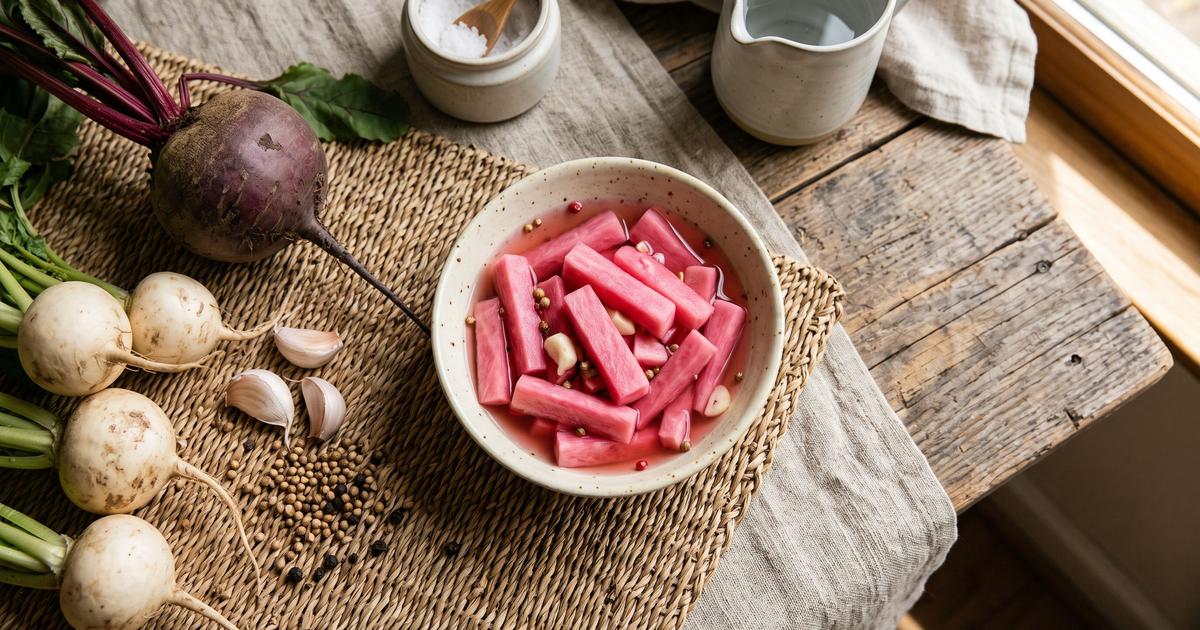
Torshi left is the neon-pink pickled turnip that sits on mezze tables from Cairo to Beirut, sour and crisp and impossible to eat just one of. A single slice of beet tints the whole jar over a few days, which is where the color comes from. The usual recipe cures the turnips in a strong salt brine, but a straight vinegar pickle kept in the fridge gives you the same snap and tang without the sodium. Cut the batons a similar size so they sour evenly, and give the jar a few days before you dig in.
Ingredients
- 4 cups Turnips, peeled and cut into batons
- 1/2 Beets, peeled and sliced into coins
- 3 cloves Garlic, smashed
- 1 cup White wine vinegar
- 1 Bay leave
- 1 tsp Black peppercorns
Method
- Pack the turnip batons upright into a clean quart jar, tucking the garlic, bay leaf, and peppercorns down the sides. Standing them upright fits more in and keeps them submerged later.
- Slide the beet coins in among the turnips. The beet does one job, bleeding its color through the brine over a few days until the whole jar turns rose pink. Two or three slices are plenty, since more will make it taste earthy.
- Stir the vinegar with one cup (240 ml) of water and pour it over to cover everything completely. A traditional pickle leans on a heavy salt brine, but a half-and-half vinegar and water bath sours and preserves the turnips just as well without it, so long as they stay in the fridge.
- Cap the jar and refrigerate at least 3 days before eating, giving the color and sour time to work through the dense turnip. Keep it cold and use within two weeks, since this is a fresh pickle, not a shelf-stable one.
- Serve the batons cold as a sharp, crunchy nibble beside dips, beans, and flatbread. Their job is to cut richness, so bring them out whenever the table feels heavy.
Nutrition
Estimated per serving: 20 calories, 1 g protein, 1 g fiber, 40 mg sodium. Computed from USDA FoodData Central reference values for the main ingredients. This is an approximation, not a laboratory measurement. How these are computed.
Cost per serving is estimated from US national-average retail prices for cheap staple forms, using BLS dried-bean prices and USDA produce prices. Prices vary by store and season, so treat it as a guide, not a receipt. How this is computed.