Dukkah, Egyptian Nut and Seed Blend
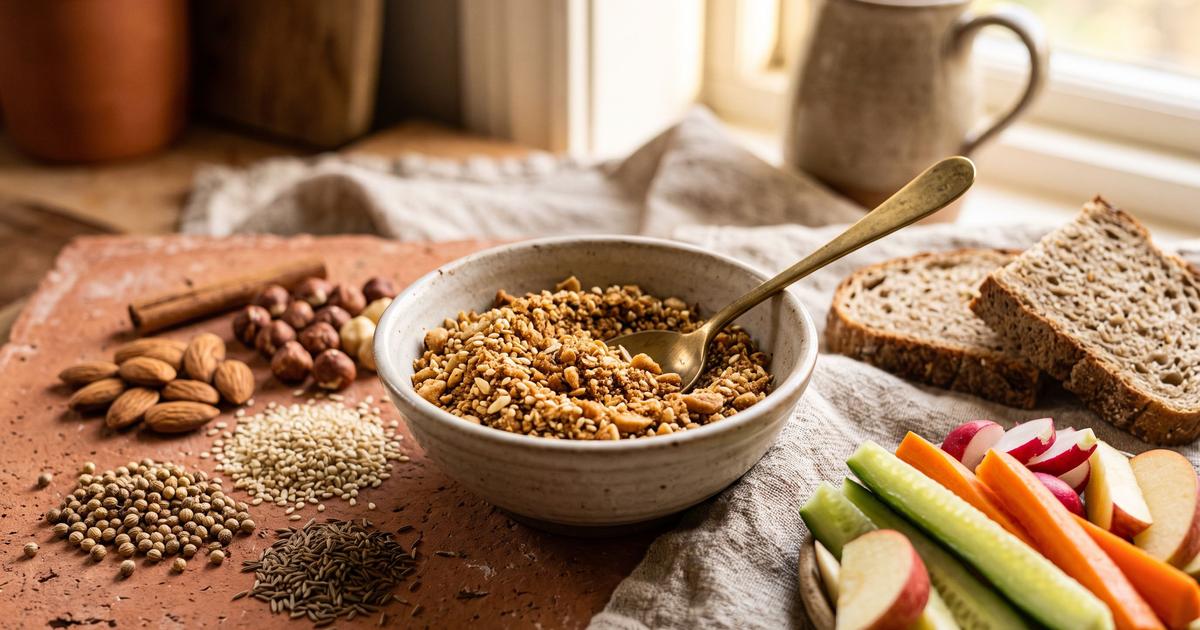
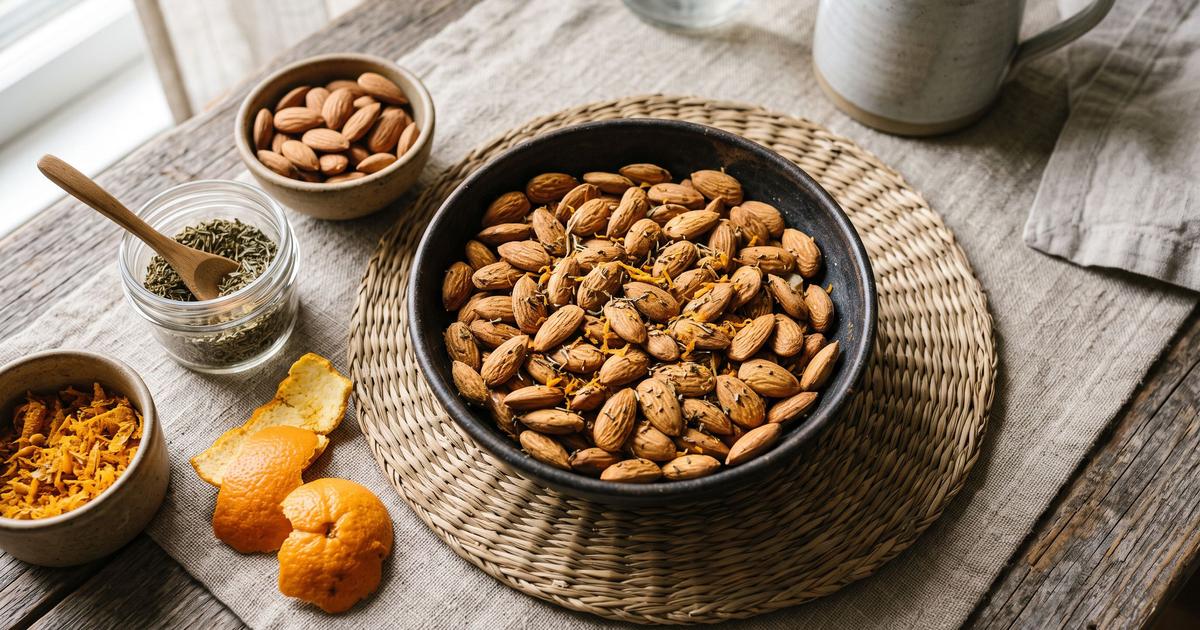
Dukkah is an Egyptian mix of nuts, seeds, and spices, toasted and pounded to a coarse rubble, and no two households make it quite the same. The usual way to eat it is to dip bread first into olive oil and then into the dukkah, so it sticks. Skip the oil and the blend still has plenty to offer as a dry, crunchy dip: press moist vegetables or apple slices into it and the crumble clings on its own. Almonds stand in for the hazelnuts often used, sesame and coriander do the heavy lifting, and the trick that matters most is toasting each element separately so nothing burns before the rest is ready.
Ingredients
- 1/2 cup Almonds
- 1/3 cup Sesame seeds
- 2 tbsp Coriander seed
- 1 tbsp Cumin seed
- 1 tsp Fennel seed
- 1/2 tsp Black peppercorns
- 1 tsp Nigella seed, optional
Method
- Toast the almonds dry in a pan over medium heat until fragrant and one shade darker, then tip them out to cool. Nuts take longer than seeds, so they go first and on their own.
- In the same pan, toast the sesame until golden, then the coriander, cumin, fennel, and peppercorns just until they pop and smell fragrant. Seeds and spices scorch fast, and each at its own pace, so keep them moving and pull them the moment they turn. Burnt spice is bitter and cannot be fixed.
- Pulse the cooled almonds first to a coarse rubble, then add the toasted seeds and pulse just a few times more, to a dry, gravelly crumble. Over-processing releases the almond oil and turns dukkah into a paste, and you want it loose enough to sprinkle.
- Stir in the nigella seeds off the heat. Left raw, their oniony, oregano-like note stays sharp against the toasted rest.
- Serve in a bowl with cucumber spears, carrot sticks, apple slices, or torn whole-grain bread for dipping. Stored airtight, it keeps for weeks.
Nutrition
Estimated per serving: 120 calories, 4 g protein, 3 g fiber, 5 mg sodium. Computed from USDA FoodData Central reference values for the main ingredients. This is an approximation, not a laboratory measurement. How these are computed.
Cost per serving is estimated from US national-average retail prices for cheap staple forms, using BLS dried-bean prices and USDA produce prices. Prices vary by store and season, so treat it as a guide, not a receipt. How this is computed.