Ta'ameya, Egyptian Baked Fava Fritters
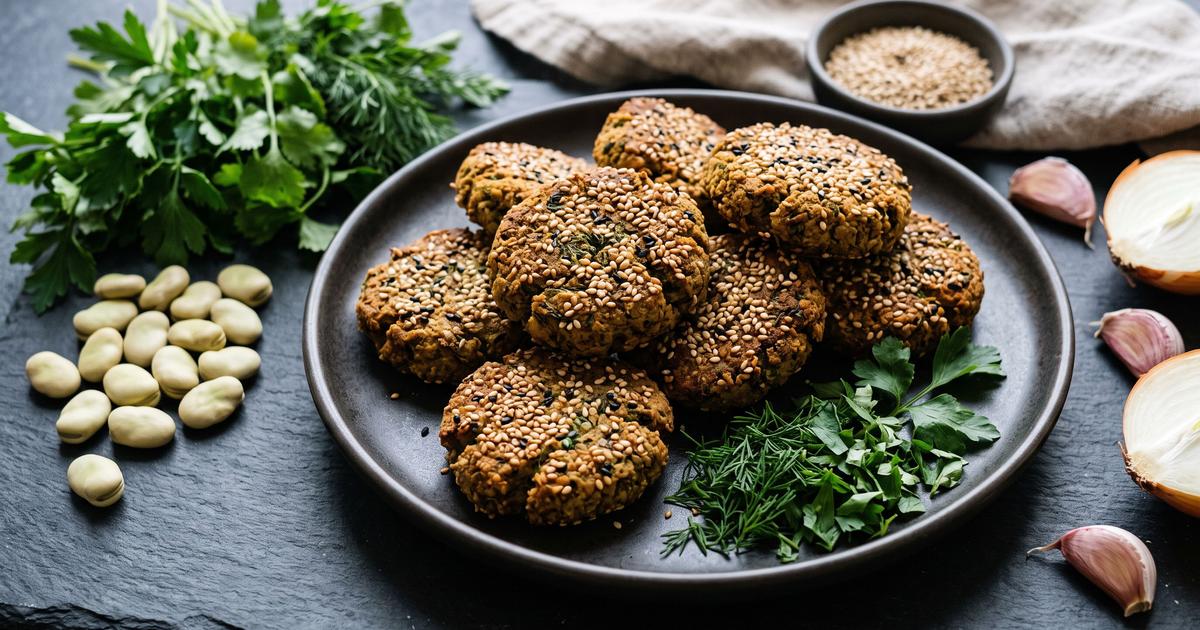
Ta'ameya is the Egyptian falafel, older than the chickpea version and different in every way that counts. It is made from split fava beans, not chickpeas, and it carries so many herbs that the inside stays a startling green. The classic is deep-fried and crusted in sesame; baking it dry keeps the whole-food promise while still giving you a crisp sesame shell. The one rule you cannot bend is the soak: uncooked, soaked favas ground to a coarse paste are what let the fritters hold together without egg or flour, so a spoon of ground flax is the only binder needed. Make a big batch, since they reheat well and freeze raw.
Ingredients
- 1 cup Fava beans, dried and split, soaked overnight
- 1 cup Cilantro
- 1 cup Flat-leaf parsley
- 1/2 cup Dill
- 4 wholes Scallions
- 4 cloves Garlic
- 1 tsp Cumin seed, ground
- 1 tsp Coriander seed, ground
- 1/2 tsp Black peppercorns, ground
- 1 tbsp Ground flaxseed
- 2 tbsp Sesame seeds
Method
- Soak the split fava beans in plenty of cold water for at least 12 hours, then drain them well. They go into the grinder raw, never cooked: it is the starch in the uncooked bean that binds the fritter, and boiled favas turn to a wet paste that will not hold.
- Stir the ground flaxseed into 3 tbsp water and let it sit 5 minutes until it gels. This is the egg the fritters would otherwise need to hold together in the oven.
- Pulse the drained favas with the cilantro, parsley, dill, scallions, garlic, cumin, coriander, and pepper to a coarse, bright green paste. Stop before it purees; ta'ameya wants a little texture. Pulse in the flax gel at the end.
- Let the mix rest 20 minutes so it hydrates and firms enough to shape. Form small flat patties and press the top of each into the sesame seeds.
- Bake at 400 F (200 C) on a lined tray, flipping once, until set and golden, 25 to 30 minutes. Baking asks for a hotter and longer go than the deep fryer, and it toasts the sesame crust in the process.
- Serve warm with lemon, a tahini sauce, and a chopped salad.
Nutrition
Estimated per serving: 210 calories, 13 g protein, 11 g fiber, 40 mg sodium. Computed from USDA FoodData Central reference values for the main ingredients. This is an approximation, not a laboratory measurement. How these are computed.
Cost per serving is estimated from US national-average retail prices for cheap staple forms, using BLS dried-bean prices and USDA produce prices. Prices vary by store and season, so treat it as a guide, not a receipt. How this is computed.