Ras el Hanout Roasted Chickpeas
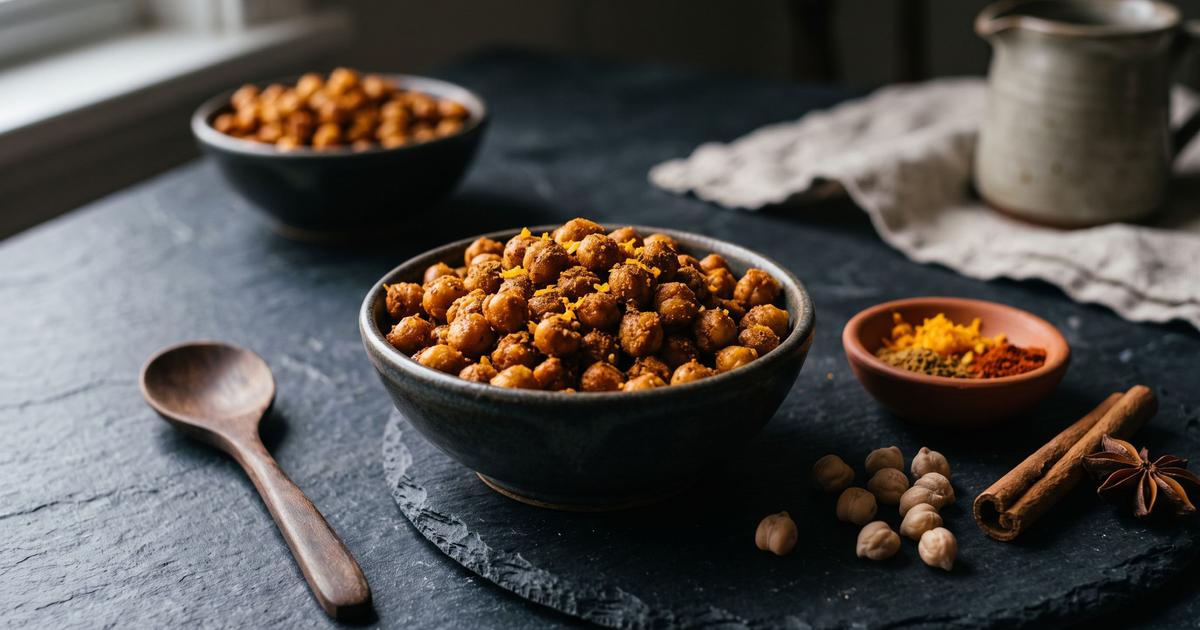
Roasted chickpeas are the easiest crunchy snack a pantry can make, and ras el hanout, the Moroccan blend that can run to thirty spices, turns a plain handful into something worth setting out for guests. The two rules are simple: dry the chickpeas hard before they go in, and season them after they come out. Wet chickpeas steam instead of crisping, and delicate ground spices scorch over a long roast, so the blend and a hit of orange zest go on while the chickpeas are still hot from the pan. They lose their crunch within a day, so eat them fresh.
Ingredients
- 3 cups Chickpeas, cooked
- 2 tsp Ras el hanout
- 1/2 tsp Smoked paprika
- 1/4 tsp Cayenne
- 1 Orange, zested
Method
- Heat the oven to 425 F (220 C). Spread the cooked chickpeas on a clean towel and roll them around to dry them thoroughly, letting the loose skins come off. Getting them bone-dry is the whole trick to crisping without oil, since surface water just steams.
- Tip the chickpeas onto a dry sheet pan in a single layer and roast for 25 to 30 minutes, shaking the pan twice, until they are deep golden and rattle-dry. Do not crowd them, or they will steam each other soft.
- Combine the ras el hanout, smoked paprika, cayenne, and orange zest in a large bowl. Grinding or mixing the spices before the chickpeas land keeps them from clumping on wet spots.
- Tip the hot chickpeas straight into the bowl and toss hard while they are still steaming. Dressing them hot lets the porous roasted skins grab the spice, and adding the blend after roasting keeps the ras el hanout from scorching in the oven. Cool before serving so they crisp up fully.
Nutrition
Estimated per serving: 160 calories, 8 g protein, 7 g fiber, 30 mg sodium. Computed from USDA FoodData Central reference values for the main ingredients. This is an approximation, not a laboratory measurement. How these are computed.
Cost per serving is estimated from US national-average retail prices for cheap staple forms, using BLS dried-bean prices and USDA produce prices. Prices vary by store and season, so treat it as a guide, not a receipt. How this is computed.