Nilagang Mani, Filipino Boiled Peanuts
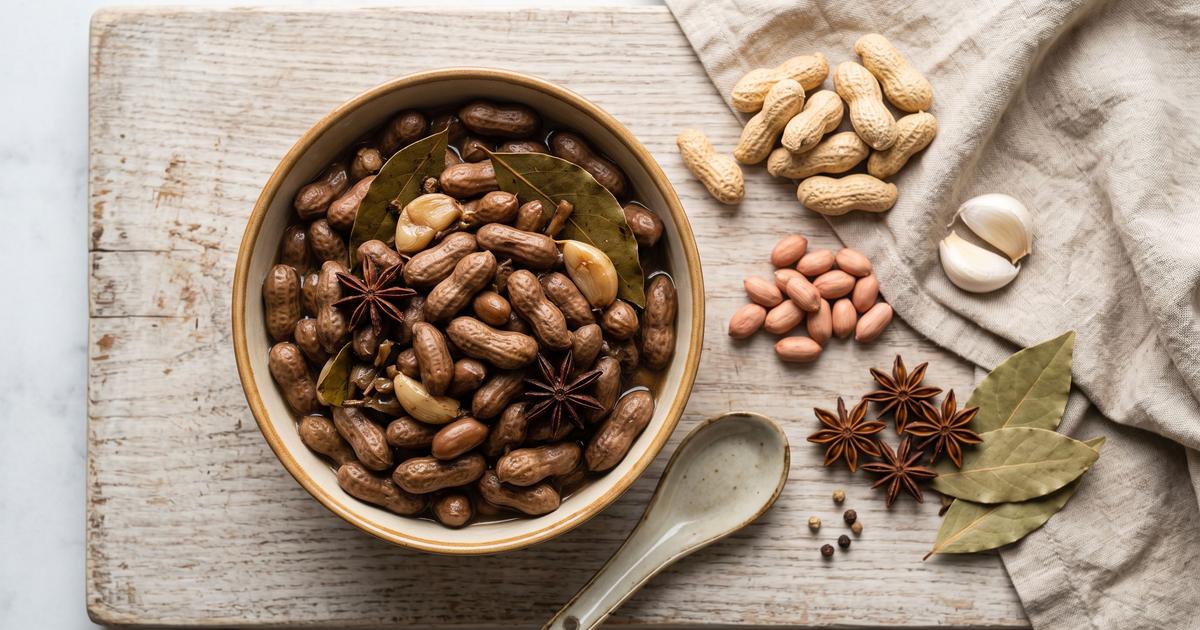
Nilagang mani is sold warm in paper cones at Philippine markets and bus stops, a soft, savory counter to the crisp roasted peanut everyone already knows. Boiling a raw peanut changes it completely: the nut turns tender and almost bean-like, closer to an edamame than to a bar snack. The stand version relies on a salty brine, and a few whole aromatics carry the flavor here without it, the way five-spice peanuts do across Southeast Asia. Since they only improve overnight in their liquid, they are worth cooking a day ahead, and they cost almost nothing to make in quantity.
Ingredients
- 1 lb Peanuts, raw, in the shell or shelled
- 6 cloves Garlic, smashed
- 2 Star anises
- 2 Bay leaves
- 1 tsp Black peppercorns
- 1 Lime, cut into wedges
Method
- Rinse the raw peanuts and put them in a deep pot with the garlic, star anise, bay, and peppercorns. Cover with about 2 inches (5 cm) of water. Raw peanuts, not roasted, are what you want here, since only raw ones turn soft and beany the way this snack should.
- Bring to a boil, then drop to a low simmer, cover, and cook 1.5 to 2 hours. Shelled peanuts land at the shorter end, in-shell at the longer. Keep them submerged, adding hot water as needed. Long wet heat is the only thing that makes a raw peanut tender, and it slowly draws the aromatics into the nut.
- The roadside version is boiled in heavily salted water, and here the garlic, star anise, and bay do the seasoning instead, leaving a savory, faintly sweet peanut that does not need the salt.
- Turn off the heat and let the peanuts cool in their liquid for at least 30 minutes, or refrigerate them in it overnight. They keep soaking up flavor as they sit, so they are better the next day. Drain and serve warm with lime wedges.
Nutrition
Estimated per serving: 240 calories, 11 g protein, 4 g fiber, 20 mg sodium. Computed from USDA FoodData Central reference values for the main ingredients. This is an approximation, not a laboratory measurement. How these are computed.
Cost per serving is estimated from US national-average retail prices for cheap staple forms, using BLS dried-bean prices and USDA produce prices. Prices vary by store and season, so treat it as a guide, not a receipt. How this is computed.