Minatamis na Saging, Date-Sweetened Bananas
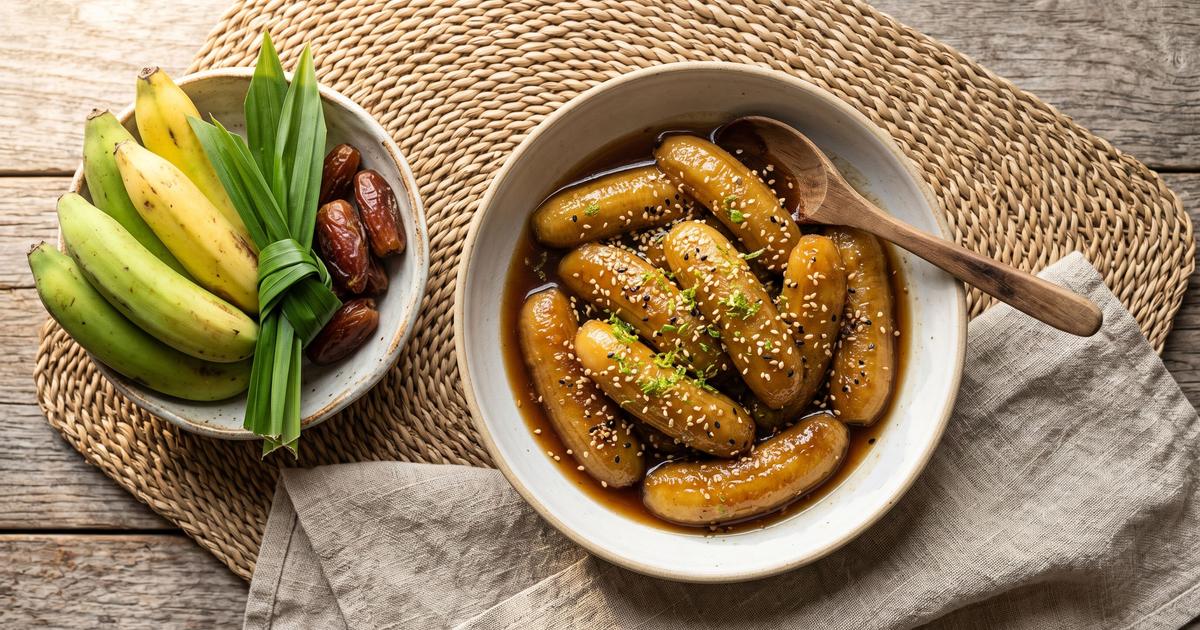
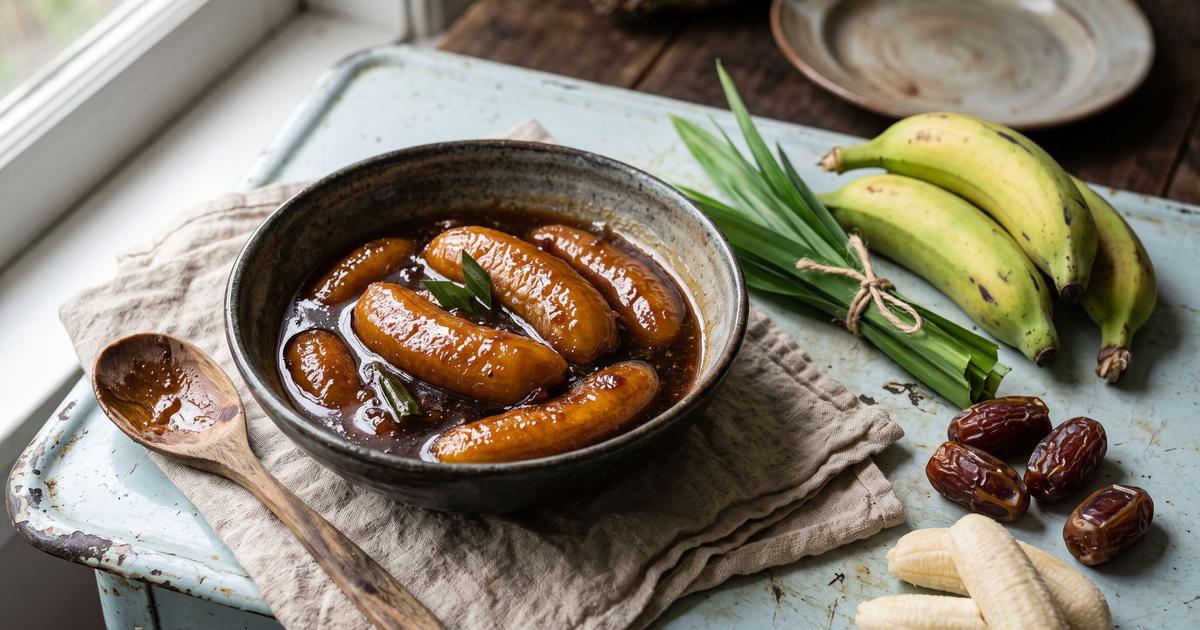
Minatamis na saging is a Filipino merienda of bananas cooked soft in syrup, sweet enough to end a meal and simple enough to be an afternoon snack. The usual pot is built on brown sugar, and often coconut, and this one leans instead on a syrup blended from whole dates and perfumed with a knot of pandan. Firm cooking bananas, saba if you can find them, are what to use: they soak up the syrup and keep their shape where ripe eating bananas would fall apart. A squeeze of lime at the end keeps the sweetness in check, and toasted sesame stands in for the coconut.
Ingredients
- 4 wholes Bananas, firm, peeled and cut into thick coins
- 5 wholes Medjool dates, pitted
- 1 whole Pandan leaf, knotted
- 1 tbsp Lime juice
- 1 tbsp Sesame seeds, toasted
Method
- Blend the pitted dates with one cup (240 ml) of hot water until smooth. This date syrup is the entire sweetener: blended rather than chopped, the dates dissolve into a caramel-colored liquid that coats the fruit the way a brown-sugar syrup would.
- Pour the syrup into a wide pan, add the knotted pandan leaf, and bring to a gentle simmer. Knotting the pandan lets it perfume the syrup with its grassy, vanilla-like scent while staying in one piece so you can lift it out later.
- Slide in the banana coins in a single layer and simmer gently, spooning syrup over them, until they turn glossy and tender but still hold their shape, about 8 minutes. Use firm, slightly underripe bananas: soft ripe ones dissolve into mush, while firm fruit drinks up the syrup and keeps its coins intact. Saba, the Filipino cooking banana, is the traditional choice.
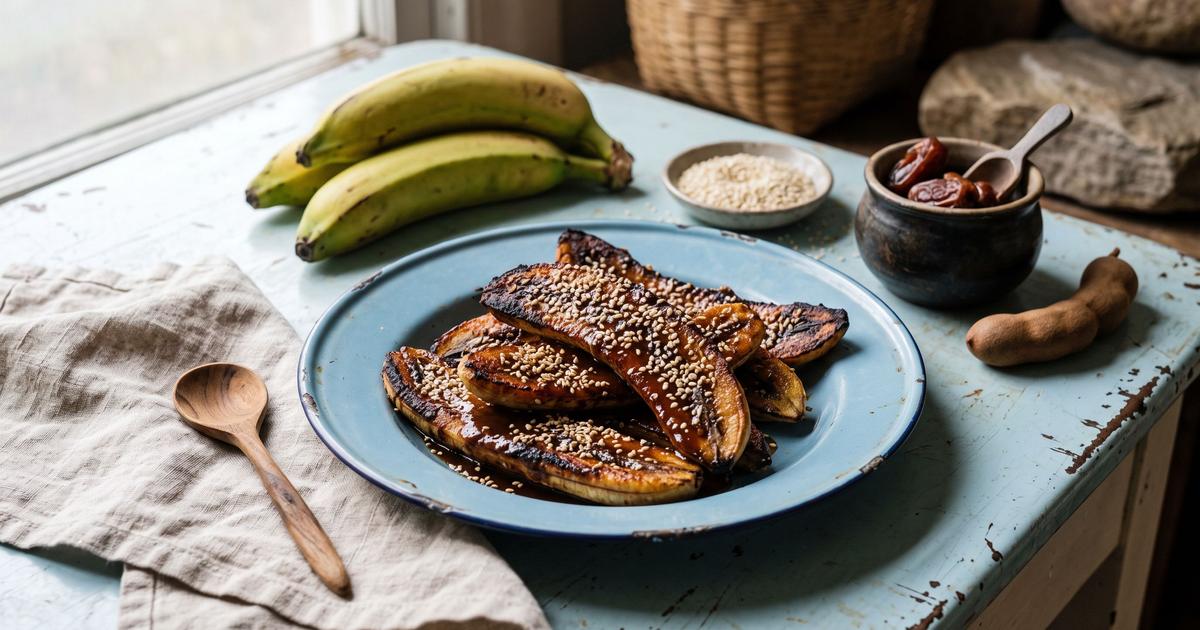
- Discard the pandan, stir in the lime juice, and let the syrup reduce another minute until it clings. The lime cuts the sweetness so the dish tastes of caramelized banana rather than pure sugar. Serve warm or chilled, scattered with toasted sesame.
Nutrition
Estimated per serving: 180 calories, 3 g protein, 5 g fiber, 5 mg sodium. Computed from USDA FoodData Central reference values for the main ingredients. This is an approximation, not a laboratory measurement. How these are computed.
Cost per serving is estimated from US national-average retail prices for cheap staple forms, using BLS dried-bean prices and USDA produce prices. Prices vary by store and season, so treat it as a guide, not a receipt. How this is computed.