Kluai Ping, Thai Grilled Bananas
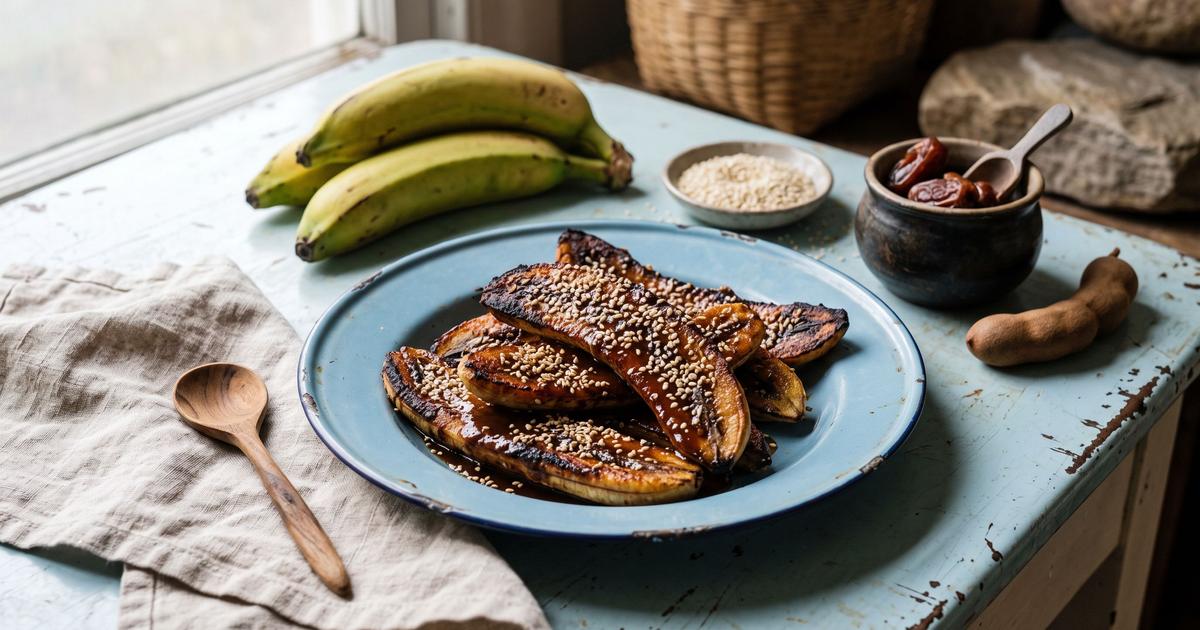
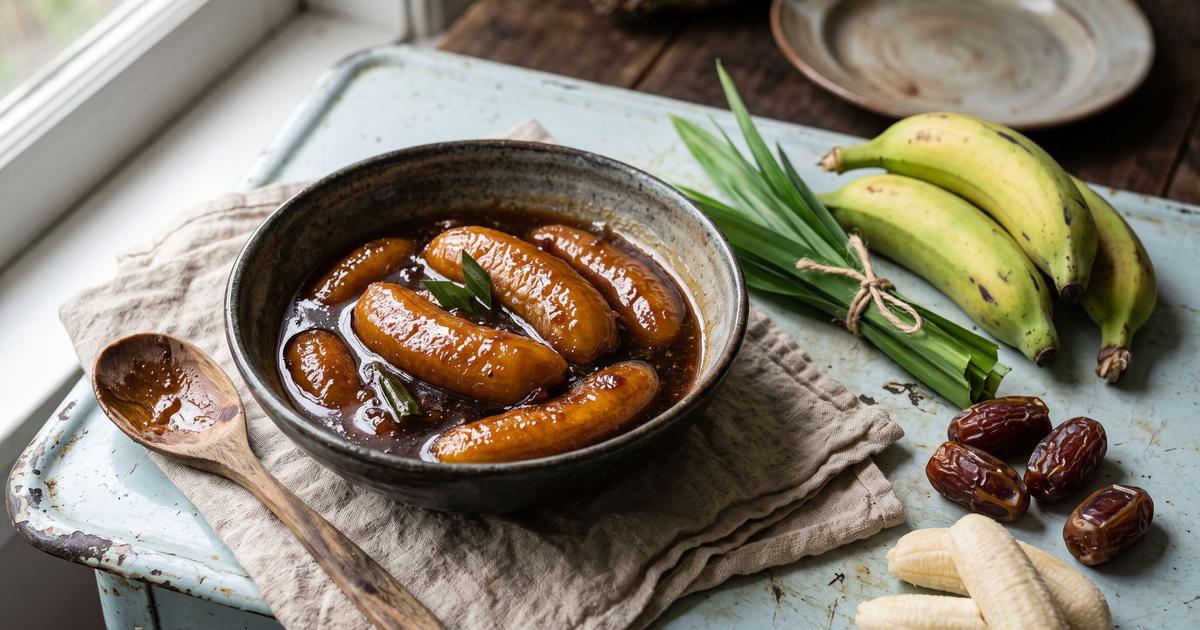
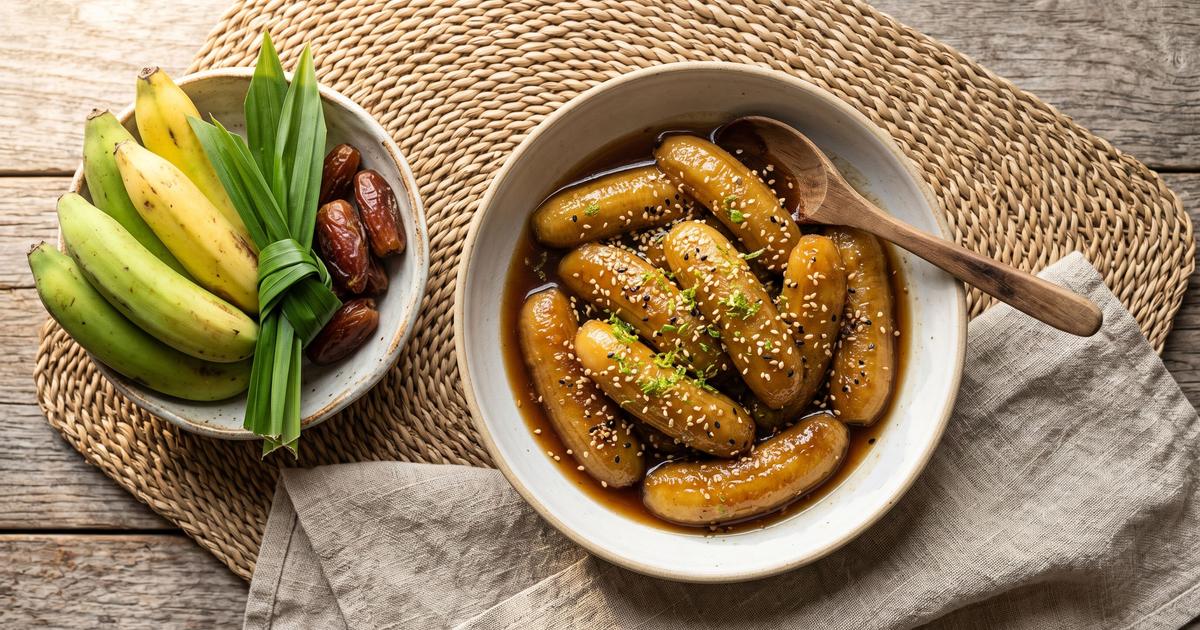
Kluai ping is a Thai street sweet in its simplest form: bananas laid on a grill until the skin blisters and the flesh turns to caramel. The vendor's version is usually finished with a salted palm-sugar syrup, sometimes cut with coconut, and here a quick date-and-tamarind glaze covers the sweet-and-sour job on its own. Reach for bananas that are ripe but still firm, since a soft banana slumps on the heat while a firm one holds long enough to build a proper crust. A short-fat namwa or "apple" banana is the traditional pick if your store carries them.
Ingredients
- 4 Bananas, firm-ripe, peeled
- 4 Medjool dates, pitted and blended with 0.25 cup (60 ml) hot water into a glaze
- 1 tsp Tamarind paste
- 1 Pandan leaf, knotted, optional
- 1 tbsp Sesame seeds, toasted
Method
- Blend the dates with the hot water and the tamarind into a loose glaze. If you have a pandan leaf, drop the knot into the warm glaze for 5 minutes to steep, then fish it out. Pandan gives the grassy vanilla note that reads as classically Thai.
- Press each peeled banana gently under your palm or a plate until it flattens a little without breaking apart. More flat surface means more contact with the pan and more caramel.
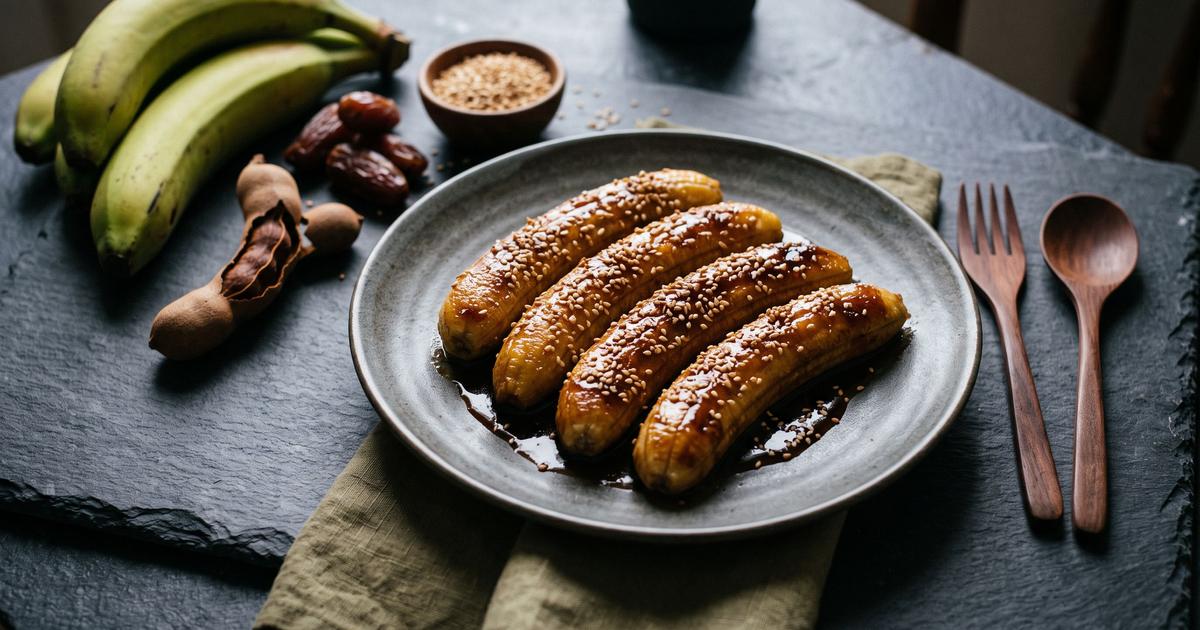
- Heat a dry cast iron or nonstick pan over medium. Lay the bananas in and leave them undisturbed for 3 to 4 minutes per side, until deep brown caramel spots form. The banana's own sugars are doing the browning, so no fat is needed and none belongs here.
- In the last minute, brush the glaze over both sides and let it set against the heat. Add it only at the end, because date sugars scorch fast once they hit a hot pan.
- Dust with the toasted sesame and serve warm. These are best straight off the heat, when the outside is set and the inside has gone soft and jammy.
Nutrition
Estimated per serving: 180 calories, 3 g protein, 4 g fiber, 5 mg sodium. Computed from USDA FoodData Central reference values for the main ingredients. This is an approximation, not a laboratory measurement. How these are computed.
Cost per serving is estimated from US national-average retail prices for cheap staple forms, using BLS dried-bean prices and USDA produce prices. Prices vary by store and season, so treat it as a guide, not a receipt. How this is computed.