Roasted Bananas with Tamarind and Sesame
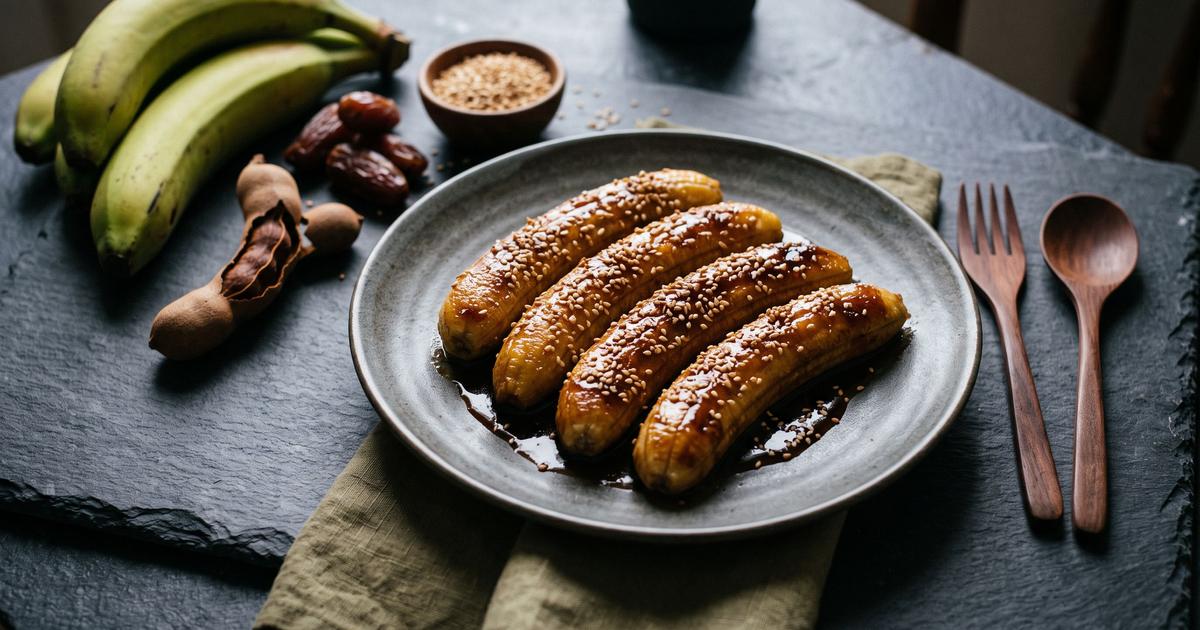
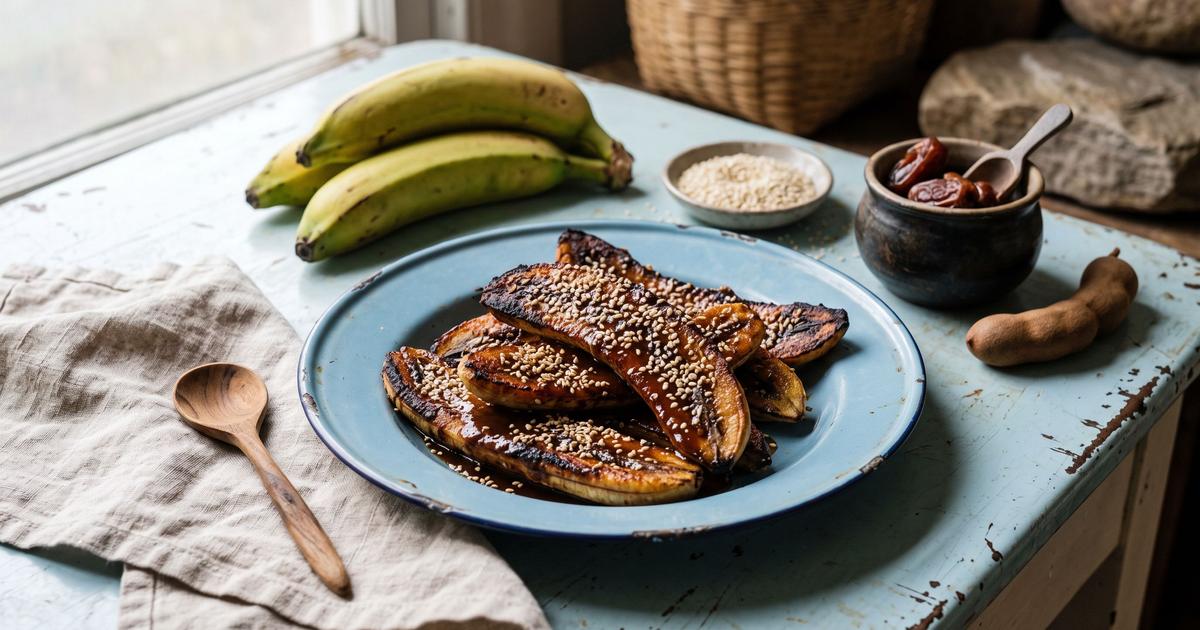
Roasting or grilling ripe bananas and plantains over coals is a common sweet across West Africa, the fruit going soft and jammy as the sugars caramelize. This oven version pairs that with two other West African pantry staples: tamarind, whose sour-fruity pulp turns up in drinks and sweets from the Sahel to the coast, and sesame, known there as benne, a seed that traces its cooking roots back to the continent. The glaze is nothing but dates and tamarind loosened with water and lime, so the sweetness stays tied to whole fruit. Choose bananas that are ripe but still firm, since they need to hold together through the heat before they give up and caramelize.
Ingredients
- 4 wholes Bananas, firm-ripe, halved lengthwise
- 1 tbsp Tamarind paste
- 3 wholes Medjool dates, pitted
- 1/2 tsp cassia cinnamon, ground
- 1 tbsp Lime juice
- 2 tbsp Sesame seeds
Method
- Lay the banana halves cut side up on a lined tray and roast at 425 F (220 C) for 15 to 18 minutes, until slumped and browned at the edges. Firm-ripe bananas hold their shape long enough to caramelize, where soft ones would collapse into mush before they colored.
- While they roast, blend the dates, tamarind, cinnamon, lime juice, and 3 tablespoons (45 ml) water into a loose, pourable syrup. The tamarind brings the sourness and the dates the sweetness, so together they make a glaze that reads like caramel without a grain of sugar.
- Toast the sesame seeds in a dry pan for 2 minutes until golden and fragrant, shaking constantly so they color evenly rather than scorching in spots.
- Spoon the tamarind syrup over the hot bananas so it sinks into the split, caramelized flesh. Glazing them straight from the oven lets the warm fruit drink in the syrup instead of leaving it sitting on top.
- Scatter the sesame over the top and serve warm. The seeds add the toasted crunch and gentle bitterness that keeps the dish from tipping into pure sweetness.
Nutrition
Estimated per serving: 185 calories, 4 g protein, 5 g fiber, 10 mg sodium. Computed from USDA FoodData Central reference values for the main ingredients. This is an approximation, not a laboratory measurement. How these are computed.
Cost per serving is estimated from US national-average retail prices for cheap staple forms, using BLS dried-bean prices and USDA produce prices. Prices vary by store and season, so treat it as a guide, not a receipt. How this is computed.