Ngalakh, Senegalese Millet and Peanut Pudding
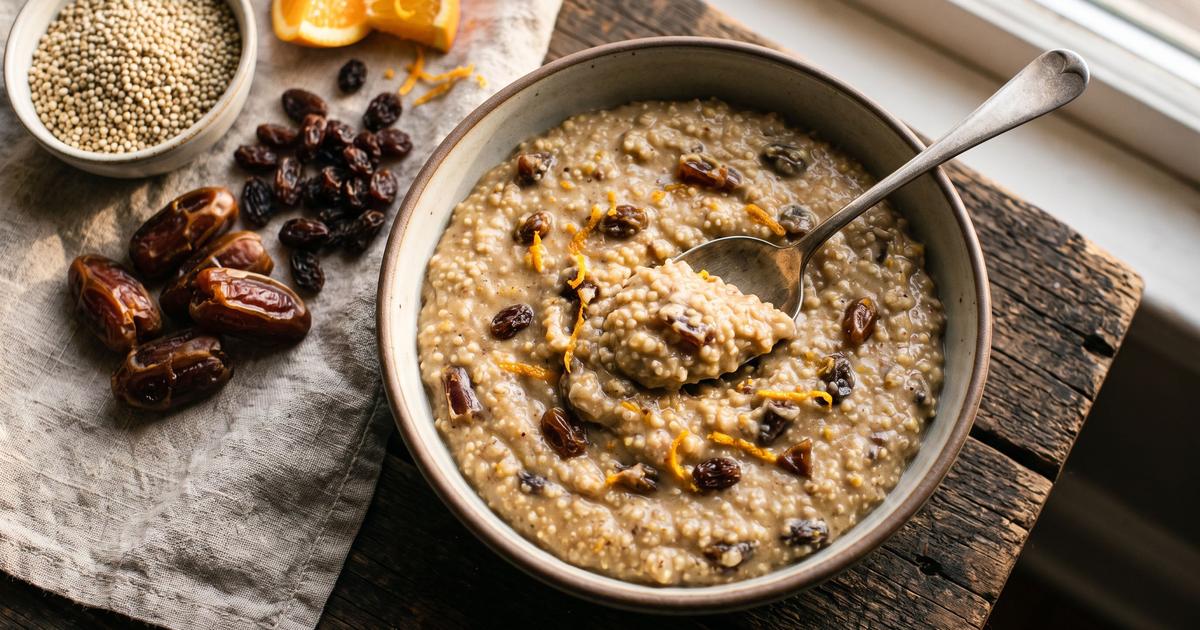
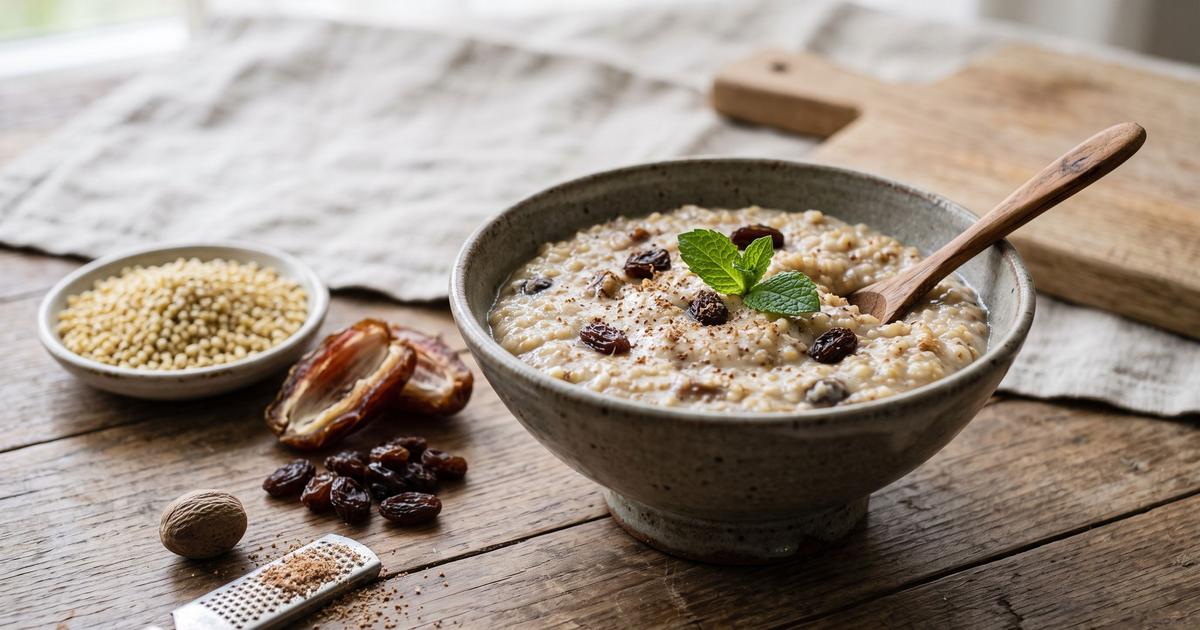
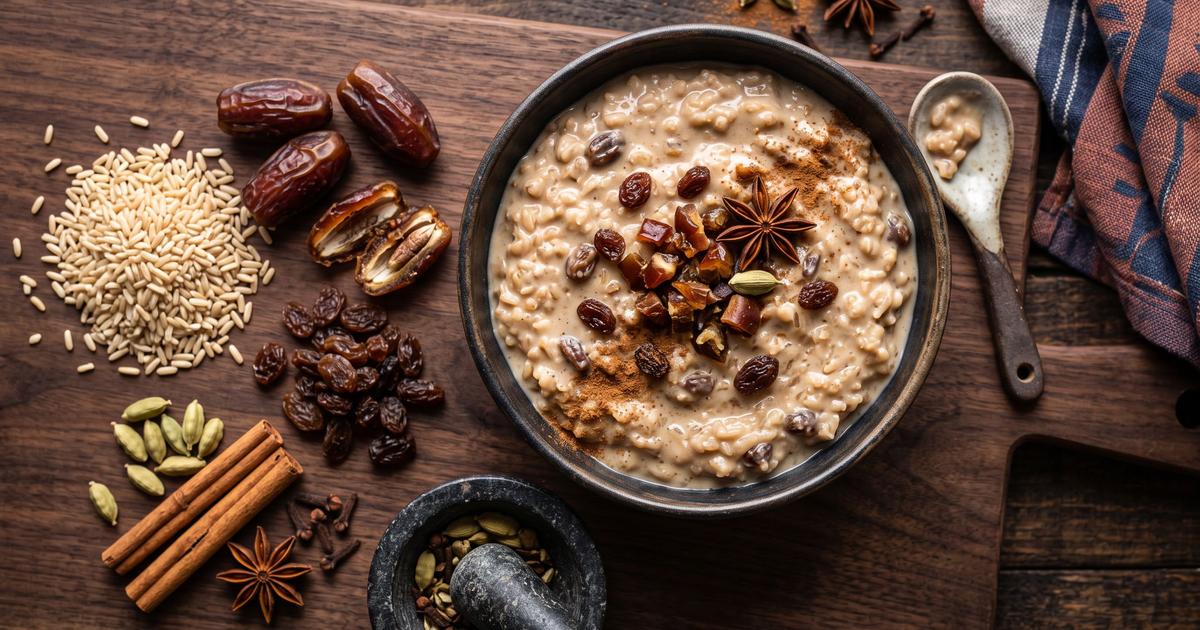
Ngalakh is the sweet millet pudding Senegalese families share on Thursdays and holidays, rich with groundnut paste, dates, and raisins and scented with orange. The traditional version leans on baobab fruit and orange-flower water; here orange zest and juice carry that same floral brightness. Cook the millet well past tender so it turns creamy, then fold in peanut butter while it is hot so it melts in smoothly. It is served cold and thick, so make it ahead and let it chill, which only deepens the flavor.
Ingredients
- 3/4 cup Millet
- 3 tbsp unsweetened peanut butter
- 4 Medjool dates, pitted
- 1/4 cup Raisins
- 1 Orange, zested and juiced
- 1 cup Plain plant yogurt
- 1/2 cup Unsweetened soy milk
Method
- Simmer the millet in two cups (480 ml) of water until very soft and beginning to fall apart, about 20 minutes. You want it cooked past fluffy and into porridge, since the grain is the body of the pudding, not a side of it.
- While it cooks, blend the dates with the soy milk into a smooth paste, and plump the raisins in the warm orange juice. The date paste is the sweetener, and softening the raisins first keeps them from staying hard and chewy in the finished bowl.
- Off the heat, stir the peanut butter into the hot millet until it melts in completely. Adding it while the millet is hot loosens the peanut butter so it coats every grain rather than clumping.
- Fold in the date paste, the raisins with their orange juice, and the orange zest. Let the mix cool to warm, then fold in the plant yogurt. Adding the yogurt off the heat keeps its tang bright and stops it from splitting.
- Chill at least an hour and serve cold. Ngalakh is meant to be eaten cool and thick, and the rest lets the peanut, date, and orange settle into one another.
Nutrition
Estimated per serving: 300 calories, 9 g protein, 6 g fiber, 40 mg sodium. Computed from USDA FoodData Central reference values for the main ingredients. This is an approximation, not a laboratory measurement. How these are computed.
Cost per serving is estimated from US national-average retail prices for cheap staple forms, using BLS dried-bean prices and USDA produce prices. Prices vary by store and season, so treat it as a guide, not a receipt. How this is computed.