Swahili Cardamom Rice Pudding with Dates
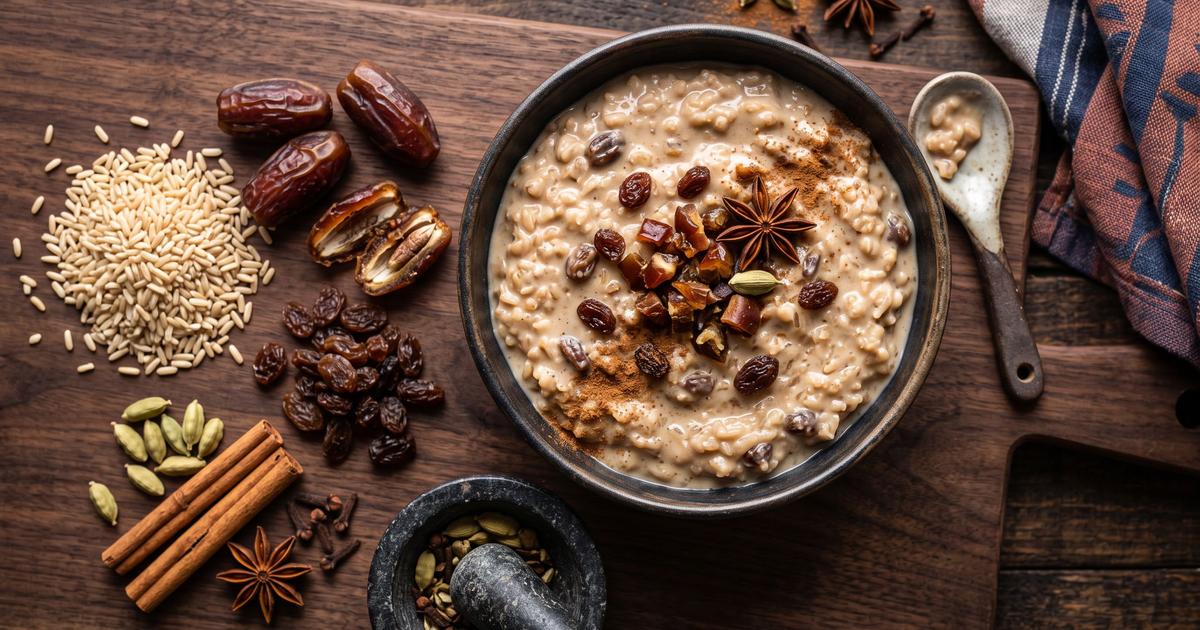
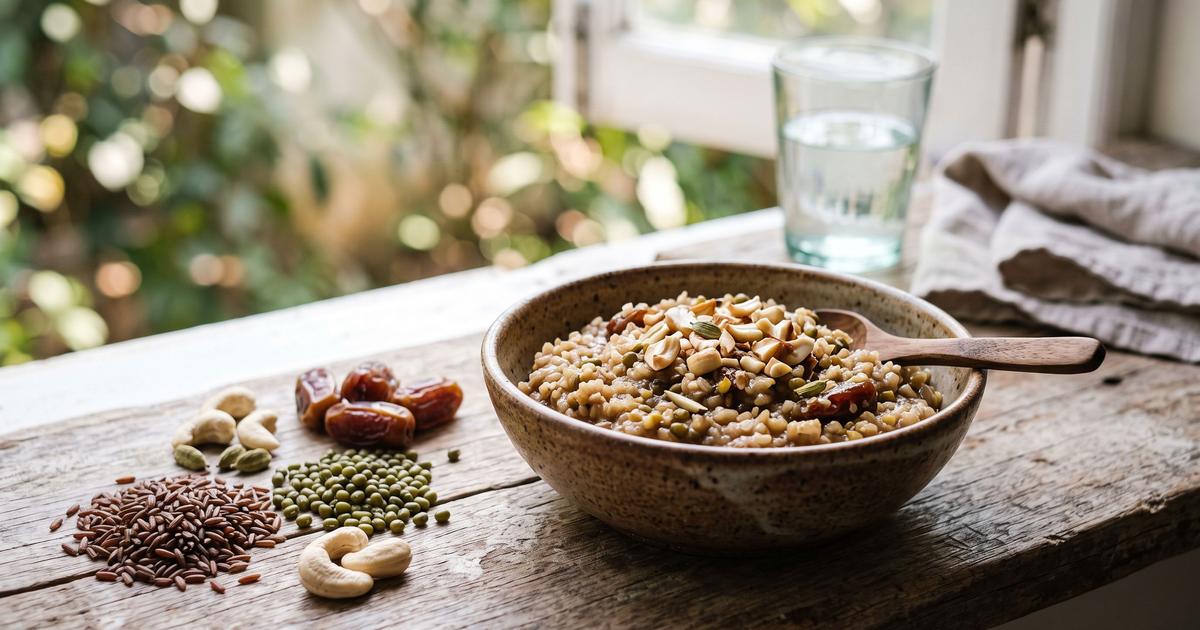
The Swahili coast, from Mombasa down to Zanzibar, cooks with the spices that made it a trading hub: cardamom, cinnamon, clove, and nutmeg turn up in the pilau rice as readily as in the sweets. Rice puddings there are usually built on coconut milk; this one swaps in soy milk, which brings the protein coconut lacks and lets the spices sit forward instead of hiding under coconut fat. Brown short-grain rice keeps the grain intact and adds a chew the polished version never has. Dates and raisins carry all the sweetness, and a last grating of orange zest lifts the whole bowl. It is as good cold from the fridge as it is warm from the pot.
Ingredients
- 3/4 cup short grain brown rice, cooked
- 3 cups Unsweetened soy milk
- 1/2 tsp Green cardamom, seeds ground
- 1/2 tsp cassia cinnamon, ground
- 2 wholes Cloves
- 5 wholes Medjool dates, pitted and chopped
- 3 tbsp Raisins
- 1 tsp Oranges, zest only
Method
- Simmer the cooked rice with the soy milk, cardamom, cinnamon, and whole cloves in a wide pan over low heat for 20 to 25 minutes, stirring often. Starting from cooked short-grain rice means it gives up its starch quickly, thickening the milk into cream without any need for a thickener.
- Stir in the chopped dates and raisins and cook another 5 minutes. Added late, the dates hold their shape and melt at the edges into pockets of caramel rather than dissolving away into the background.
- Fish out the whole cloves before serving. They give a warm perfume over ten minutes but turn harsh and medicinal if you bite one, so they come out once their work is done.
- Off the heat, grate in the orange zest. Zest holds volatile citrus oils that vanish in a hot pan, so stirring it in at the very end keeps that bright top note alive.
- Serve warm, or chill and eat cold; it thickens further as it sits. Made a day ahead it only improves, since the cardamom and clove have time to work all the way through.
Nutrition
Estimated per serving: 235 calories, 7 g protein, 4 g fiber, 120 mg sodium. Computed from USDA FoodData Central reference values for the main ingredients. This is an approximation, not a laboratory measurement. How these are computed.
Cost per serving is estimated from US national-average retail prices for cheap staple forms, using BLS dried-bean prices and USDA produce prices. Prices vary by store and season, so treat it as a guide, not a receipt. How this is computed.