Kashata ya Ufuta, Swahili Sesame and Date Sweet
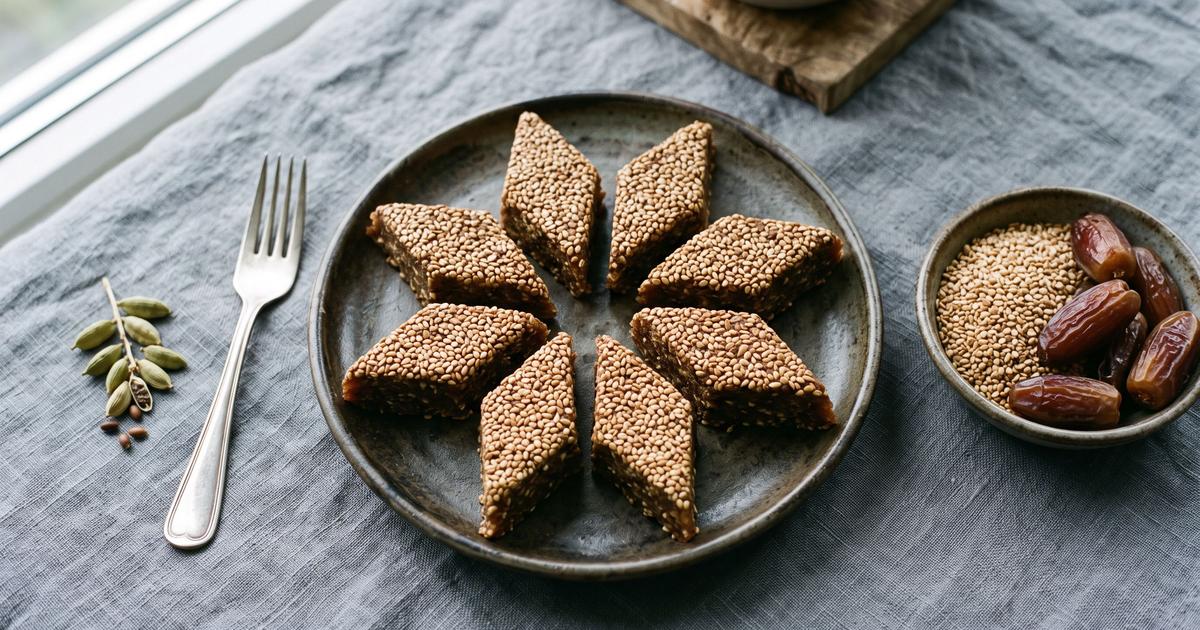
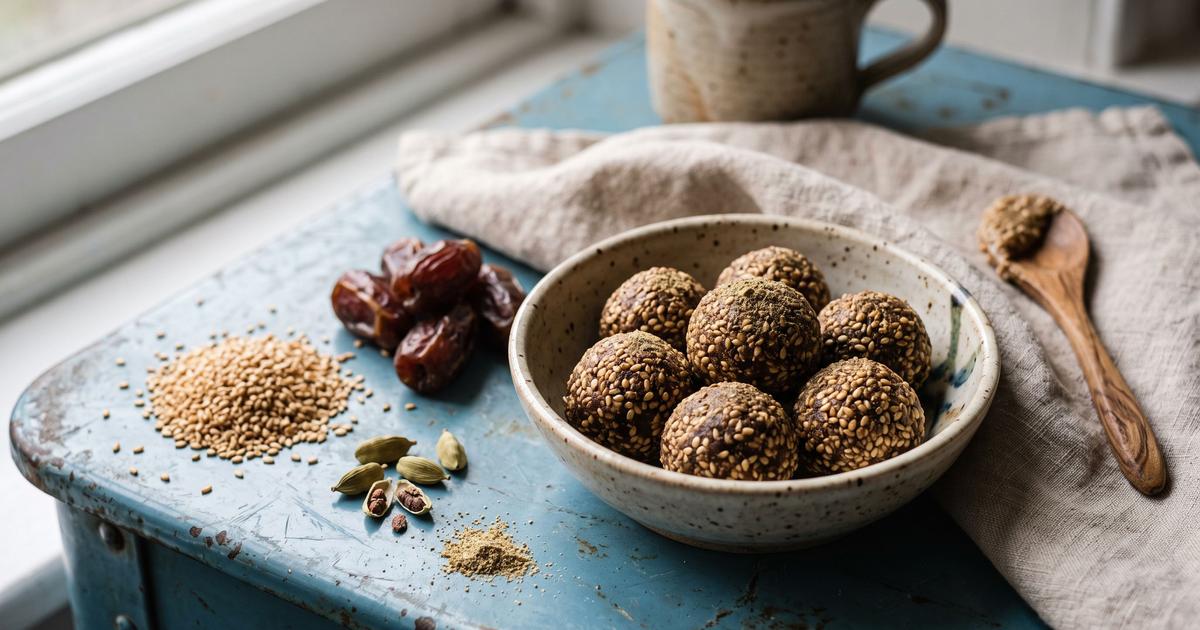
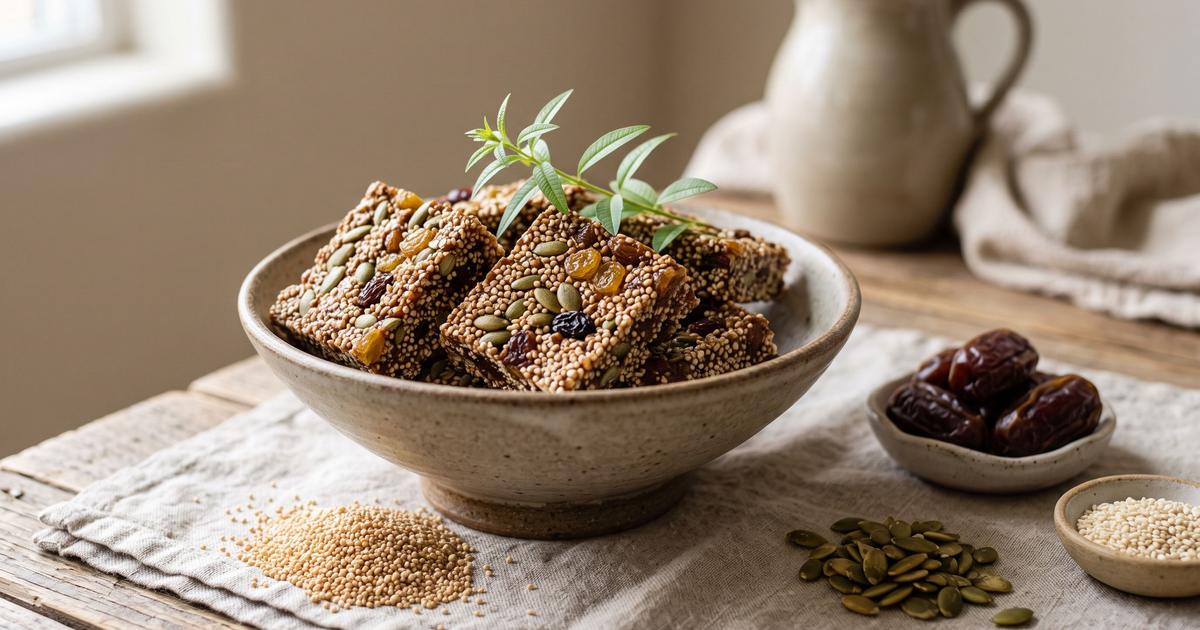
Kashata is the sweet of the Swahili coast, sold in little diamonds from Zanzibar to Mombasa and made from peanuts, coconut, or sesame bound with caramelized sugar and scented with cardamom. This is the sesame version, ufuta, where toasted seeds carry a nutty depth that stands in for the browned sugar. Instead of a boiled syrup, medjool dates do double duty as the sweetener and the binder, so the whole confection is nothing but sesame, dates, and warm spice. Toast the seeds carefully, press the slab hard, and give it time to set in the fridge. Cut small: it is rich, and a couple of diamonds is the point.
Ingredients
- 1 1/2 cups Sesame seeds
- 8 wholes Medjool dates, pitted
- 1/2 tsp Green cardamom, ground
- 1/4 tsp Ceylon cinnamon, ground
Method
- Toast the sesame seeds in a dry pan over medium heat, stirring constantly, until they are golden and smell nutty, 4 to 5 minutes. This toasting is the whole flavor of kashata, giving the deep, almost caramel note that the boiled sugar provides in the original, so take them right to gold but not brown.
- Blend the pitted dates with the cardamom, cinnamon, and 2 to 3 tablespoons (30 to 45 ml) warm water into a thick, sticky paste. The dates are both the sweetener and the glue, so keep the paste stiff enough to hold the seeds together without going runny.
- Stir the warm sesame seeds into the date paste until every seed is coated and the mix pulls into a dense, cohesive mass. Working while the seeds are warm helps them fold in evenly before the paste stiffens.
- Press the mixture very firmly into a small parchment-lined pan or dish, about half an inch (1 cm) thick. Pressing hard is what compacts the seeds so the slab holds together, since there is no sugar syrup to set around them.
- Chill at least 1 hour until firm, then cut into small diamonds the traditional way. Store airtight in the fridge for up to a week; they firm up further as they sit.
Nutrition
Estimated per serving: 140 calories, 4 g protein, 3 g fiber, 5 mg sodium. Computed from USDA FoodData Central reference values for the main ingredients. This is an approximation, not a laboratory measurement. How these are computed.
Cost per serving is estimated from US national-average retail prices for cheap staple forms, using BLS dried-bean prices and USDA produce prices. Prices vary by store and season, so treat it as a guide, not a receipt. How this is computed.