Alegrias, Popped Amaranth and Date Bars
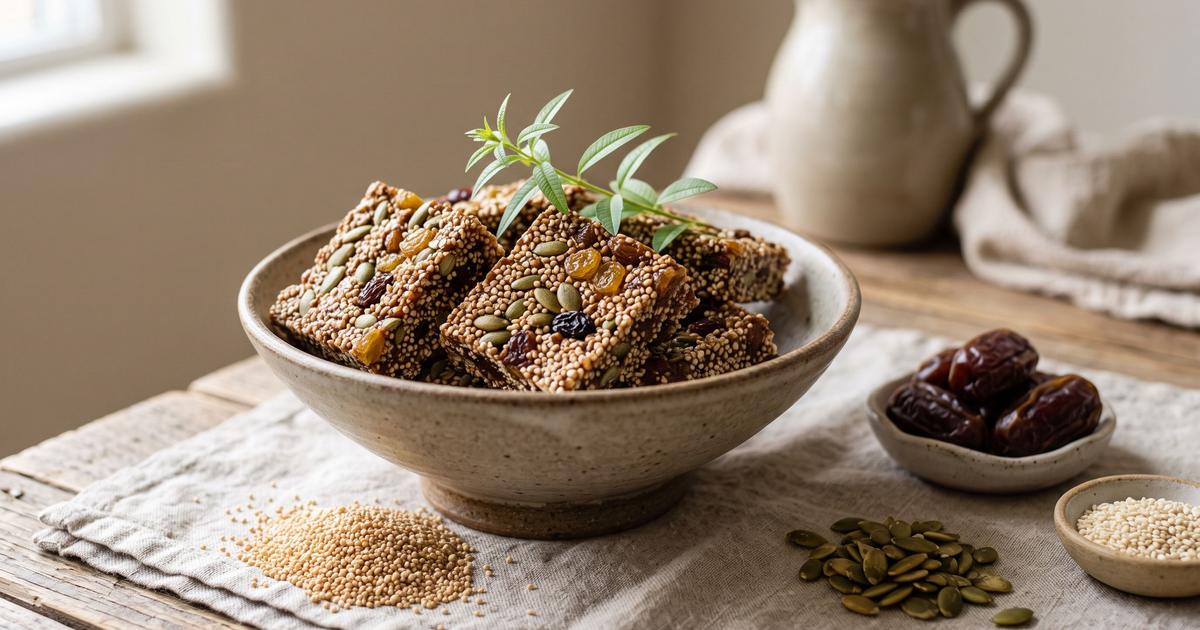
Alegria means joy, and the sweet that carries the name has been made in central Mexico since long before the Spanish arrived, when amaranth was a staple grain and a ritual food. The seeds are toasted until they pop into tiny weightless puffs, then pressed with a sticky syrup into bars sold at markets and street stalls all over the country. The usual binder is piloncillo, unrefined cane sugar, or honey; a thick date paste does the same job, holding the puffs together and sweetening them while keeping the fiber attached. Popping the amaranth is the one skill involved, and it is worth learning the feel of it: a very hot dry pan, a spoonful at a time, and a fast hand. Pepitas, raisins, and sesame are the traditional add-ins.
Ingredients
- 3/4 cup Amaranth, raw, for popping
- 8 wholes Medjool dates, pitted
- 3 tbsp Pumpkin seeds, toasted
- 3 tbsp Raisins
- 1 tbsp Sesame seeds, toasted
- 1/4 tsp cassia cinnamon, ground
Method
- Pop the amaranth: get a deep dry pot very hot, then add just a tablespoon of amaranth at a time and swirl constantly. Within a few seconds the tiny seeds burst into pale puffs, like miniature popcorn. Work in small batches and tip each one into a bowl the moment it stops popping, because amaranth scorches in a blink. This is the technique the whole sweet is built on, and it takes a little practice to feel the right heat.
- Make the date caramel: blend the pitted dates with a quarter cup (60 ml) of hot water into a thick, smooth paste. This is the binder and the only sweetener, standing in for the piloncillo syrup or honey that holds a traditional alegria together, and it brings fiber that a sugar syrup does not.
- Warm the date paste in a wide pan over low heat with the cinnamon until it loosens and turns glossy, about 2 minutes. Keep it low, since date paste catches and burns quickly.
- Take the pan off the heat and quickly fold in the popped amaranth, pumpkin seeds, raisins, and sesame seeds. Work fast and press the mixture together while it is warm and tacky, before the paste stiffens.
- Scrape it onto a sheet of parchment, lay another sheet on top, and press it flat and firm with your hands or a flat pan to about a half-inch (1 cm) thick. Pressing hard is what makes the bars hold together instead of crumbling.
- Let it cool and set fully, about 20 minutes, then peel off the paper and cut into bars or squares. They keep a week in a tin and travel well, which is what makes them a lunchbox and market sweet.
Nutrition
Estimated per serving: 150 calories, 4 g protein, 4 g fiber, 5 mg sodium. Computed from USDA FoodData Central reference values for the main ingredients. This is an approximation, not a laboratory measurement. How these are computed.
Cost per serving is estimated from US national-average retail prices for cheap staple forms, using BLS dried-bean prices and USDA produce prices. Prices vary by store and season, so treat it as a guide, not a receipt. How this is computed.