Sweet Potato Pudding, Coconut-Free
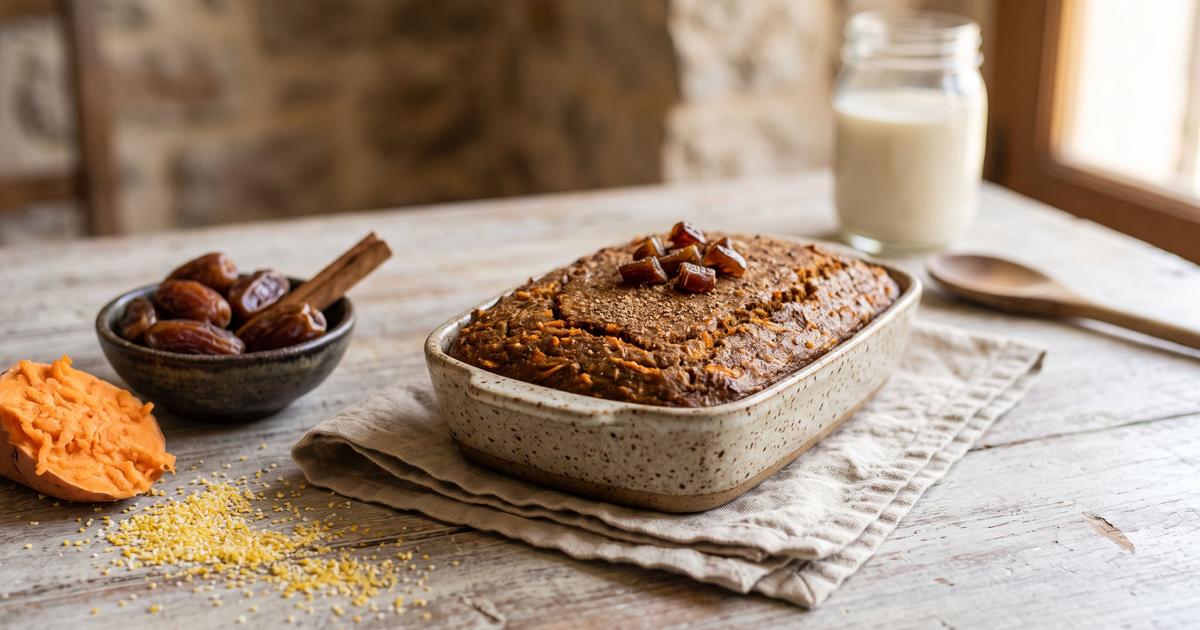
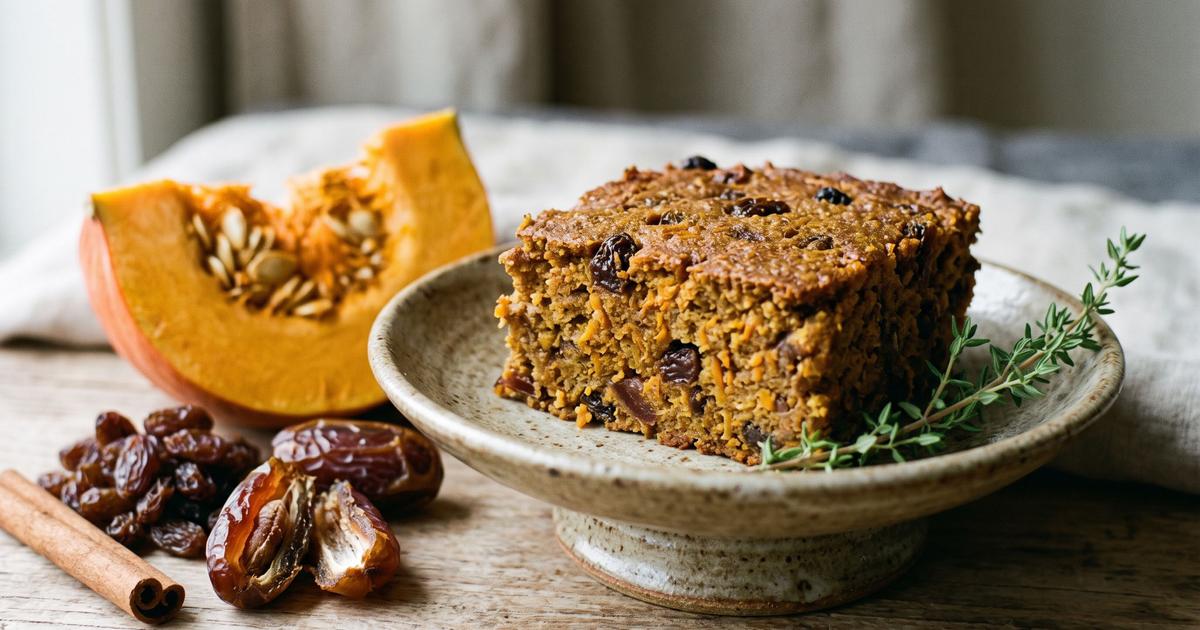
Jamaican sweet potato pudding is a dense, spiced, baked pudding, and the local saying about it, hell a top and hell a bottom, describes the dark crust a long slow bake gives the top and bottom. The traditional version is built on coconut milk and a good deal of sugar. This one keeps the spice and the texture but changes the sweetening: dates blended into the soy milk carry it, and the sweet potato's own caramelizing sugars deepen as it bakes. Grated sweet potato and a little cornmeal set the pudding with no egg and no flour. Cinnamon, nutmeg, allspice, and fresh ginger are the warm backbone. It slices best fully cooled, and a batch keeps for days.
Ingredients
- 2 lb Sweet potatoes, peeled and grated
- 1/2 cup Polenta / coarse cornmeal
- 1 1/2 cups Unsweetened soy milk
- 8 Medjool dates, pitted
- 1/2 cup Raisins
- 1 tsp cassia cinnamon
- 1/2 tsp Nutmeg, grated
- 1/2 tsp Allspice, ground
- 1 tbsp Ginger, grated
Method
- Heat the oven to 350F (175C). Blend the pitted dates with the soy milk until smooth. This date puree is the only sweetener, replacing the sugar and coconut milk a traditional pudding leans on.
- In a large bowl, combine the grated sweet potato, cornmeal, raisins, cinnamon, nutmeg, allspice, and grated ginger. Pour in the date puree and mix well. The cornmeal and the sweet potato's own starch are what set the pudding, so no egg and no flour are needed.
- Scrape into a parchment-lined 8-inch (20 cm) baking dish and smooth the top.
- Bake for 60 to 75 minutes, until the top is dark and firm and a knife comes out clean. Jamaican cooks call the crust at the top and bottom the sign of a pudding baked long enough; the slow heat caramelizes the sweet potato's sugars into that deep flavor.
- Cool completely before slicing. It sets as it cools, going from soft to sliceable, and tastes even better the next day.
Nutrition
Estimated per serving: 200 calories, 4 g protein, 5 g fiber, 45 mg sodium. Computed from USDA FoodData Central reference values for the main ingredients. This is an approximation, not a laboratory measurement. How these are computed.
Cost per serving is estimated from US national-average retail prices for cheap staple forms, using BLS dried-bean prices and USDA produce prices. Prices vary by store and season, so treat it as a guide, not a receipt. How this is computed.