Jamaican Hominy Corn Porridge
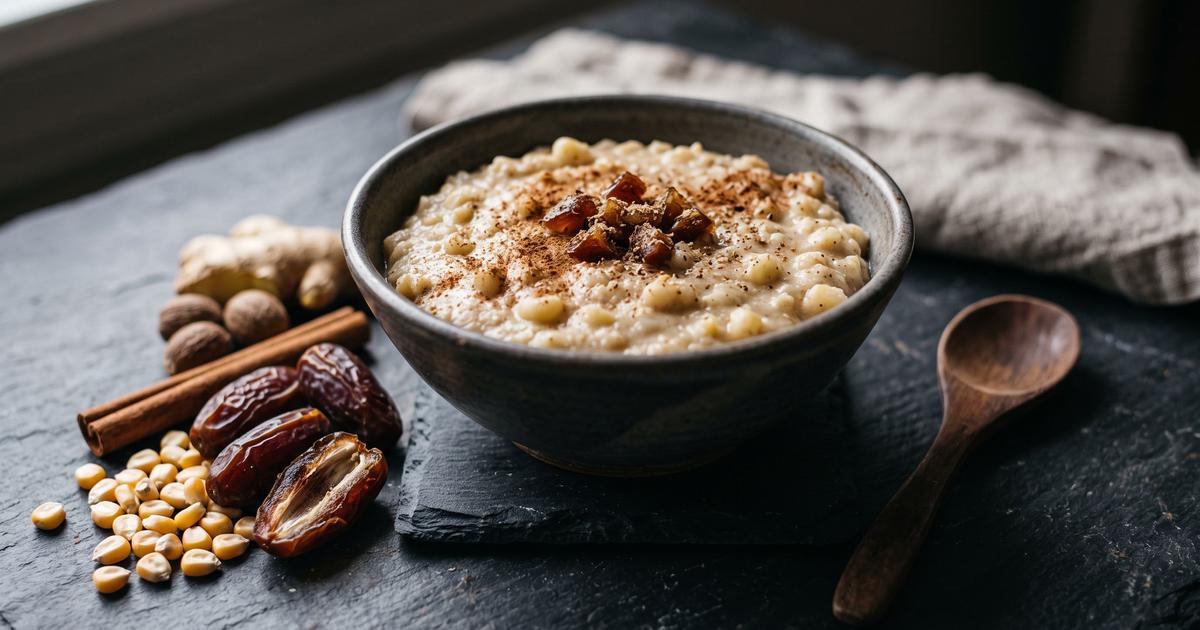
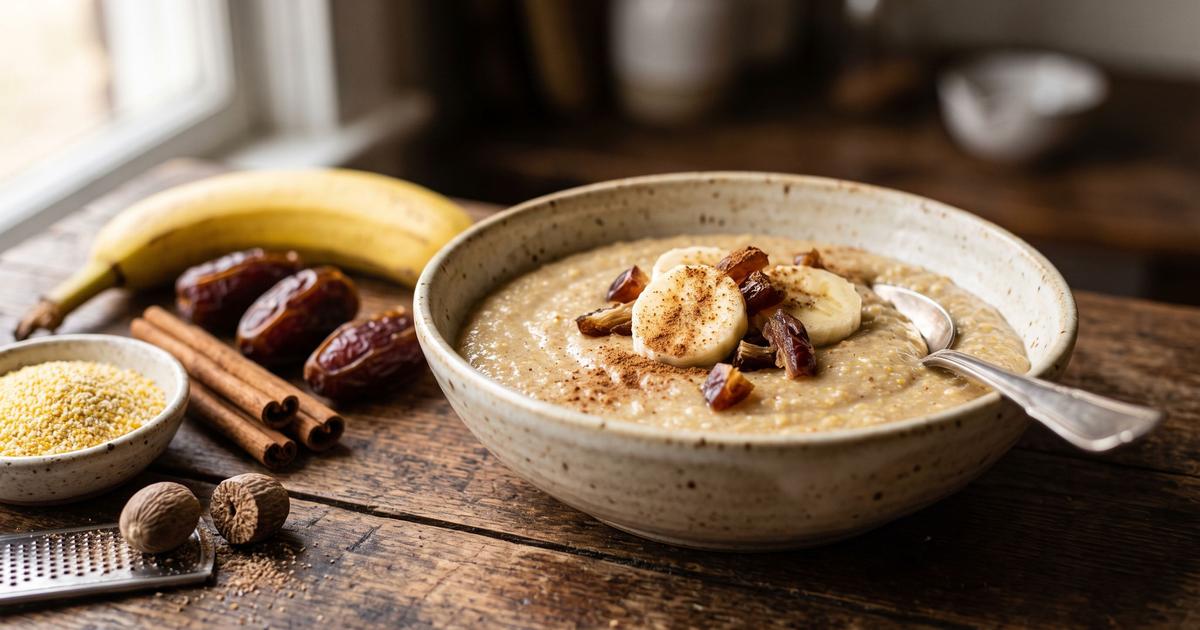
Hominy corn porridge is a Jamaican breakfast staple, a pot of whole nixtamalized corn simmered slow until it turns soft and creamy. It is close kin to the island's cornmeal porridge but built on whole hominy, so it has more chew and body. The traditional bowl is rich with coconut milk, condensed milk, and sugar; this one leaves all three behind and still comes out warm and full. Soy milk gives it creaminess and a little protein, blended dates do the sweetening, and cinnamon, nutmeg, and ginger carry the familiar warm spice. Blending half the hominy is the trick to thickening it without flour, using the corn's own starch. It is filling, cheap, and easy to make ahead: it thickens overnight and loosens again with a splash of milk when you reheat it.
Ingredients
- 3 cups Hominy, cooked, no-salt-added and rinsed, or cooked from dried
- 2 cups Unsweetened soy milk
- 4 Medjool dates, pitted
- 1 tsp cassia cinnamon, ground
- 1/4 tsp Nutmeg, grated
- 1 tsp Ginger, grated
- 1 tbsp Cornstarch, slurried in 2 tbsp water
Method
- Blend half the hominy with the soy milk until fairly smooth. This thickens the porridge with the corn itself, doing the job that a flour-and-water cut does in the Jamaican original.
- Pour the blended base into a pot with the whole hominy, cinnamon, nutmeg, and ginger and bring to a gentle simmer, stirring often. A starchy corn porridge catches and scorches the moment you stop moving it.
- Blend the dates with a splash of water and stir them in. They sweeten the pot without the refined sugar and condensed milk the traditional version leans on.
- Simmer 8 to 10 minutes until creamy. For a thicker spoon, stir in the cornstarch slurry and cook 2 minutes more until it coats the back of a spoon.
- Serve hot with an extra grate of nutmeg on top.
Nutrition
Estimated per serving: 220 calories, 7 g protein, 6 g fiber, 55 mg sodium. Computed from USDA FoodData Central reference values for the main ingredients. This is an approximation, not a laboratory measurement. How these are computed.
Cost per serving is estimated from US national-average retail prices for cheap staple forms, using BLS dried-bean prices and USDA produce prices. Prices vary by store and season, so treat it as a guide, not a receipt. How this is computed.