Caribbean Cornmeal Porridge
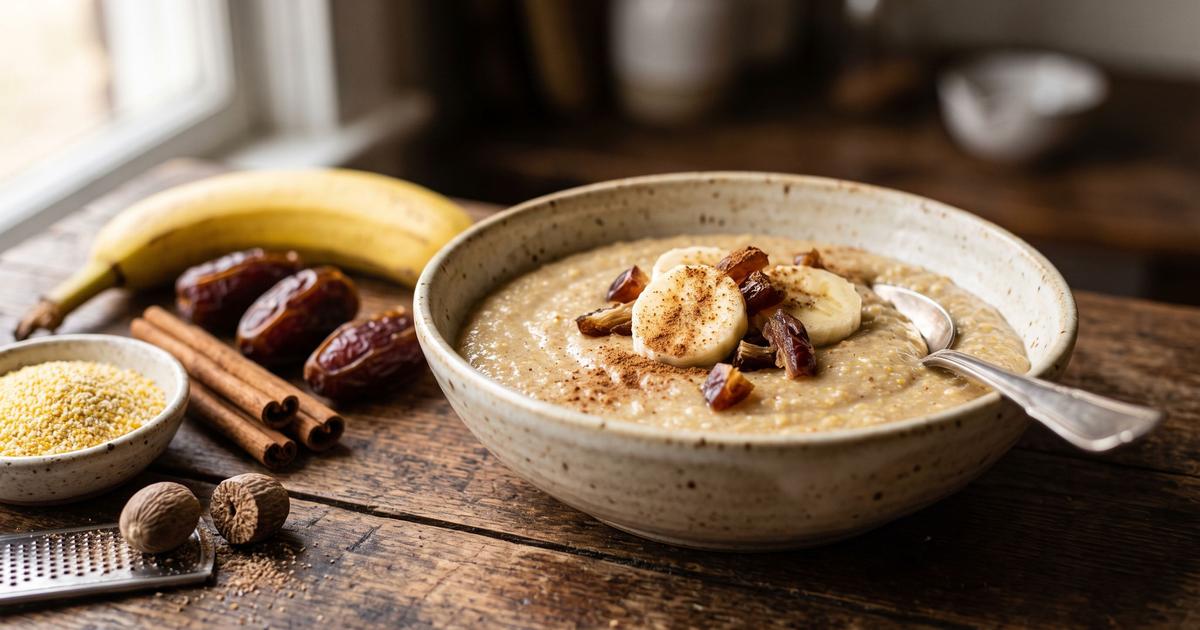
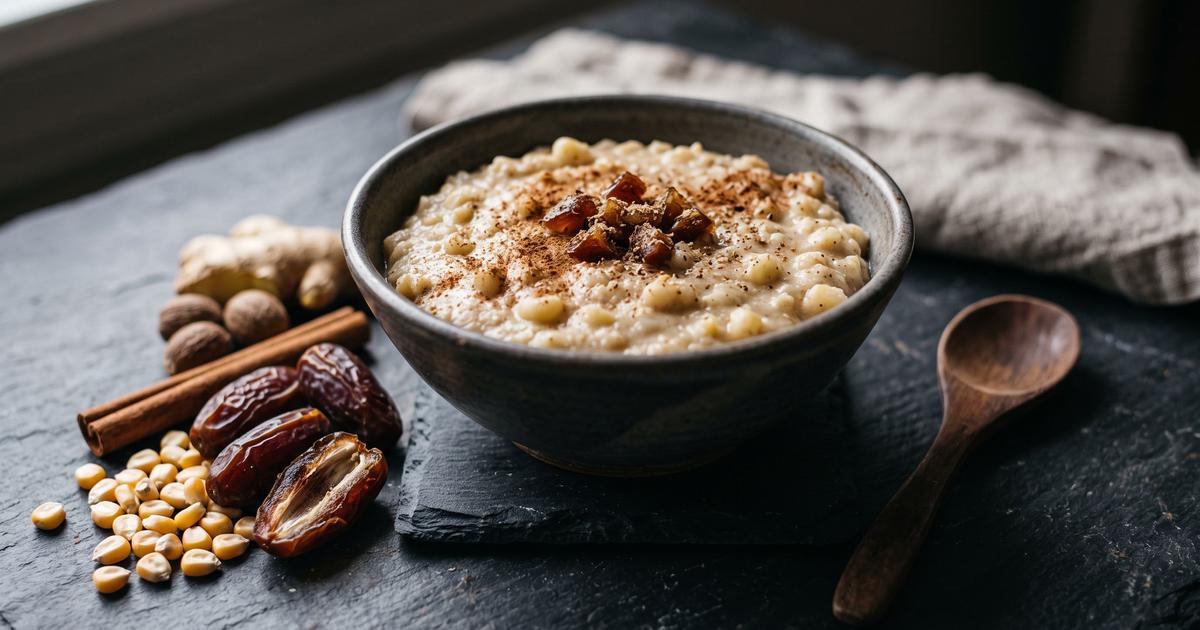
Cornmeal porridge is a morning staple across the Caribbean, a thick, spiced bowl usually built on sweetened condensed milk and a good deal of sugar. Neither is necessary. Blended dates carry the sweetness with their fiber intact, a mashed ripe banana adds more, and unsweetened soy milk gives the creaminess. The one technique that makes or breaks it is how you add the cornmeal: whisk it into cold water first, never hot, or it clumps the moment it hits the pan. Warm spices, cinnamon and freshly grated nutmeg, are traditional and do the aromatic work. It reheats well with a splash of milk, so it is easy to make ahead for busy mornings.
Ingredients
- 3/4 cup Polenta / coarse cornmeal, medium-grind cornmeal
- 1 1/2 cups Unsweetened soy milk
- 5 Deglet noor dates, pitted
- 1 Banana, mashed
- 1/2 tsp cassia cinnamon, ground
- 1/4 tsp Nutmeg, freshly grated
Method
- Blend the pitted dates with 0.5 cup (120 ml) water into a smooth paste. This is the sweetener that replaces the sugar and condensed milk a traditional pot leans on, and it brings fiber along with the sweetness.
- Off the heat, whisk the dry cornmeal into 2.5 cups (590 ml) cold water in a saucepan until there are no lumps. Starting cold is the key step: dry cornmeal shaken into hot liquid seizes instantly into lumps you cannot whisk out.
- Set the pan over medium heat and bring it to a gentle simmer, whisking constantly, for 8 to 10 minutes, until the porridge thickens and the raw corn taste cooks off.
- Stir in the soy milk, mashed banana, date paste, cinnamon, and nutmeg. Simmer 3 to 4 minutes more, stirring, until thick and glossy.
- Loosen with a splash more soy milk if it sets too firm as it cools. Serve warm.
Nutrition
Estimated per serving: 210 calories, 7 g protein, 4 g fiber, 55 mg sodium. Computed from USDA FoodData Central reference values for the main ingredients. This is an approximation, not a laboratory measurement. How these are computed.
Cost per serving is estimated from US national-average retail prices for cheap staple forms, using BLS dried-bean prices and USDA produce prices. Prices vary by store and season, so treat it as a guide, not a receipt. How this is computed.