Tao Suan, Thai Split Mung Beans in Pandan Syrup
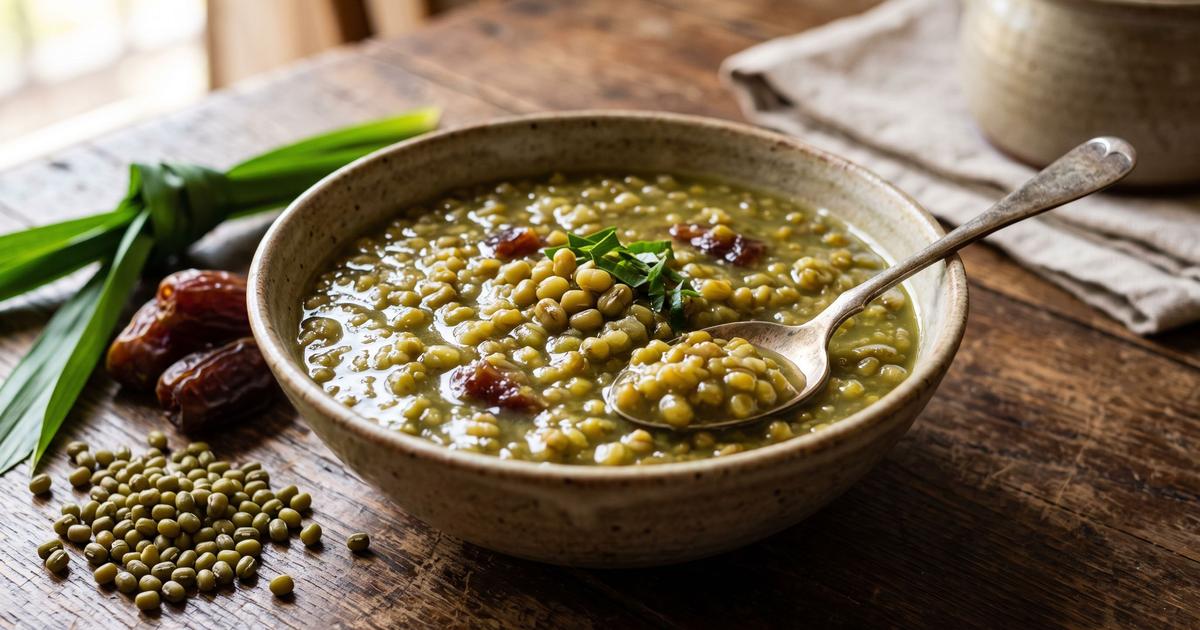
Tao suan is a Bangkok street dessert, a bowl of tender split mung beans suspended in a thin, glossy syrup scented with pandan, usually eaten warm for breakfast or a late snack. It is naturally free of coconut in its base, which sets it apart from most Thai sweets, and it asks for almost nothing: beans, water, a thickener, and something sweet. Here that sweetness comes from dates blended into a paste, which dissolves into the syrup and leaves the mung beans to be the quiet, nutty center of the bowl.
Ingredients
- 1 cup Mung beans, soaked overnight, drained
- 2 Pandan leafs, each tied into a knot
- 5 Medjool dates, pitted, blended smooth with 1 cup (240 ml) water
- 3 tbsp Cornstarch, whisked with 0.25 cup (60 ml) cold water
Method
- Steam the soaked mung beans over simmering water for about 20 minutes, until a bean crushes easily but the beans still hold their shape. Tao suan is a dessert you eat by the spoonful of whole beans, so stop well before they collapse into porridge.
- In a wide pot, bring 4 cups (1 L) water and the knotted pandan to a gentle simmer for 5 minutes. Bruising and knotting the pandan is what releases its grassy, vanilla-like scent, the aroma that defines the syrup.
- Stir in the blended date paste. The dates are the only sweetener, standing in for the palm sugar a Thai cook would melt in here, so taste and add another blended date if you want it sweeter.
- Add the steamed mung beans and warm them through. Then lower the heat, pour in the cornstarch slurry in a thin stream, and stir constantly. Off a hard boil the starch turns the syrup clear and glossy rather than cloudy, and that light, coating thickness is the whole texture of the dish.
- Fish out the pandan knots and ladle into bowls. Serve warm. It thickens further as it cools, so loosen a made-ahead batch with a splash of hot water when you reheat it.
Nutrition
Estimated per serving: 210 calories, 9 g protein, 7 g fiber, 10 mg sodium. Computed from USDA FoodData Central reference values for the main ingredients. This is an approximation, not a laboratory measurement. How these are computed.
Cost per serving is estimated from US national-average retail prices for cheap staple forms, using BLS dried-bean prices and USDA produce prices. Prices vary by store and season, so treat it as a guide, not a receipt. How this is computed.