Kluai Chueam, Thai Candied Bananas
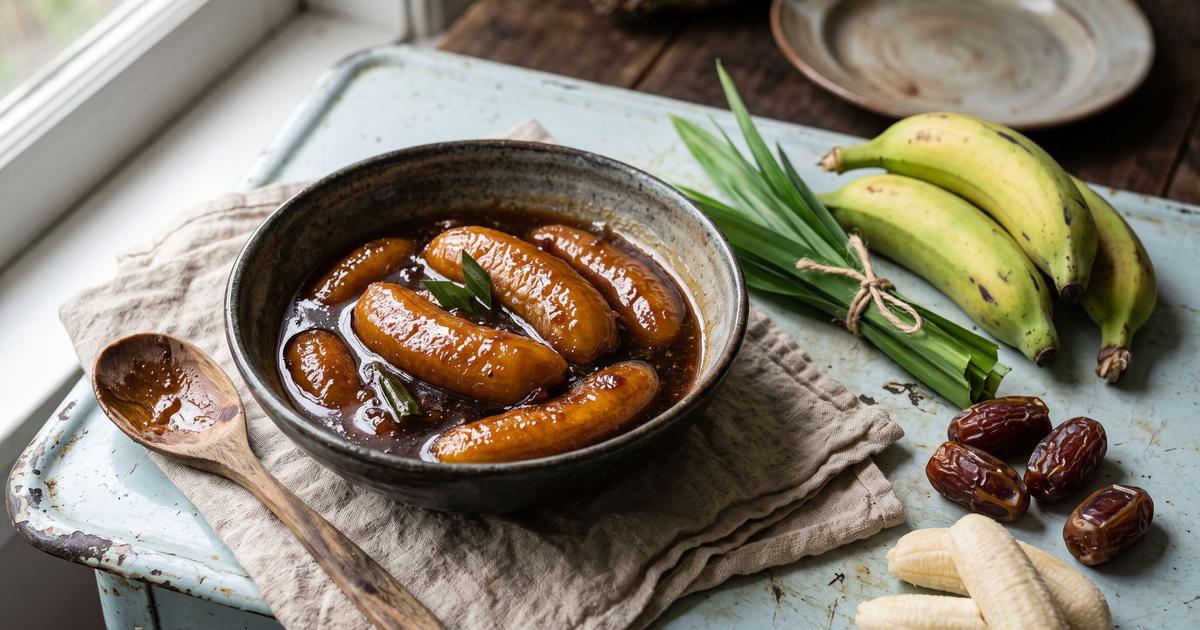
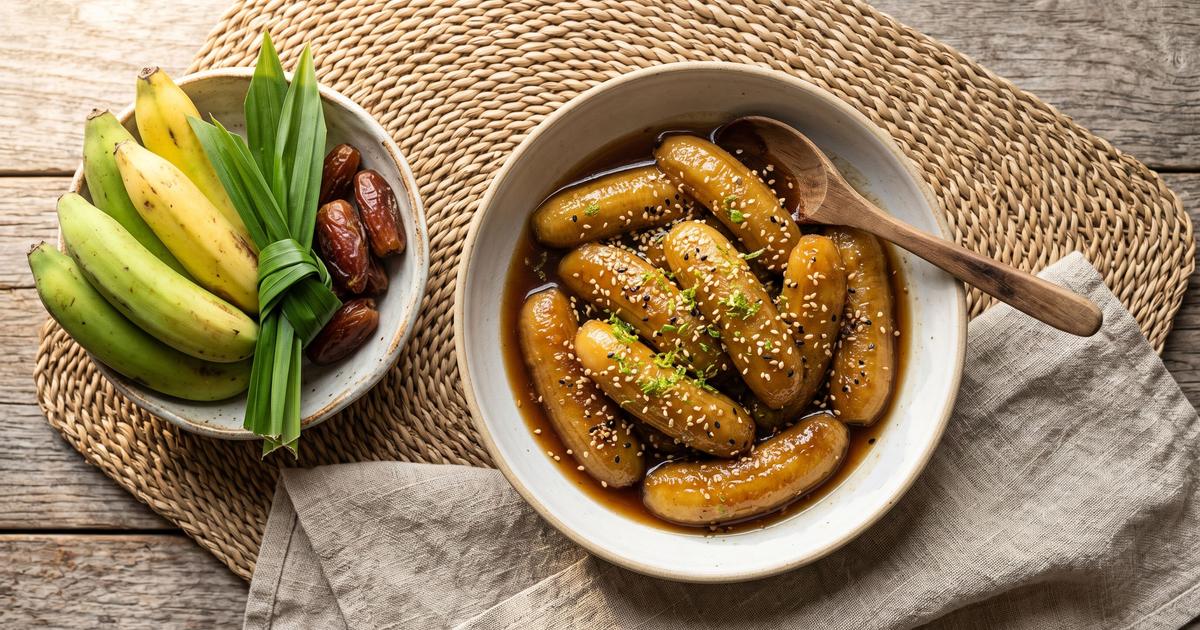
Kluai chueam is the Thai way with slightly underripe bananas: simmered slowly in a sweet syrup until they go deep gold and see-through, glazed rather than mushy. The traditional syrup is palm sugar, sometimes with a pinch of salt and a knot of pandan; here blended Medjool dates do that job, bringing sweetness with fiber instead of refined sugar and no coconut anywhere. Firm bananas are essential, since ripe ones collapse before they can candy. The pandan leaf is the signature aroma, worth seeking frozen if you cannot find it fresh, though a strip of lime zest is a fair stand-in. A little lime juice at the end keeps the whole thing from tasting one-note. Eat it warm as is, or chill it and spoon it over a bowl of oats.
Ingredients
- 4 Bananas, firm and slightly underripe, halved lengthwise
- 6 Medjool dates, pitted
- 1 Pandan leaf, rinsed and knotted
- 1 tbsp Lime juice
Method
- Blend the dates with 1.5 cups (355 ml) hot water until completely smooth. This is the syrup: date sugar comes with its fiber attached, and blended into water it thickens and clings the way a palm-sugar syrup would.
- Pour the date syrup into a wide pan, add the knotted pandan leaf, and bring to a bare simmer. Bruising and knotting the leaf lets it release its grassy, vanilla-like scent into the syrup, then lifts out cleanly at the end.
- Lay the banana halves in a single layer and simmer very gently, 15 to 18 minutes, spooning syrup over them as they cook. Keep the heat low; a hard boil breaks the fruit apart, while a slow simmer is what turns it glossy and translucent and lets the syrup soak in.
- Stir the lime juice into the syrup at the end and let the bananas cool in the pan. The acid keeps the sweetness from turning flat and stops the cut fruit from browning. Serve warm or chilled, with the syrup spooned over.
Nutrition
Estimated per serving: 150 calories, 2 g protein, 4 g fiber, 5 mg sodium. Computed from USDA FoodData Central reference values for the main ingredients. This is an approximation, not a laboratory measurement. How these are computed.
Cost per serving is estimated from US national-average retail prices for cheap staple forms, using BLS dried-bean prices and USDA produce prices. Prices vary by store and season, so treat it as a guide, not a receipt. How this is computed.