Tomato Rasam
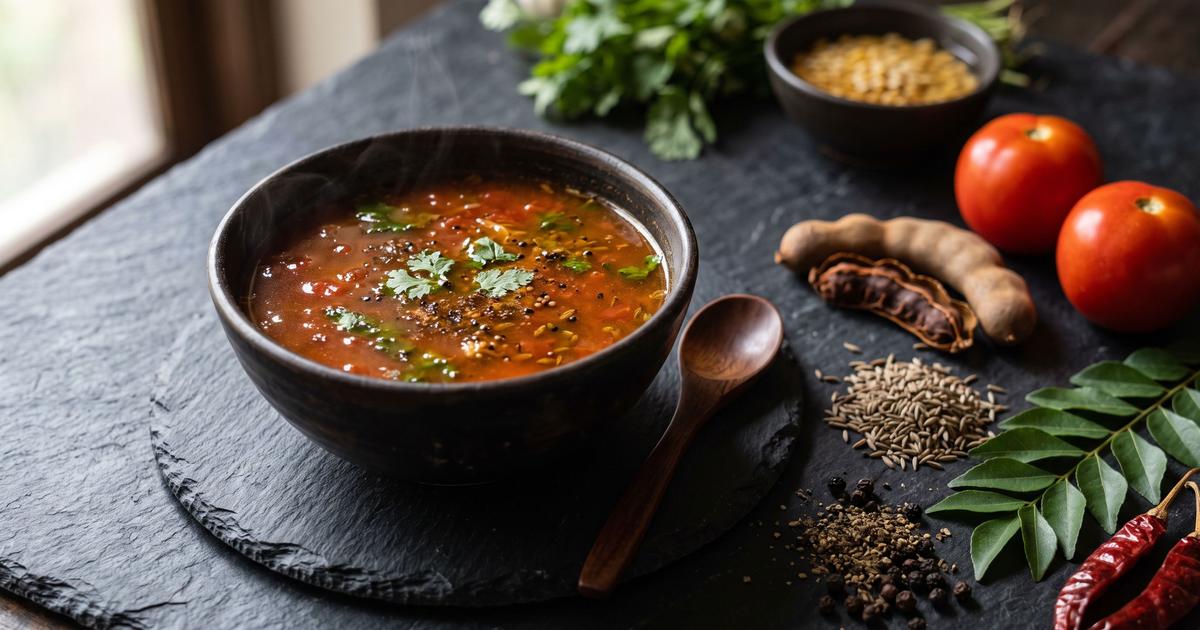
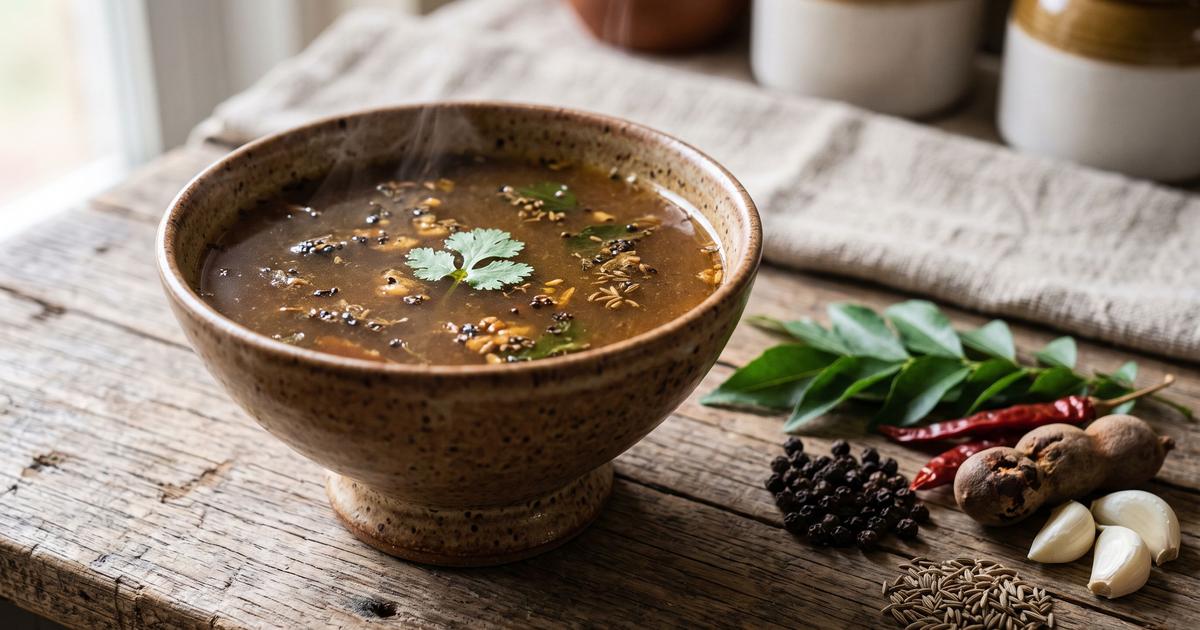
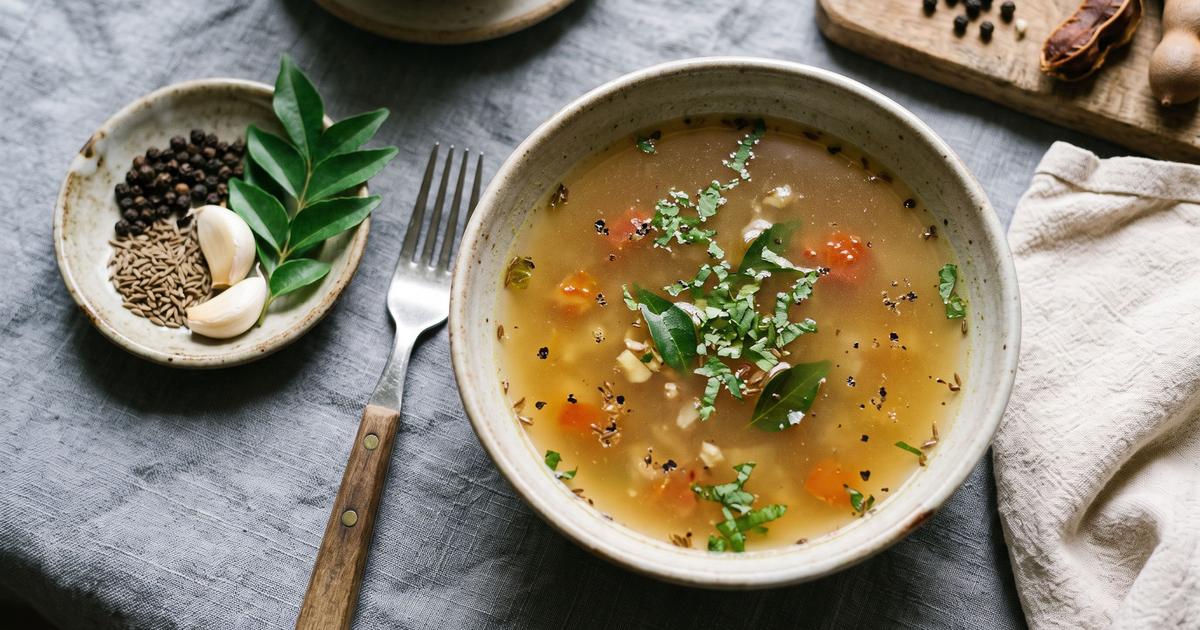
Rasam is broth reduced to its essentials: sour, peppery, aromatic, and thin enough to drink. The sourness comes from tamarind and tomato, the heat from black pepper ground fresh, and the backbone from a coarse toasted powder you make in a minute. A single spoonful of toor dal, cooked to mush, keeps it from being merely spiced water. Cook it gently and never let it boil hard, and the tamarind and pepper will do everything salt would.
Ingredients
- 1/4 cup Toor dal
- 3 Fresh tomatoes, chopped
- 1 tsp Tamarind paste
- 1 tsp Black peppercorns
- 1 1/2 tsp Cumin seed
- 1 tsp Coriander seed
- 3 cloves Garlic, crushed
- 1/4 tsp Turmeric
- 1/2 tsp Brown mustard seed
- 1 Byadgi chile, broken in half
- 12 Curry leaves
- 1 pinch Asafoetida
- 3 tbsp Cilantro, chopped
Method
- Rinse the toor dal and simmer it in 1.5 cups (355 ml) water until completely soft and falling apart, about 25 minutes, then mash it smooth in its water. This spoonful of dal is what gives a thin rasam its faint body.
- Make the rasam powder: toast the black pepper, 1 teaspoon of the cumin, and the coriander seeds in a dry pan until fragrant, about 1 minute, then grind them coarse.
- In a pot, combine the chopped tomatoes, crushed garlic, turmeric, tamarind, the ground rasam powder, and 3 cups (710 ml) water. Bring to a gentle simmer and cook 8 minutes, pressing the tomatoes against the side of the pot as they soften.
- Stir in the mashed dal and warm it through. Keep it at a bare simmer from here. Rasam is never boiled hard, which drives off the aroma you just built.
- Make the tempering: toast the mustard seeds and the remaining 0.5 teaspoon cumin in a dry pan until the mustard pops, add the broken chile, curry leaves, and asafoetida with 1 tablespoon (15 ml) water, and swirl until the leaves crackle.
- Pour the tempering into the rasam, stir in the cilantro, and turn off the heat. Tamarind, pepper, and tomato give it a sour, hot edge that needs no salt. Drink it from a cup or spoon it over intact brown rice.
Nutrition
Estimated per serving: 90 calories, 4 g protein, 3 g fiber, 45 mg sodium. Computed from USDA FoodData Central reference values for the main ingredients. This is an approximation, not a laboratory measurement. How these are computed.
Cost per serving is estimated from US national-average retail prices for cheap staple forms, using BLS dried-bean prices and USDA produce prices. Prices vary by store and season, so treat it as a guide, not a receipt. How this is computed.