Mulligatawny
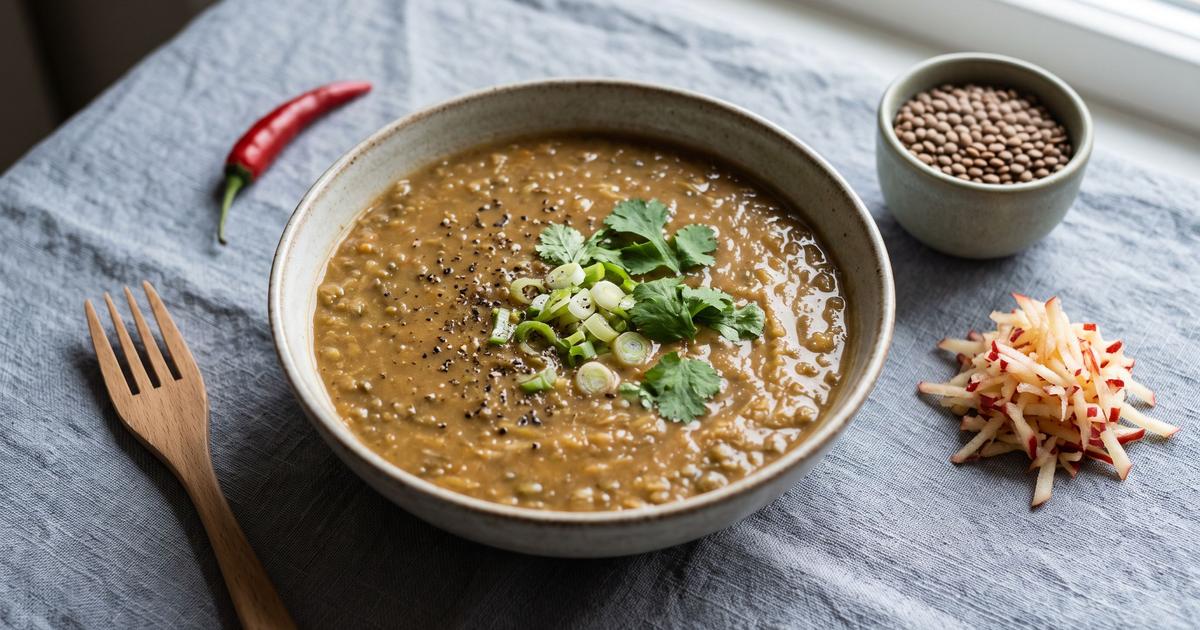
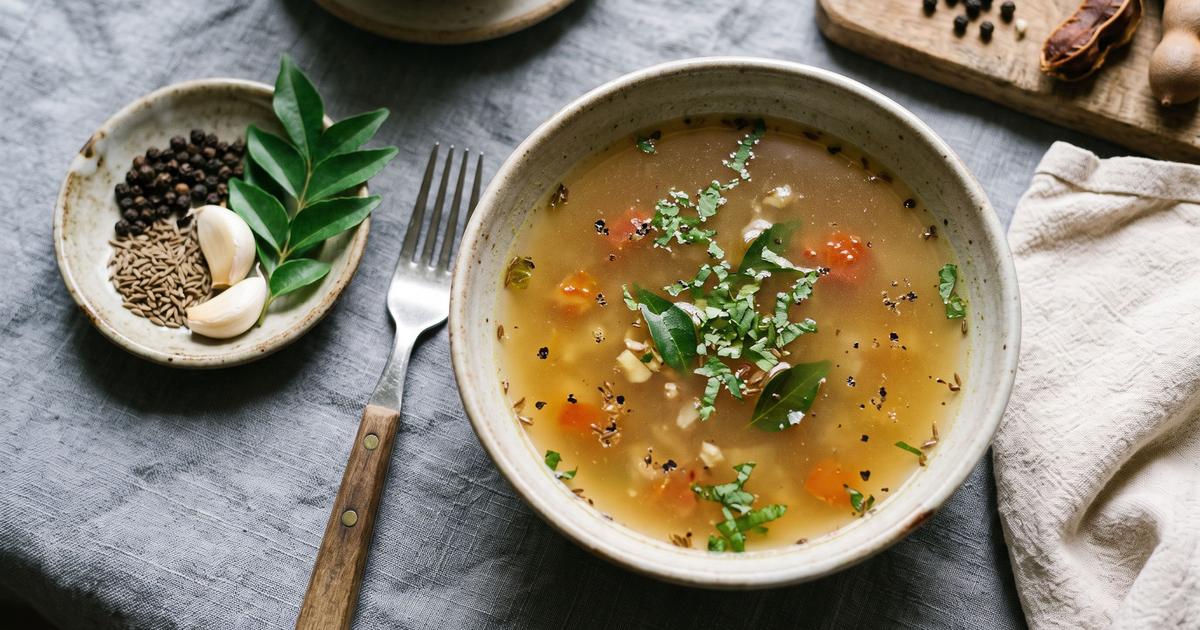
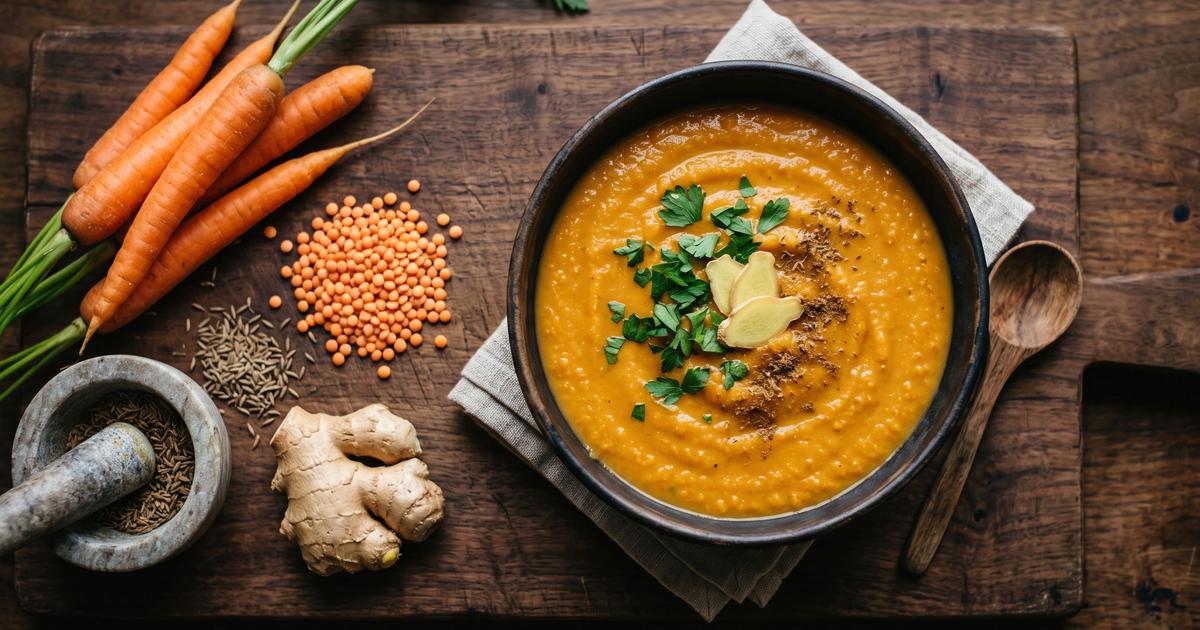
Mulligatawny came out of colonial-era South India, an English attempt to turn a thin Tamil pepper broth into a soup course. The versions that followed piled in cream, sometimes chicken, and a spoon of sugar. None of that is load-bearing. Red lentils give the soup its body once you blend half the pot, a grated apple gives the faint sweetness, and a heavy hand with black pepper honors the literal meaning of the name. Lemon at the end stands in for salt.
Ingredients
- 1 cup Red lentils, rinsed
- 1 whole Yellow onions, diced
- 1 whole Carrots (cooking), diced
- 1 rib Celery, diced
- 3 cloves Garlic, minced
- 1 tbsp Ginger, grated
- 1 tsp Cumin seed
- 1 tbsp Curry powder
- 1/2 tsp Turmeric
- 1/2 cup Canned crushed tomatoes
- 1 whole Apples, grated
- 2 tsp no-salt vegetable bouillon
- 2 Bay leaves
- 3/4 tsp Black peppercorns, coarsely ground
- 1 tbsp Lemon juice
- 1/4 cup Cilantro, chopped
Method
- Sweat the onion, carrot, and celery in a pot with a few tablespoons of water over medium heat until soft, about 10 minutes. Add water whenever the pan dries so the vegetables steam and soften rather than stick.
- Stir in the garlic and ginger for 1 minute, then add the cumin, curry powder, turmeric, and ground pepper. Toast the spices in the dry-ish pan for 30 seconds until fragrant. The name mulligatawny comes from Tamil words for pepper and water, so let the black pepper run generous.
- Add the rinsed lentils, tomatoes, grated apple, bouillon, bay leaves, and 4 cups (950 ml) water. Bring to a boil, then simmer partly covered until the lentils have completely collapsed, about 25 minutes. The apple melts in and gives a background sweetness that keeps the soup from needing sugar.
- Fish out the bay leaves. Blend about half the soup, either with an immersion blender pulsed a few times or in a jar, then stir it back. The blended lentils thicken the pot to a near-creamy body with no cream involved.
- Finish off the heat with the lemon juice and cilantro. The acid brightens everything and does the lifting that salt would at the table. Serve as is or over a scoop of brown rice.
Nutrition
Estimated per serving: 220 calories, 13 g protein, 9 g fiber, 60 mg sodium. Computed from USDA FoodData Central reference values for the main ingredients. This is an approximation, not a laboratory measurement. How these are computed.
Cost per serving is estimated from US national-average retail prices for cheap staple forms, using BLS dried-bean prices and USDA produce prices. Prices vary by store and season, so treat it as a guide, not a receipt. How this is computed.