Paruppu Rasam, South Indian Lentil and Tamarind Broth
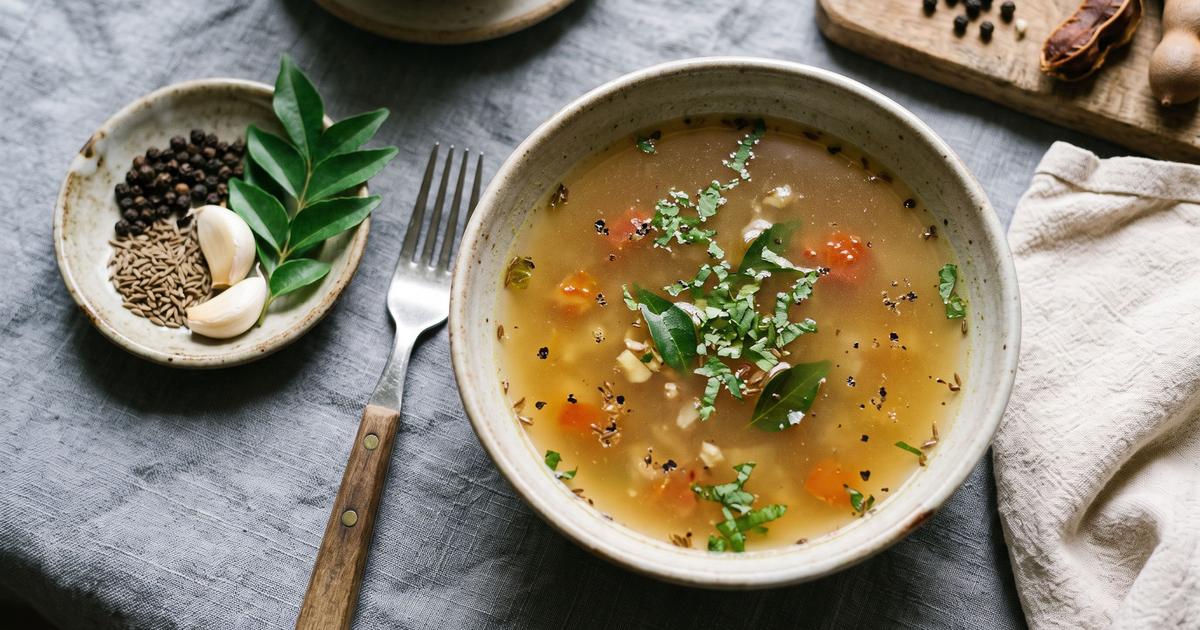
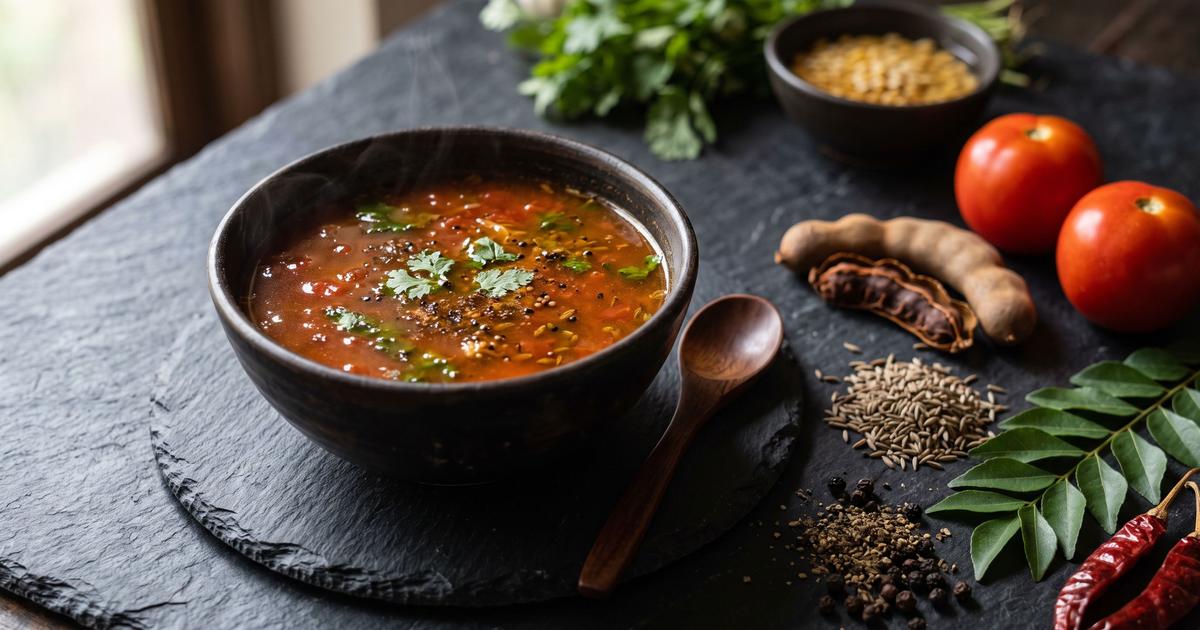
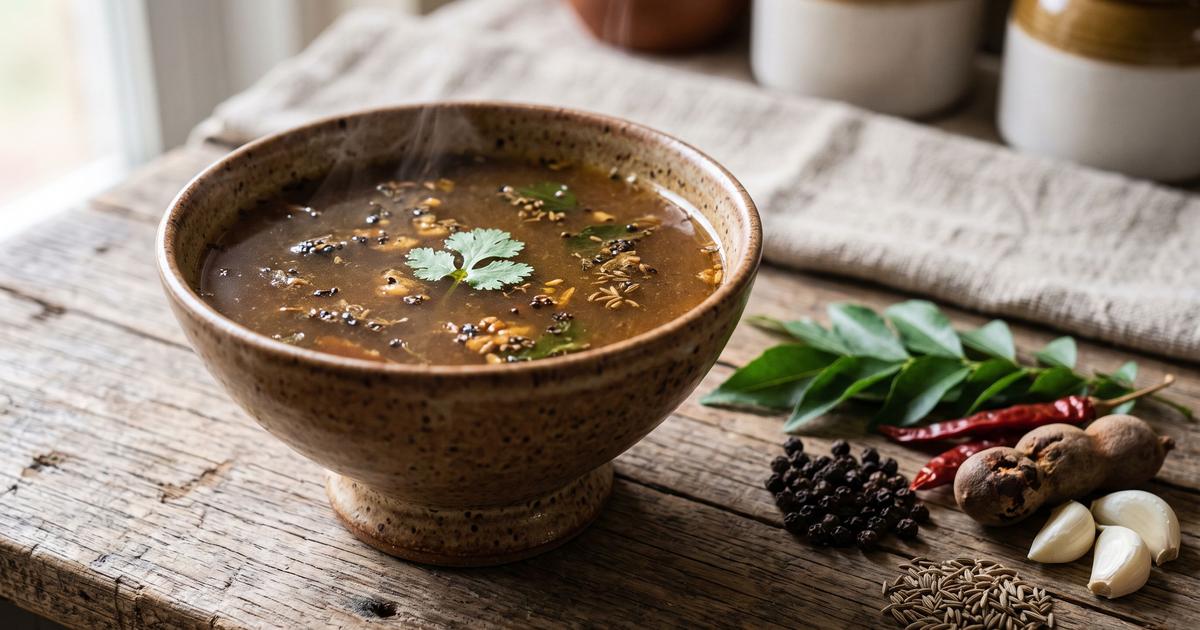
Paruppu rasam is the everyday rasam, the one that turns a handful of toor dal and a spoon of tamarind into a broth you can drink by the cup. Where a pepper rasam is all fire and a tomato rasam all tang, this one has the soft, grounding body of dissolved lentils behind the pepper and cumin. Two rules carry it: crush the spices fresh so the broth stays aromatic, and never let it boil once the tamarind is in, because a hard boil flattens a rasam and takes the pepper down with it. It is coconut-free, barely any work, and quietly restorative.
Ingredients
- 1/2 cup Toor dal
- 1/2 tsp Turmeric
- 2 wholes Fresh tomatoes, chopped
- 1 tsp Tamarind paste
- 1 tsp Black peppercorns
- 1 1/2 tsp Cumin seed
- 3 cloves Garlic
- 12 leafs Curry leaves
- 1/2 tsp Brown mustard seed
- 1 whole Dried Thai chile, broken
- 1 pinch Asafoetida
- 3 tbsp Cilantro, chopped
Method
- Rinse the toor dal and simmer it with the turmeric and 2 cups (480 ml) water until completely soft, about 25 minutes, then whisk to a thin, cloudy broth. The dissolved dal is what gives paruppu rasam its body, the thing a plain pepper rasam lacks.
- While the dal cooks, pound the black peppercorns, cumin seed, and garlic to a coarse rasam powder in a mortar. Crushing them fresh, rather than using ground spice, keeps the broth aromatic and a little rough.
- Add the chopped tomato, tamarind paste, the crushed spice, and the curry leaves to the dal along with 1 more cup (240 ml) water. Bring it just to a froth and pull it off the heat. A rasam must never boil hard: a rolling boil turns it flat and dulls the pepper.
- In a small dry pan, pop the mustard seeds and broken chile until the seeds jump, add the asafoetida for 5 seconds, then tip the whole tempering into the pot. Finish with cilantro.
- Serve as a thin soup to sip, or ladled over rice as the second course of a South Indian meal.
Nutrition
Estimated per serving: 110 calories, 6 g protein, 4 g fiber, 45 mg sodium. Computed from USDA FoodData Central reference values for the main ingredients. This is an approximation, not a laboratory measurement. How these are computed.
Cost per serving is estimated from US national-average retail prices for cheap staple forms, using BLS dried-bean prices and USDA produce prices. Prices vary by store and season, so treat it as a guide, not a receipt. How this is computed.