Andhra Tomato Pachadi, South Indian Tomato Chutney
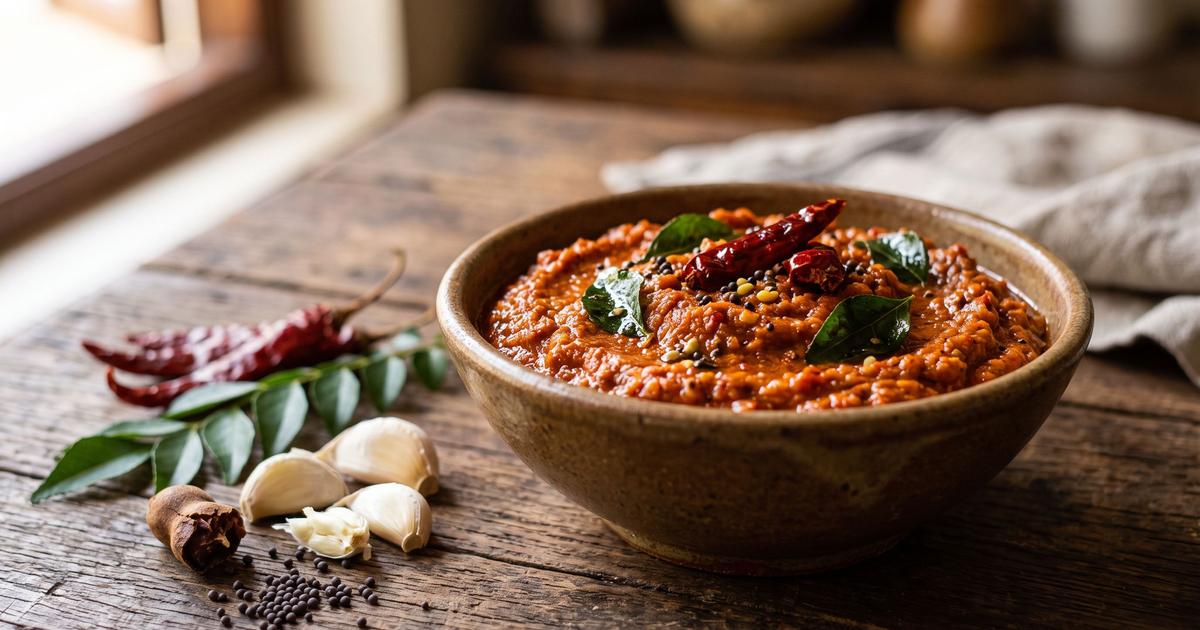
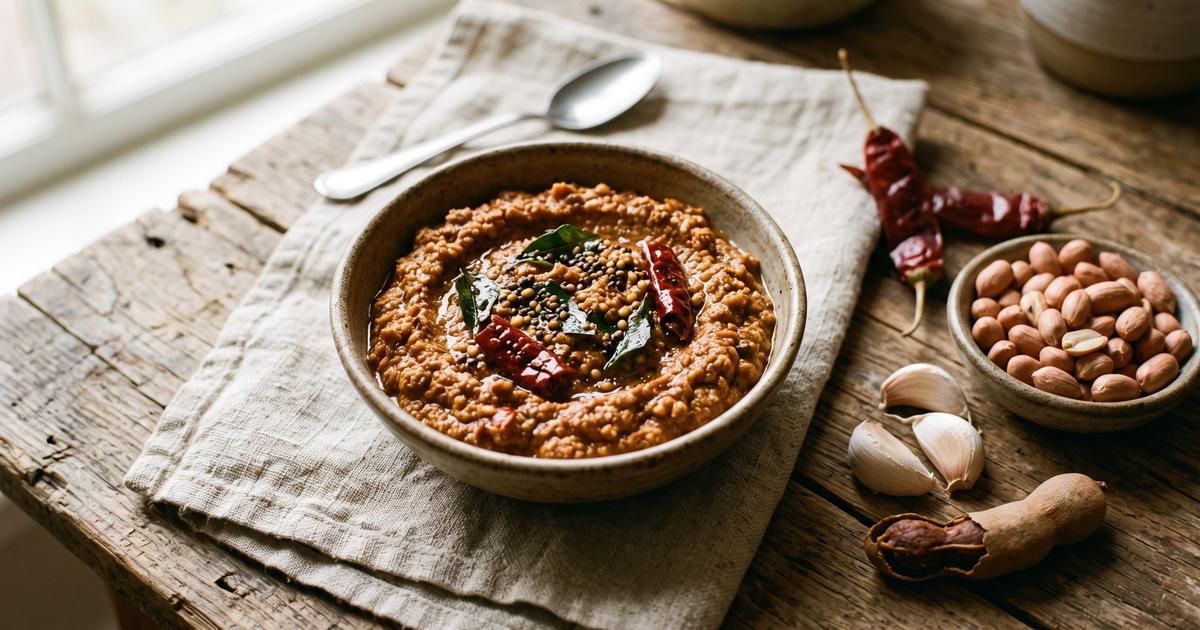
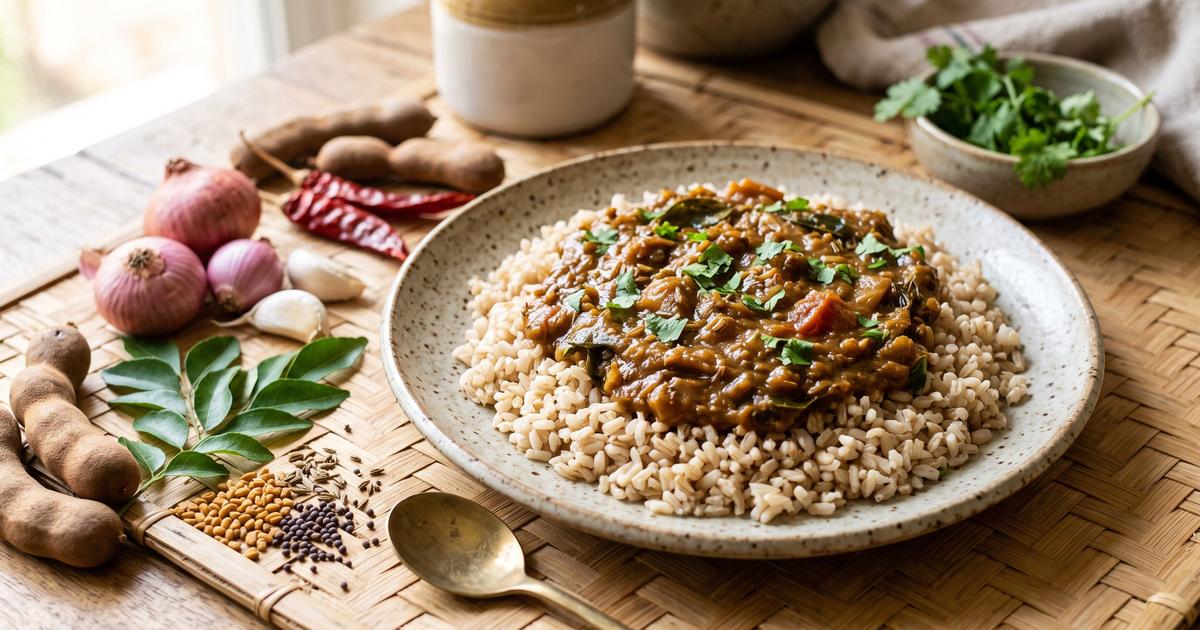
This is the tomato pachadi of Andhra kitchens, where chutney is a daily food and not an afterthought: a jammy, garlicky, chile-forward paste eaten with dosa, idli, or just folded into hot rice. The flavor is built in two dry-roasts, first the chiles and fenugreek for depth, then the mustard and cumin for the finishing tarka, with the tomatoes cooked down hard in between so the chutney keeps. Byadgi chiles bring the deep red color with little heat; the single thai chile brings the bite. It is coconut-free, cheap, and better on the second day.
Ingredients
- 4 wholes Fresh tomatoes, chopped
- 3 wholes Byadgi chile
- 1 whole Dried Thai chile
- 1/4 tsp Fenugreek seed
- 4 cloves Garlic
- 1 tsp Tamarind paste
- 1/4 tsp Turmeric
- 1 tsp Brown mustard seed
- 1 tsp Cumin seed
- 12 leafs Curry leaves
- 1 pinch Asafoetida
Method
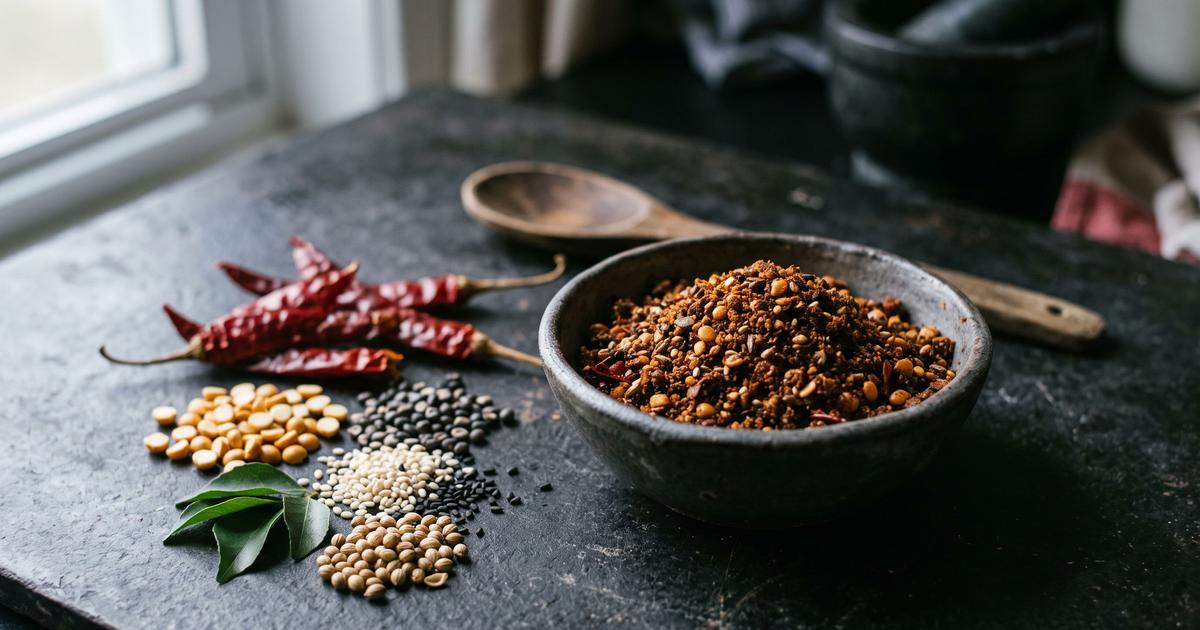
- Warm a dry pan over medium-low heat and roast the byadgi chiles, thai chile, and fenugreek seed together until the chiles darken and turn brittle and the fenugreek smells nutty, about 2 minutes. This dry-roast is the deep, slightly bitter base note that separates an Andhra pachadi from a raw tomato relish. Fenugreek burns fast, so pull the pan the moment it colors.
- In the same pan, cook the chopped tomatoes with the turmeric and a splash of water over medium heat until they collapse completely and the liquid cooks off, about 8 minutes. A thick, dry tomato base keeps for days in the fridge, where a watery one would turn sour.
- Grind the roasted chiles, cooked tomatoes, garlic, and tamarind to a coarse paste. Leave it rough, not smooth: pachadi is meant to have texture you can see.
- Wipe the pan, pop the mustard and cumin seeds dry until they crackle, add the curry leaves and asafoetida for 5 seconds, then stir the tempering through the chutney. Serving the tempering hot over the cold chutney is what makes the curry leaf and mustard sing.
- Cool and serve with dosa, idli, or rice. It keeps 4 to 5 days refrigerated.
Nutrition
Estimated per serving: 45 calories, 2 g protein, 2 g fiber, 20 mg sodium. Computed from USDA FoodData Central reference values for the main ingredients. This is an approximation, not a laboratory measurement. How these are computed.
Cost per serving is estimated from US national-average retail prices for cheap staple forms, using BLS dried-bean prices and USDA produce prices. Prices vary by store and season, so treat it as a guide, not a receipt. How this is computed.