Andhra Peanut Chutney
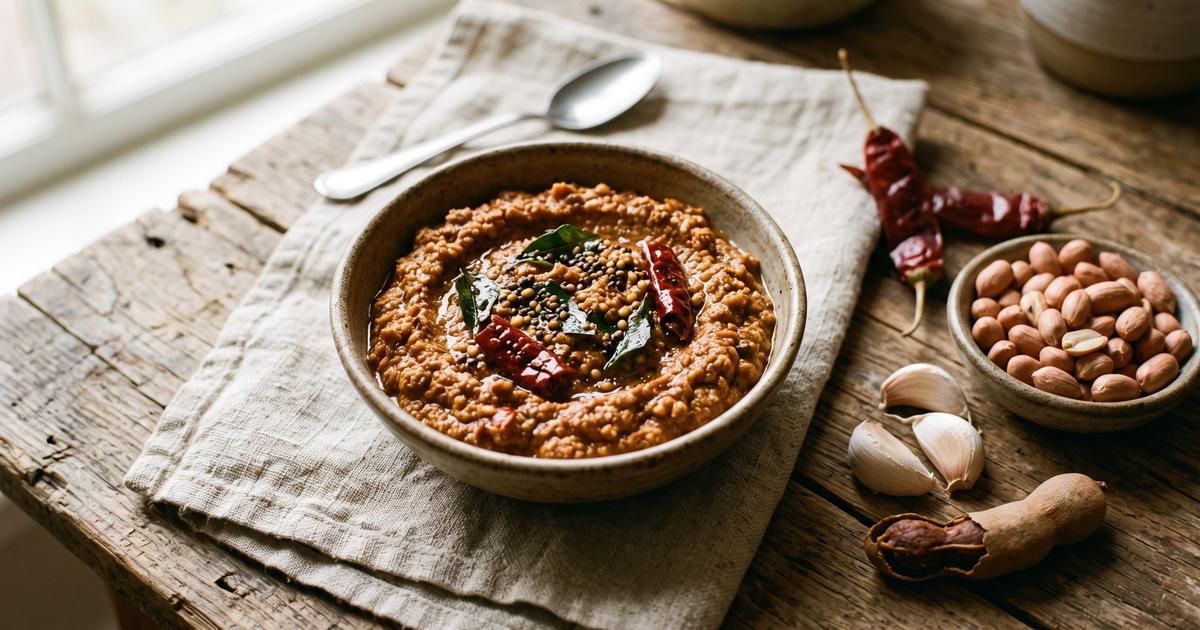
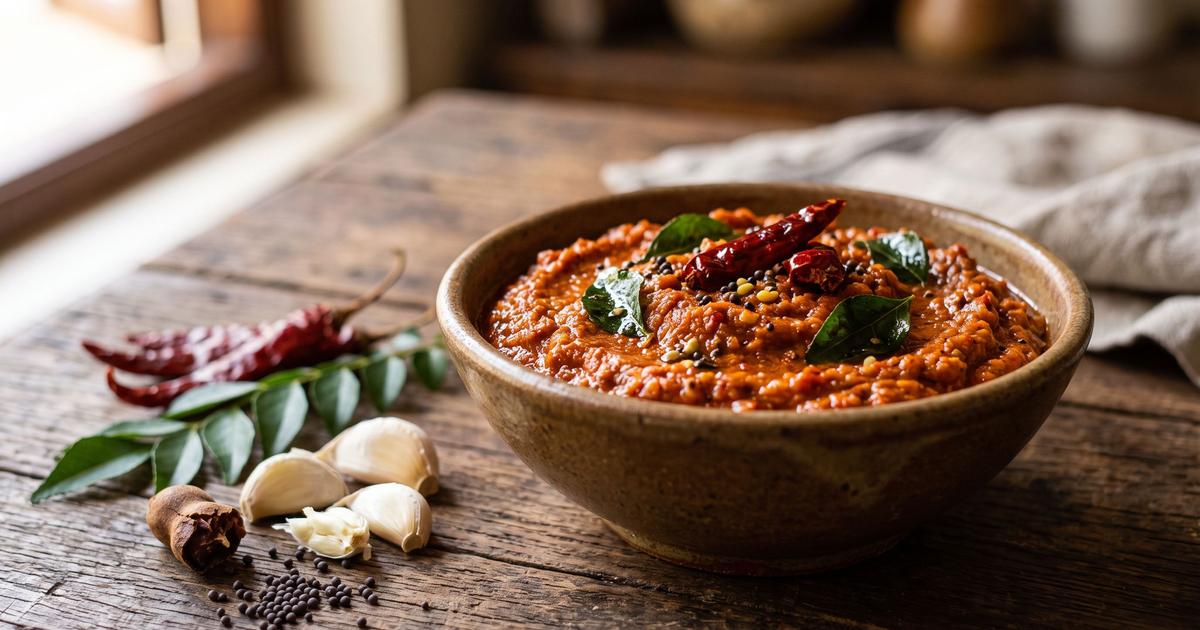
Peanut chutney, verusenaga pachadi, is the everyday grinding chutney of Andhra Pradesh, made where coconut is scarcer and peanuts are cheap. Dry-roasted peanuts are ground with toasted dried chile, garlic, and a little tamarind for sourness, then woken up with a mustard-seed and curry-leaf tempering. The roast on the peanuts decides the depth, so take them dark. It sits thick enough to spread and loose enough to spoon over rice, and unlike a coconut chutney it keeps for days without turning.
Ingredients
- 1 cup Peanuts, raw
- 3 wholes Dried Thai chile
- 3 cloves Garlic
- 1 tsp Tamarind paste
- 1 tsp Cumin seed
- 1/2 tsp Brown mustard seed
- 12 Curry leaves
- 1/4 tsp Asafoetida
Method
- Dry-roast the peanuts in a pan over medium heat, shaking often, until the skins darken and loosen and the nuts smell deeply toasty, about 6 minutes. This roast is the whole flavor of the chutney, so take them to a real gold, not pale. Let them cool, then rub off the loose skins between your palms for a smoother paste.
- In the same dry pan, toast the dried chiles and cumin for about 30 seconds, until they smell sharp. Toasting the chiles wakes up their fruit and softens their raw rasp.
- Grind the peanuts, chiles, cumin, garlic, and tamarind with 0.5 cup (120 ml) water into a thick, spoonable paste. Add the water a little at a time: too much and it slackens into a sauce, too little and it will not catch on the blades.
- For the tempering, heat a small dry pan, pop the mustard seeds until they jump, then add the curry leaves and asafoetida with a teaspoon of water and swirl for a few seconds until the leaves crackle.
- Stir the tempering through the chutney. Serve with pesarattu, dosa, or plain rice. It keeps in the fridge for four days and thickens as it sits, so loosen it with a spoon of water before serving.
Nutrition
Estimated per serving: 110 calories, 5 g protein, 2 g fiber, 20 mg sodium. Computed from USDA FoodData Central reference values for the main ingredients. This is an approximation, not a laboratory measurement. How these are computed.
Cost per serving is estimated from US national-average retail prices for cheap staple forms, using BLS dried-bean prices and USDA produce prices. Prices vary by store and season, so treat it as a guide, not a receipt. How this is computed.