Tamarind Date Chutney
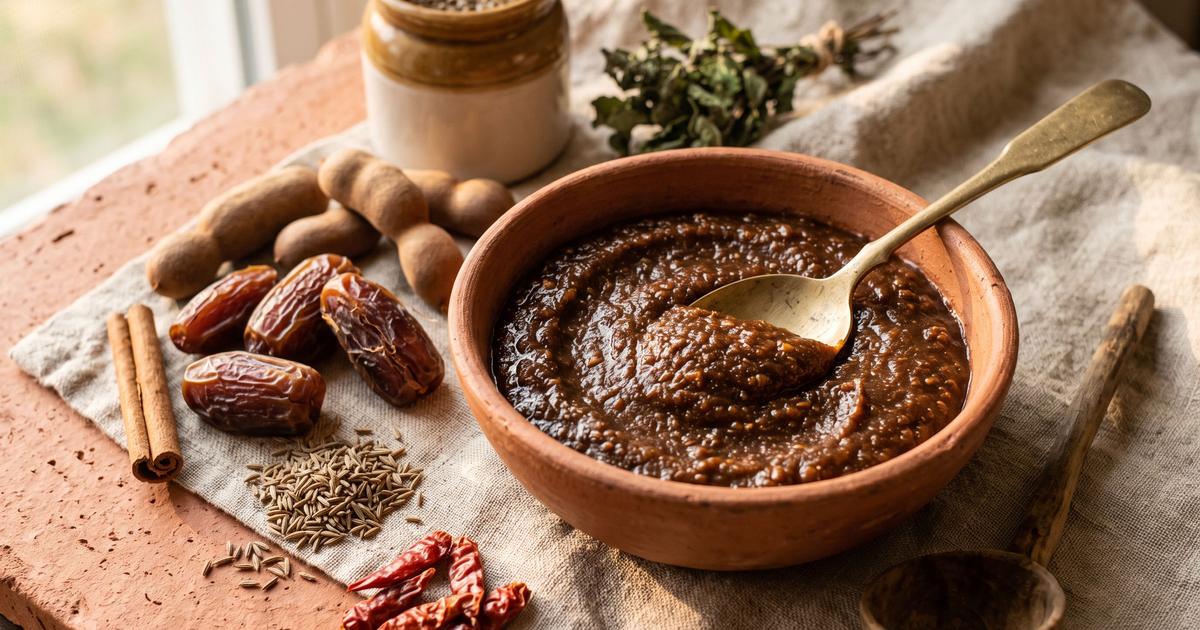
Every chaat depends on a dark, sweet-sour tamarind chutney, and that chutney almost always starts with jaggery or sugar melted into the tamarind. Blended dates do the same job while keeping their fiber, so the sweetness is buffered rather than bare. Tamarind supplies a sourness deep enough that no salt is needed to make the flavors land, and toasted cumin, ginger, and cayenne give it the warmth and bite of the version sold in every North Indian snack stall.
Ingredients
- 3 tbsp Tamarind paste
- 6 wholes Medjool dates, pitted
- 1 tsp Cumin seed, toasted and ground
- 1/2 tsp ground ginger
- 1/4 tsp Cayenne
- 1/4 tsp Black peppercorns, ground
Method
- Soak the pitted dates in 0.5 cup (120 ml) just-boiled water for 10 minutes, until they soften enough to blend. Softening them first is what lets them stand in for the block of jaggery this chutney normally leans on.
- Toast the cumin seeds in a dry pan until fragrant and a shade darker, about 1 minute, then grind them. Toasted cumin is the smell most people read as this chutney, so do not skip it.
- Blend the soaked dates and their water with the tamarind paste, cumin, ground ginger, cayenne, and pepper until completely smooth. Add water a tablespoon at a time until it pours like a thin syrup, since it thickens as it cools.
- Taste and balance. The tamarind should read clearly sour against the date sweetness, with a slow build of heat behind it. That three-way tension of sour, sweet, and hot is what keeps the chutney interesting without any salt. Check the tamarind label, since some jarred pastes carry added sugar you do not need here.
- Cool and refrigerate. It keeps for about two weeks and thickens further, so loosen with a little water before serving over chaat, with vadai, or alongside anything roasted.
Nutrition
Estimated per serving: 50 calories, 1 g protein, 1 g fiber, 5 mg sodium. Computed from USDA FoodData Central reference values for the main ingredients. This is an approximation, not a laboratory measurement. How these are computed.
Cost per serving is estimated from US national-average retail prices for cheap staple forms, using BLS dried-bean prices and USDA produce prices. Prices vary by store and season, so treat it as a guide, not a receipt. How this is computed.