Coriander Mint Chutney
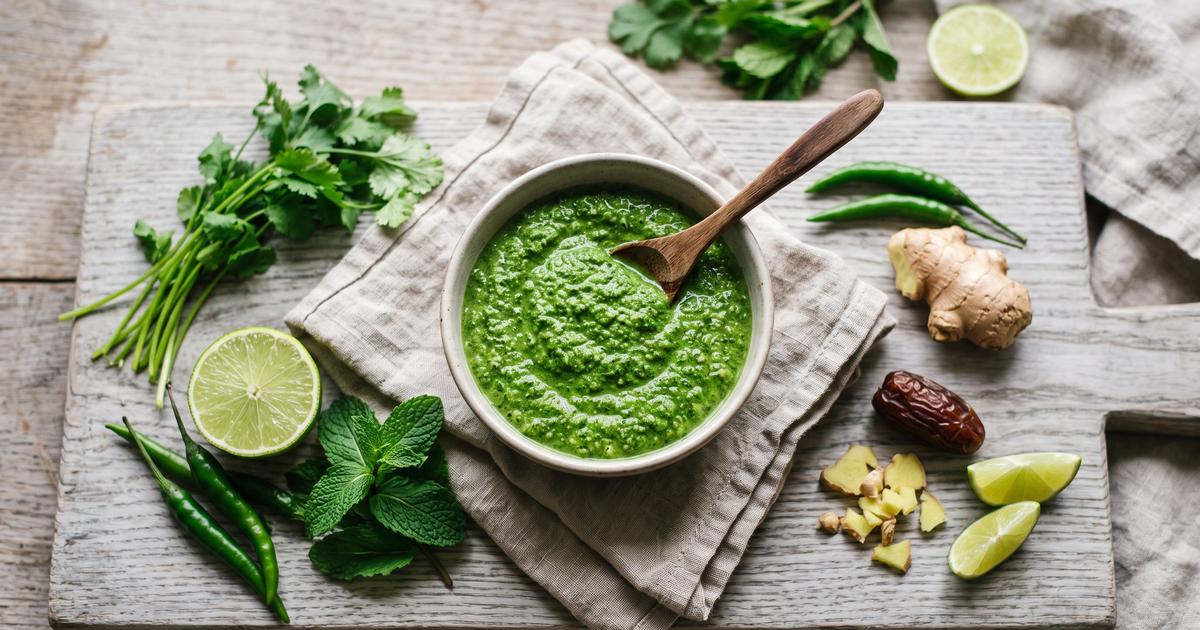
This is the fresh, uncooked counterpoint to a jarred chutney, the green sauce that lands next to samosas, folds into a chaat, or thins with water into a dressing. Cilantro and mint carry it, the green chile brings the heat, and a single date does the job a spoon of sugar usually would. There is no oil to smooth it and no salt to prop it up, so the lime has to be assertive. Blend it just before you need it, since raw herb sauces lose their color and their lift within a day.
Ingredients
- 2 cups Cilantro, packed, stems included
- 1 cup Mint, leaves only
- 1 Indian green chile, stemmed, seeds left in for heat
- 1 tsp Ginger, grated
- 1/2 tsp Cumin seed, toasted
- 1 Deglet noor date, pitted
- 2 tbsp Lime juice
Method
- Toast the cumin seeds in a dry pan over medium heat for about a minute, until they darken a shade and smell nutty. Toasting first is what separates a flat chutney from a fragrant one, since the raw seed never gives up this aroma.
- Use the cilantro stems, not just the leaves. The stems hold more of the green, peppery flavor than the leaves do, and blending them in means nothing is wasted.
- Combine the cilantro, mint, chile, ginger, toasted cumin, date, and lime juice in a blender with 3 tablespoons (45 ml) cold water. Blend to a coarse puree, stopping to scrape down the sides.
- Add water a tablespoon at a time only until the blades catch and the chutney moves. Keep it thick and spoonable, not runny, so it clings to whatever it tops.
- Taste and adjust with more lime for brightness. The single date rounds the sharp edges without reading as sweet, and the acid stands in for the salt this chutney would usually carry. Serve within a day or two, as the herbs dull and darken with time.
Nutrition
Estimated per serving: 25 calories, 1 g protein, 1 g fiber, 8 mg sodium. Computed from USDA FoodData Central reference values for the main ingredients. This is an approximation, not a laboratory measurement. How these are computed.
Cost per serving is estimated from US national-average retail prices for cheap staple forms, using BLS dried-bean prices and USDA produce prices. Prices vary by store and season, so treat it as a guide, not a receipt. How this is computed.