Tomatada, Portuguese Tomato and Cilantro Stew
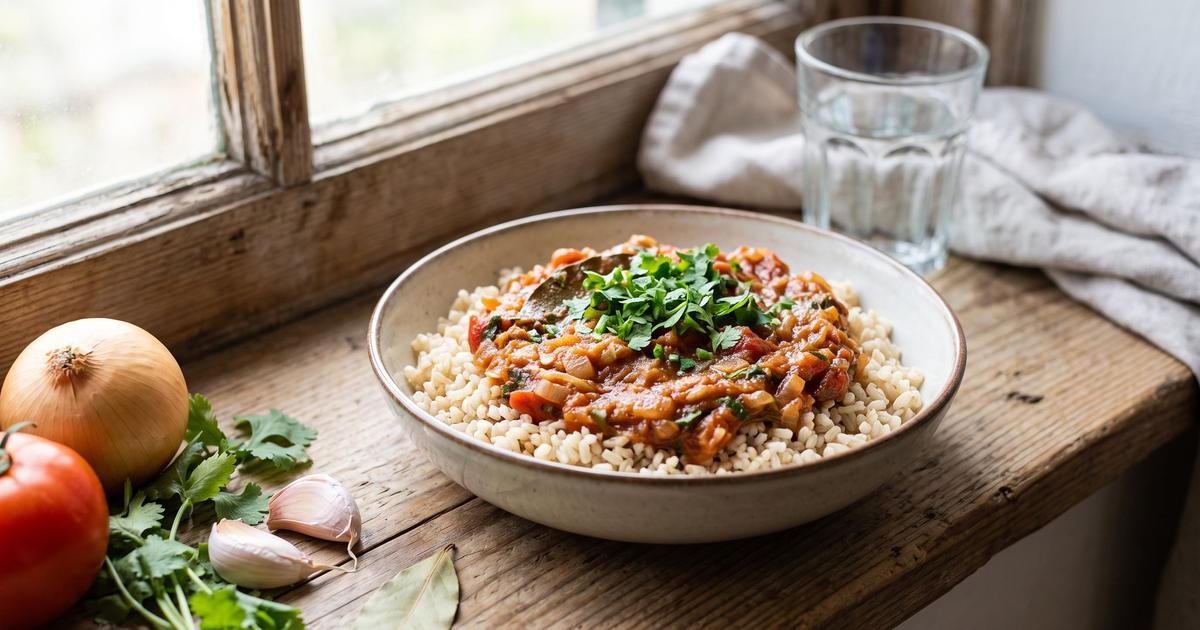
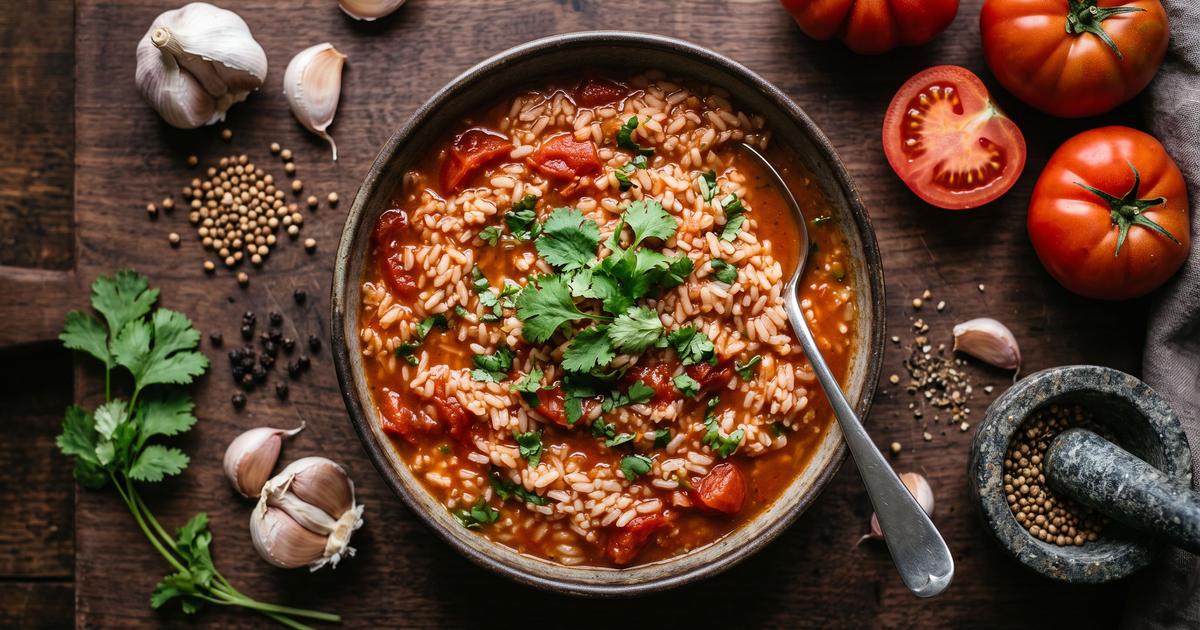
Tomatada is the Portuguese answer to a can of tomatoes: onion and garlic softened slowly, then crushed tomato cooked down with bay until it turns thick and sweet, and finally a huge handful of cilantro, the herb that flavors half the country's cooking. In its home kitchens it is a base as much as a dish, the bed for poached eggs or fish, but it is generous and satisfying on its own over grain. Cooking the sofrito slowly and reducing the tomato patiently is what lets it taste rich with no oil and no salt, and the cilantro and a spoon of vinegar carry it the rest of the way. Serve it over brown rice, or fold cooked chickpeas or white beans into the pot to make it a meal.
Ingredients
- 3 cups Canned crushed tomatoes, no-salt-added
- 1 whole Yellow onions, finely diced
- 4 cloves Garlic, sliced
- 2 wholes Bay leaves
- 1/2 cup Cilantro, chopped
- 1/2 tsp Smoked paprika
- 1 tsp Red wine vinegar
- 1/2 tsp Black peppercorns, freshly ground
- 1 cup long grain brown rice, cooked to serve
Method
- Cook the brown rice separately so it is ready when the stew is.
- Sweat the onion and garlic in 0.25 cup (60 ml) water over medium heat until soft and pale gold, about 10 minutes. This slow-cooked base, the Portuguese refogado, is where the depth of the dish lives, so give it the full time rather than rushing it toward color.
- Stir in the smoked paprika for 30 seconds, then add the crushed tomatoes and bay. Simmer, stirring now and then, until the sauce darkens and turns jammy, 20 to 25 minutes. The long reduction cooks off the raw, tinny edge of canned tomato and concentrates its own sweetness, which is why no sugar is needed to balance it.
- Off the heat, stir in most of the cilantro, the vinegar, and the black pepper. A tomatada is drowned in coentros, and adding them at the end keeps their fresh lift instead of stewing it away; the vinegar sharpens the pot in place of salt.
- Spoon the stew over the brown rice and finish with the remaining cilantro. It is even better the next day, once the flavors have settled.
Nutrition
Estimated per serving: 240 calories, 6 g protein, 6 g fiber, 140 mg sodium. Computed from USDA FoodData Central reference values for the main ingredients. This is an approximation, not a laboratory measurement. How these are computed.
Cost per serving is estimated from US national-average retail prices for cheap staple forms, using BLS dried-bean prices and USDA produce prices. Prices vary by store and season, so treat it as a guide, not a receipt. How this is computed.