Tinutuan, Manadonese Vegetable Rice Porridge
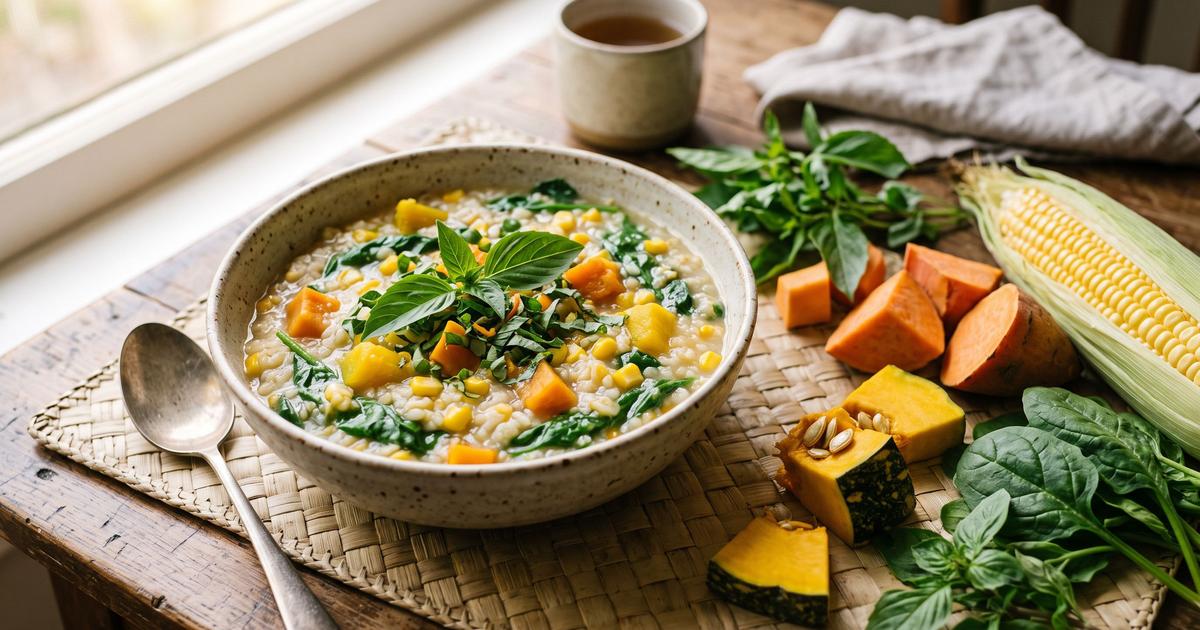
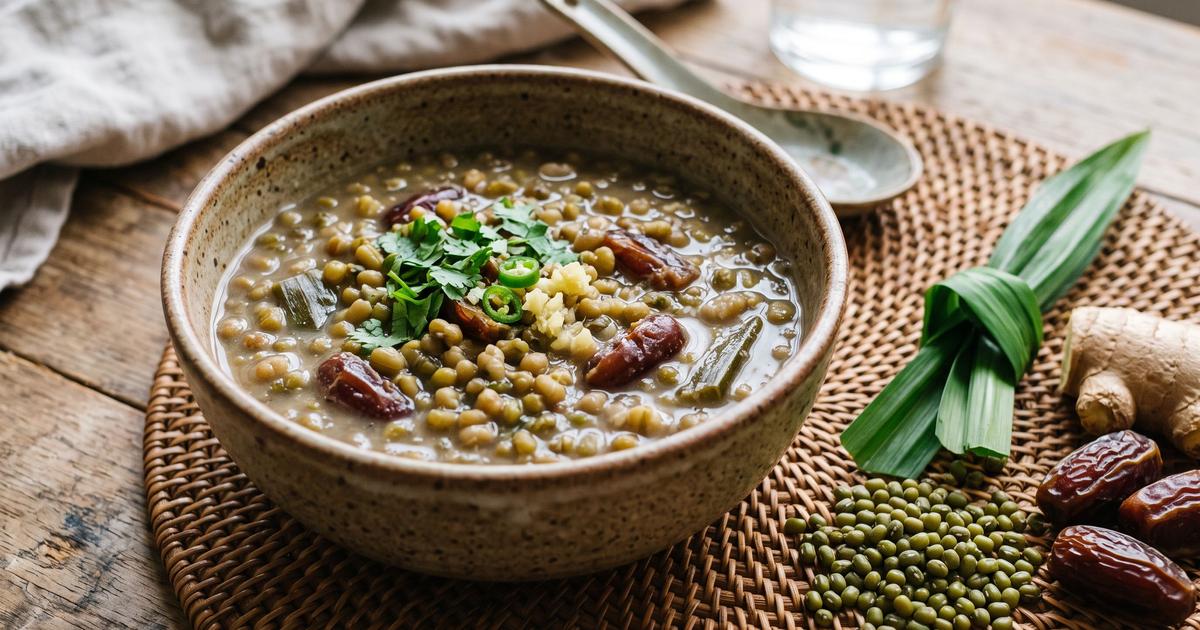
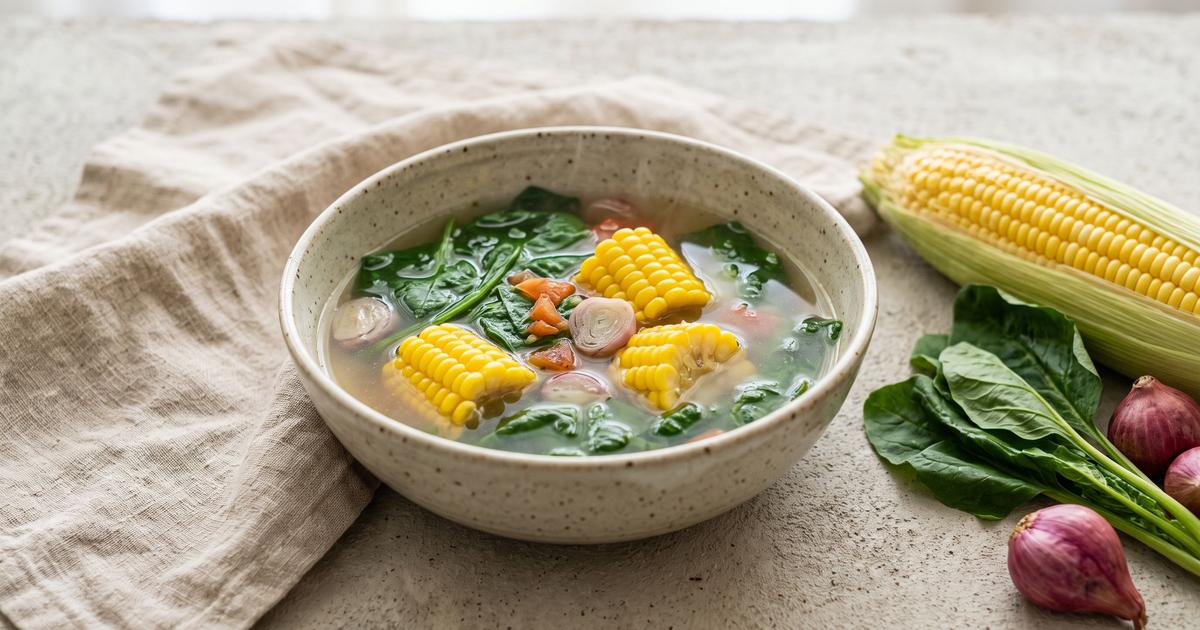
Tinutuan, also called bubur Manado, is the vegetable rice porridge eaten for breakfast in North Sulawesi, one of the rare Indonesian comfort dishes that carries no coconut milk at all. It is really a strategy for using up the garden: rice cooked to a loose porridge and thickened with whatever squash, root, and greens are on hand. The pumpkin and sweet potato melt in and sweeten it, the greens go in last to stay bright, and a spoonful of hot sambal on the side is what pulls it all into focus. It is filling, cheap, and heavy on fiber.
Ingredients
- 1 cup short grain brown rice
- 2 cups Kabocha squash, peeled and cut into 1-inch (2.5 cm) cubes
- 1 Sweet potatoe, peeled and cubed
- 1 cup Frozen corn
- 1 stalk Lemongrass, bruised and knotted
- 1 tsp no-salt vegetable bouillon
- 4 cups Spinach, packed
- 1/2 cup Basil, leaves
- 3 Scallions, sliced
Method
- Put the rice in a large pot with 7 cups (1.7 L) water, the bouillon, and the knotted lemongrass. Bring to a boil, then simmer 20 minutes, stirring now and then. Tinutuan is a loose porridge, not fluffy rice, so you want far more water than usual and you want the grains to start breaking open.
- Add the kabocha and sweet potato and simmer another 15 minutes, until they are soft enough to fall apart when pressed. As they collapse into the porridge they thicken it and lend a natural sweetness, which is why the dish needs no sugar and no coconut milk to taste rich.
- Stir in the corn and cook 3 minutes more. Loosen with a little hot water if the porridge has grown too thick; it should be soft and spoonable.
- Turn off the heat and fold in the spinach and basil, which wilt in the residual heat in under a minute. Adding them at the very end keeps them green and keeps the basil aroma alive. Fish out the lemongrass.
- Ladle into bowls and top with scallions. Serve it hot, with a spoon of dabu-dabu or another sambal on the side, since the porridge is gently sweet and wants a sharp, hot condiment against it.
Nutrition
Estimated per serving: 220 calories, 6 g protein, 7 g fiber, 40 mg sodium. Computed from USDA FoodData Central reference values for the main ingredients. This is an approximation, not a laboratory measurement. How these are computed.
Cost per serving is estimated from US national-average retail prices for cheap staple forms, using BLS dried-bean prices and USDA produce prices. Prices vary by store and season, so treat it as a guide, not a receipt. How this is computed.