Sayur Bening Bayam, Javanese Clear Spinach and Corn Soup
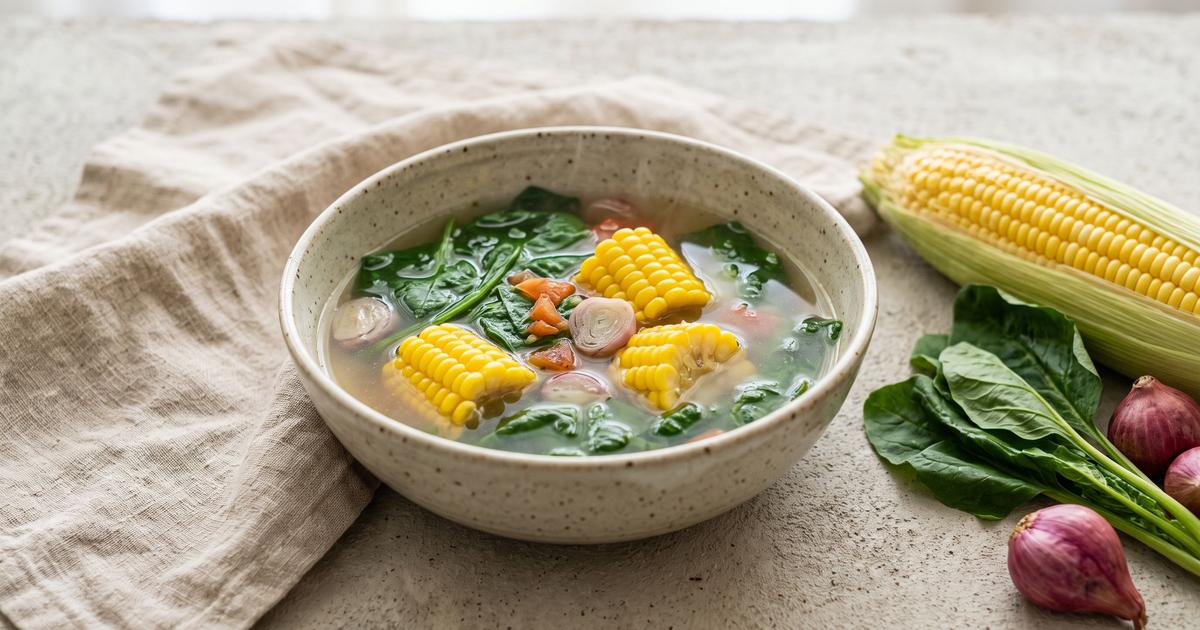
Where sayur asem is sour with tamarind and sayur lodeh is rich with coconut, sayur bening is the third great Javanese vegetable soup: bening means clear, and that is the whole point. It is a thin, bright broth carrying tender greens and sweet corn, seasoned so lightly that the vegetables speak for themselves. Spinach and corn are the classic pairing, sometimes with a little chayote or sweet potato. Built on shallots, a slip of ginger, and the natural sweetness of corn and a single date, it lands clean and complete with no added salt.
Ingredients
- 6 cups Spinach, packed, stems trimmed
- 1 cup Frozen corn
- 1 Carrot, sliced thin
- 3 Shallots, sliced thin
- 2 cloves Garlic, smashed
- 1 slice Ginger, thin, smashed
- 1 Medjool date, pitted
- 1 tsp no-salt vegetable bouillon
Method
- Bring 5 cups (1.2 L) water to a simmer with the shallots, garlic, ginger, bouillon, and the whole date. A single date dissolves over the simmer and lends the gentle background sweetness that palm sugar usually gives a bening, without turning the soup sweet.
- Add the carrot and corn and simmer 8 minutes, until the carrot is tender. The corn is doing double duty here, softening to eat and sweetening the broth as it goes, which is the entire character of a bening: clear and clean and a little sweet.
- Add the spinach and cook just until it wilts, under a minute. Bayam, the Indonesian amaranth spinach this uses, goes slippery and grey if overcooked, and ordinary spinach does the same, so pull the pot off the heat as soon as it collapses.
- Taste the broth. It should read as finished and savory-sweet on its own strength, the reason this soup is traditionally served to children and to anyone recovering from a heavy, chile-laced meal. Ladle out hot.
Nutrition
Estimated per serving: 90 calories, 4 g protein, 4 g fiber, 60 mg sodium. Computed from USDA FoodData Central reference values for the main ingredients. This is an approximation, not a laboratory measurement. How these are computed.
Cost per serving is estimated from US national-average retail prices for cheap staple forms, using BLS dried-bean prices and USDA produce prices. Prices vary by store and season, so treat it as a guide, not a receipt. How this is computed.