Sayur Asem, Indonesian Sour Vegetable Soup
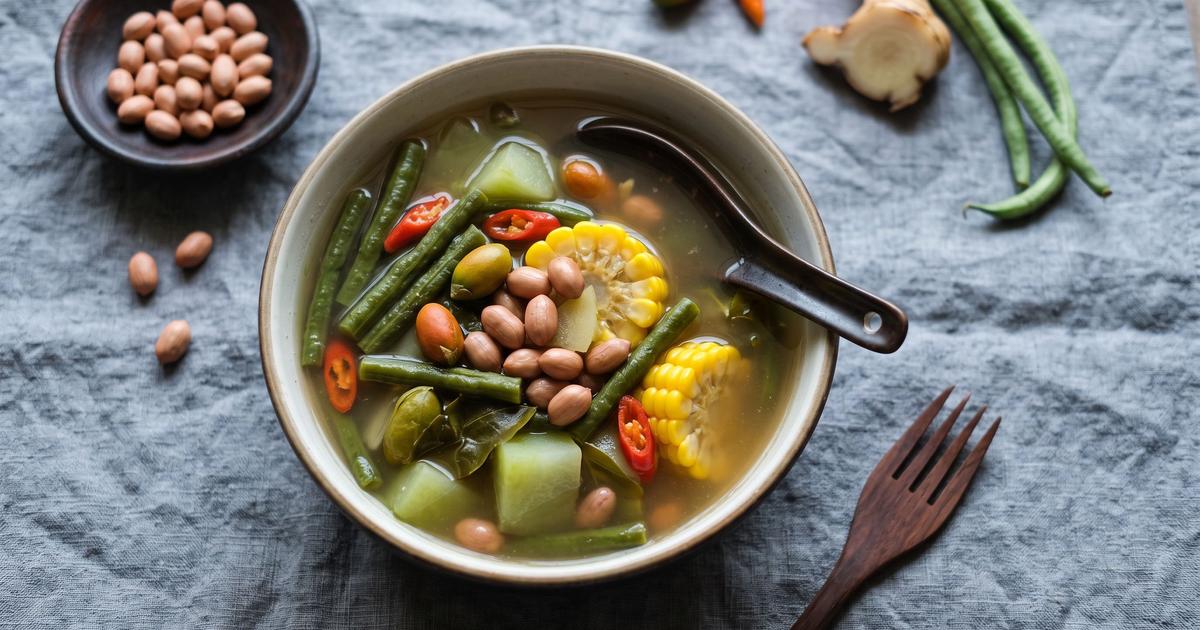
Sayur asem is the everyday sour soup of Java, a thin tamarind broth crowded with whatever vegetables are cheap and in season. It is naturally free of coconut, which sets it apart from the region's richer sayur lodeh, and its character comes entirely from the tension between sour tamarind and a whisper of sweetness. Palm sugar usually balances the tamarind and a dab of terasi deepens it, and here dates and a spoonful of tamari take those two roles. Serve it as a light first course or ladled over brown rice for a fuller plate.
Ingredients
- 3 Shallots, sliced
- 3 cloves Garlic, sliced
- 1 inch Galangal, smashed
- 2 tbsp Tamarind paste
- 1/4 cup Peanuts, raw
- 2 Medjool dates, pitted and blended with water into a paste
- 6 oz Long beans, cut into 2-inch (5 cm) lengths
- 1 cup Frozen corn
- 1 Zucchini, cut into half-moons
- 2 Fresh tomatoes, cut into wedges
- 2 Thai bird chiles, left whole, lightly bruised
- 2 tsp Low-sodium tamari
Method
- Sweat the shallots, garlic, and galangal in a pot with 3 tablespoons (45 ml) water for 2 minutes, until fragrant. Galangal is not ginger: it is sharper and more piney, and it is the aromatic that anchors this broth.
- Add about 6 cups (1.4 L) water, the tamarind, the date paste, and the raw peanuts. Simmer 20 minutes so the peanuts turn tender and the broth turns cloudy and sour. Asem means sour, and the tamarind is the whole point of the dish.
- Add the long beans and simmer 5 minutes, then the corn, zucchini, tomato, and whole chiles for another 4 to 5 minutes, until everything is just tender. Adding them in that order keeps each vegetable from going to mush.
- Stir in the tamari at the very end. A shrimp paste called terasi usually supplies the savory depth here, and a small measure of tamari does that quietly without dominating the sour, clean broth. Taste, and pull the chiles before serving if you want less heat.
Nutrition
Estimated per serving: 150 calories, 7 g protein, 7 g fiber, 120 mg sodium. Computed from USDA FoodData Central reference values for the main ingredients. This is an approximation, not a laboratory measurement. How these are computed.
Cost per serving is estimated from US national-average retail prices for cheap staple forms, using BLS dried-bean prices and USDA produce prices. Prices vary by store and season, so treat it as a guide, not a receipt. How this is computed.