Swahili White Bean Dip
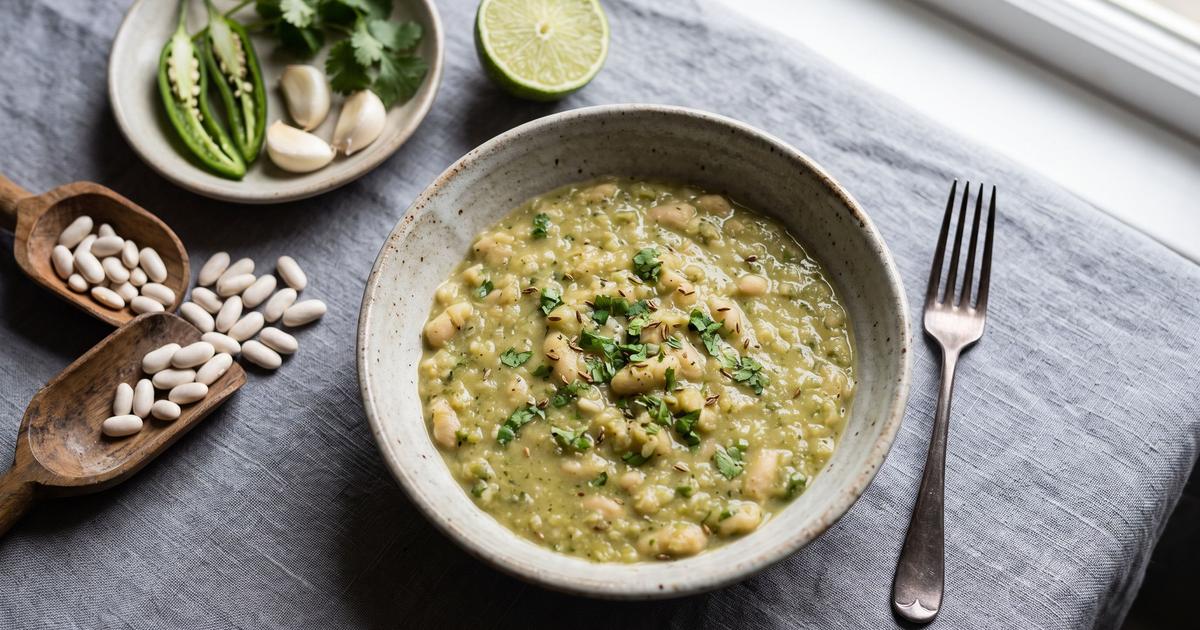
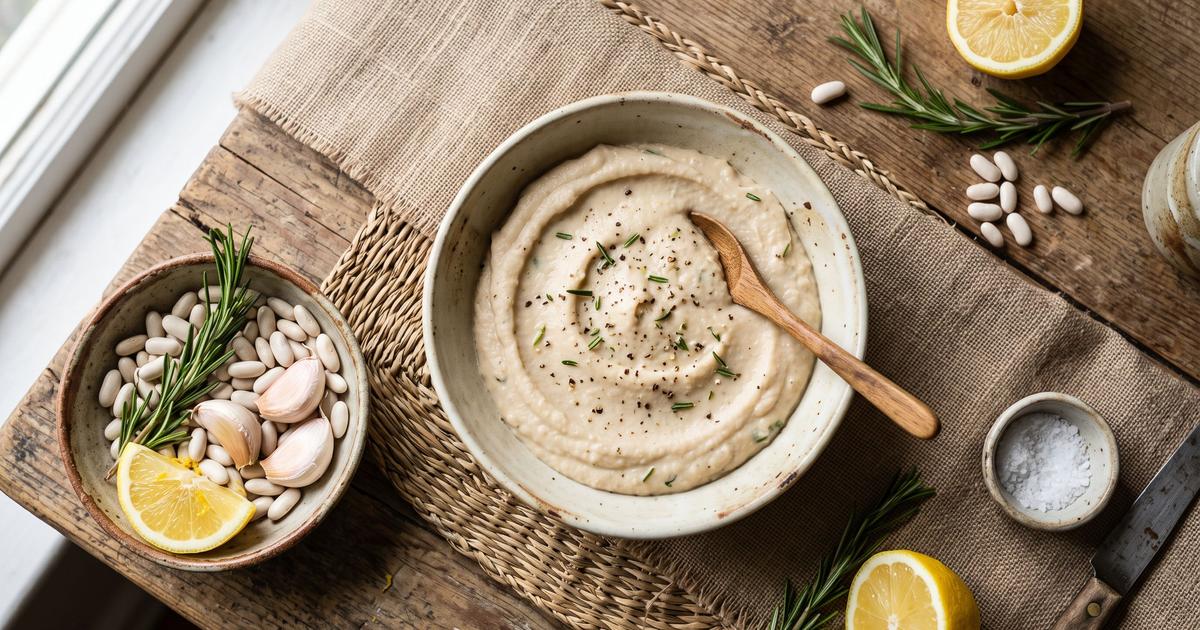
On the Swahili coast, where Somali, Indian, and Arab cooking all meet, the bright green chile-and-cilantro sauce called basbaas turns up next to almost everything, all raw heat and herb. This dip borrows that idea and folds it into blended white beans, which give the protein and the smooth, spoonable body. A spoon of tahini adds the richness that a slick of oil would in most bean dips, and toasted cumin and coriander give it a warm base. Scoop it with raw vegetables or whole-grain bread, spread it into a wrap, or thin it with lime and water into a sauce for a grain bowl.
Ingredients
- 3 cups Cannellini beans, cooked, from 1 cup dried or two 15 oz cans, drained, liquid reserved
- 2 cloves Garlic
- 1 tsp Cumin seed, toasted and ground
- 1/2 tsp Coriander seed, toasted and ground
- 1 whole Indian green chile, seeded
- 1/3 cup Cilantro, plus more to finish
- 2 tbsp Lime juice
- 1 tbsp Tahini
Method
- Toast the cumin and coriander seeds in a dry pan until fragrant, then grind them. Blooming the whole seeds first is the difference between a dip that tastes flat and one that tastes alive.
- Warm the beans through, on the stove or in the microwave. Warm beans blend far silkier than cold ones, because their starch loosens with heat.
- Blend the beans with the garlic, ground spices, chile, cilantro, lime, and tahini, loosening with the reserved bean liquid a few tablespoons at a time until smooth and scoopable. Using the bean liquid instead of water keeps the flavor deep.
- Taste and add lime, not salt. The acid, along with the raw heat of the green chile and cilantro, is what makes it read as fully seasoned.
- Top with more cilantro. It thickens as it sits, so stir in a splash of lime and water to loosen it before serving.
Nutrition
Estimated per serving: 140 calories, 7 g protein, 6 g fiber, 20 mg sodium. Computed from USDA FoodData Central reference values for the main ingredients. This is an approximation, not a laboratory measurement. How these are computed.
Cost per serving is estimated from US national-average retail prices for cheap staple forms, using BLS dried-bean prices and USDA produce prices. Prices vary by store and season, so treat it as a guide, not a receipt. How this is computed.