Braised Red Cabbage (Rotkohl)
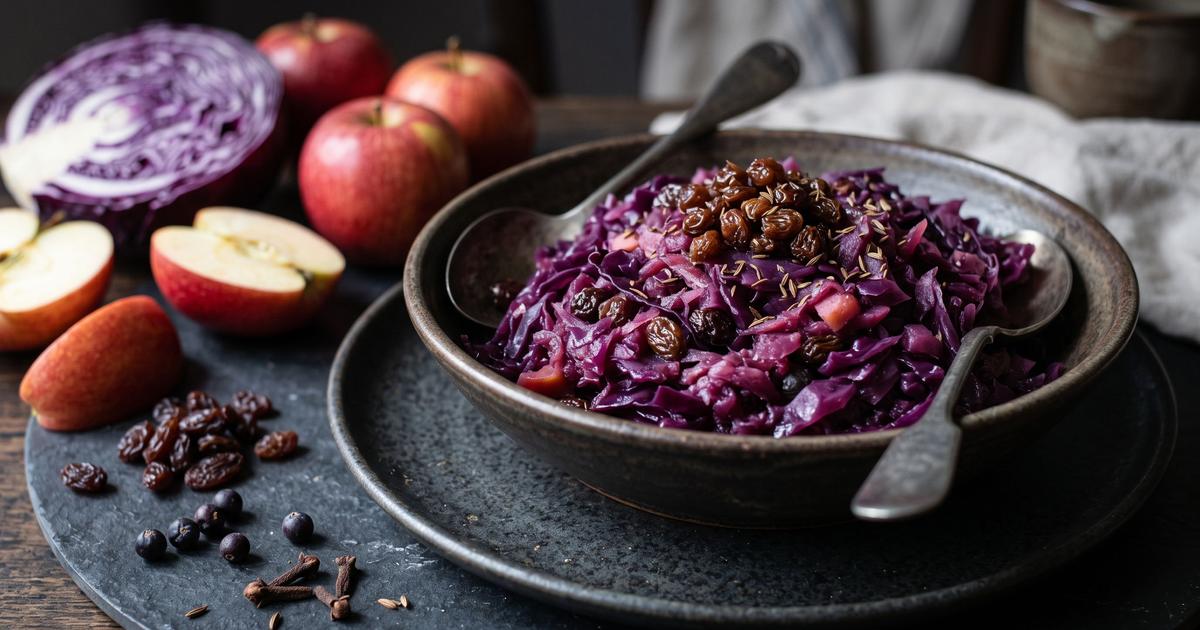
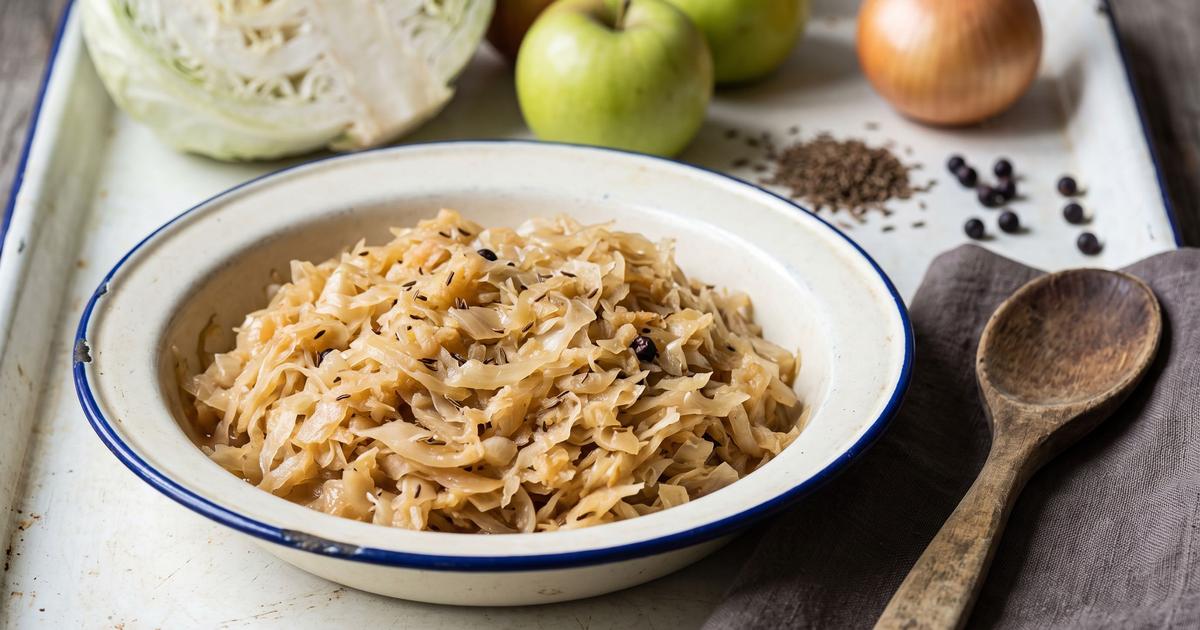
Rotkohl, or Blaukraut in the south, is the standard winter cabbage of German tables, usually cooked long with sugar and some kind of fat and set beside roasts and dumplings. Neither the sugar nor the fat is doing anything you cannot get elsewhere. Grated apple and raisins cooked down into the pot give all the sweetness, and vinegar added at the start does double duty: it seasons the cabbage and it fixes the red color so the finished dish stays a bright purple rather than dulling to gray. Juniper, clove, and caraway are the warm, resinous spices that make it read as unmistakably German. It reheats beautifully, so cook the whole head at once.
Ingredients
- 1 whole red cabbage, about 2 lb, cored and thinly shredded
- 1 whole Red onions, thinly sliced
- 2 wholes Apples, 1 grated, 1 diced
- 1/4 cup Red wine vinegar
- 2 tbsp Apple cider vinegar
- 1/3 cup Raisins
- 6 wholes Juniper berries, lightly crushed
- 4 wholes Cloves
- 2 wholes Bay leaves
- 1 tsp Caraway
- 1/4 tsp cassia cinnamon
Method
- Sweat the sliced red onion in 1/4 cup (60 ml) water in a wide, heavy pot over medium heat until soft and translucent, about 6 minutes. Keep a splash of water moving so the onion softens and sweetens instead of sticking, since there is no oil to protect the pan.
- Add the shredded cabbage, both vinegars, the grated apple, raisins, juniper, cloves, bay leaves, caraway, and cinnamon, plus 1/2 cup (120 ml) water. Add the vinegar now rather than at the end: the acid sets the cabbage's red pigment, which is what keeps braised red cabbage bright purple instead of turning a dull gray-blue.
- Cover and cook on low, stirring every 15 minutes, until the cabbage is silky and tender, 45 to 55 minutes. The grated apple dissolves into the liquid and the raisins break down, and together they sweeten the pot so no sugar is needed. Add a little water any time the pot looks dry.
- Stir in the diced apple in the last 10 minutes so it softens but keeps some shape and adds fresh bites of sweet-tart against the deep, cooked-down cabbage.
- Fish out the bay leaves, cloves, and juniper before serving, or just warn people at the table. Taste and add another splash of vinegar if you want it sharper. It keeps a week in the fridge and, like most braises, tastes better reheated the next day.
Nutrition
Estimated per serving: 110 calories, 2 g protein, 5 g fiber, 45 mg sodium. Computed from USDA FoodData Central reference values for the main ingredients. This is an approximation, not a laboratory measurement. How these are computed.
Cost per serving is estimated from US national-average retail prices for cheap staple forms, using BLS dried-bean prices and USDA produce prices. Prices vary by store and season, so treat it as a guide, not a receipt. How this is computed.