Zwetschgenkompott, Bavarian Spiced Plums
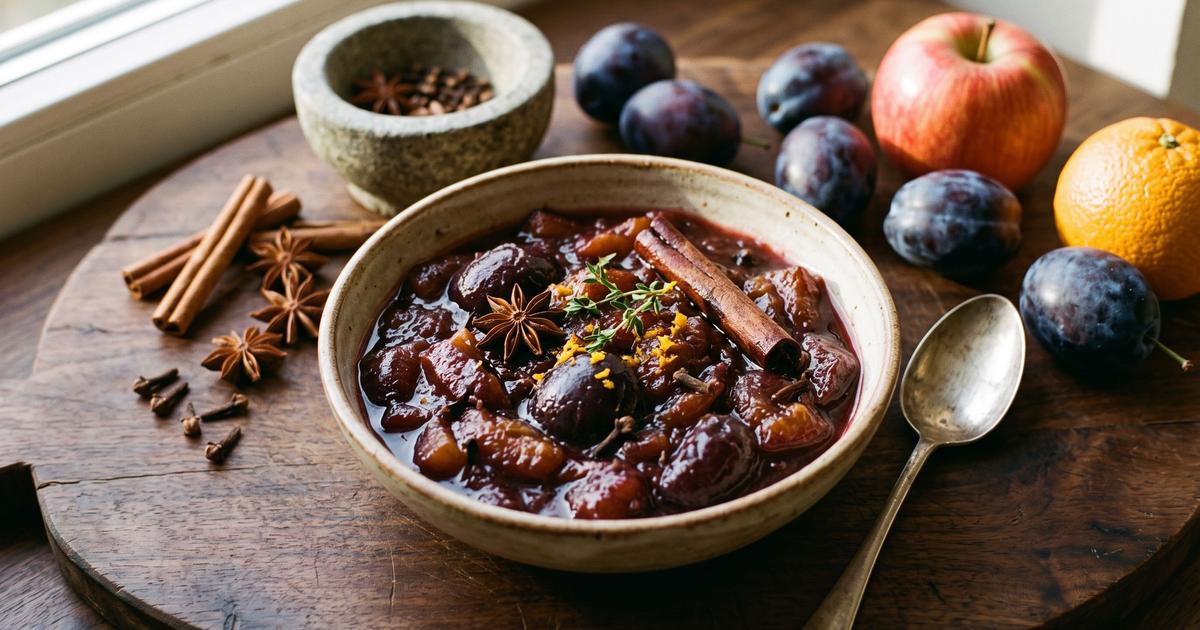
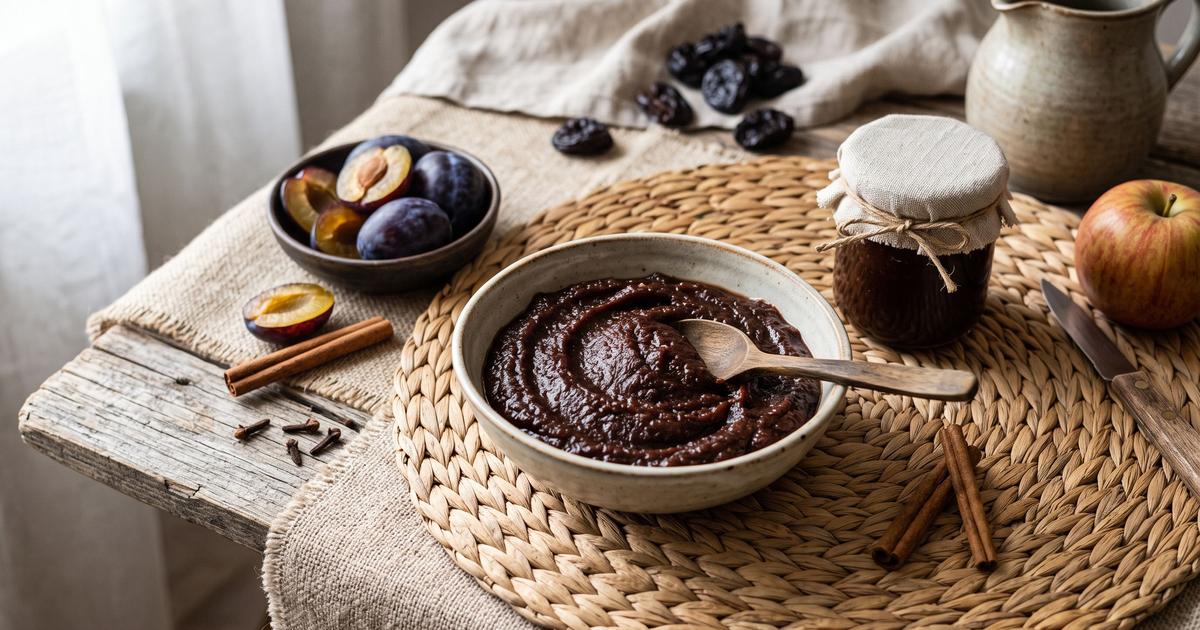
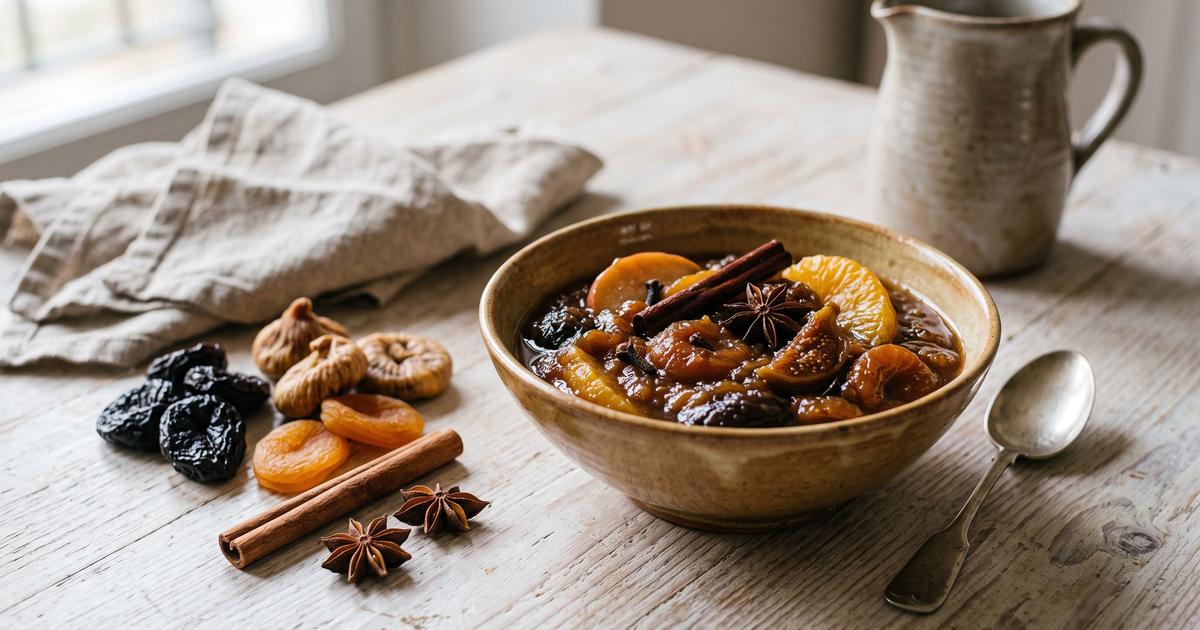
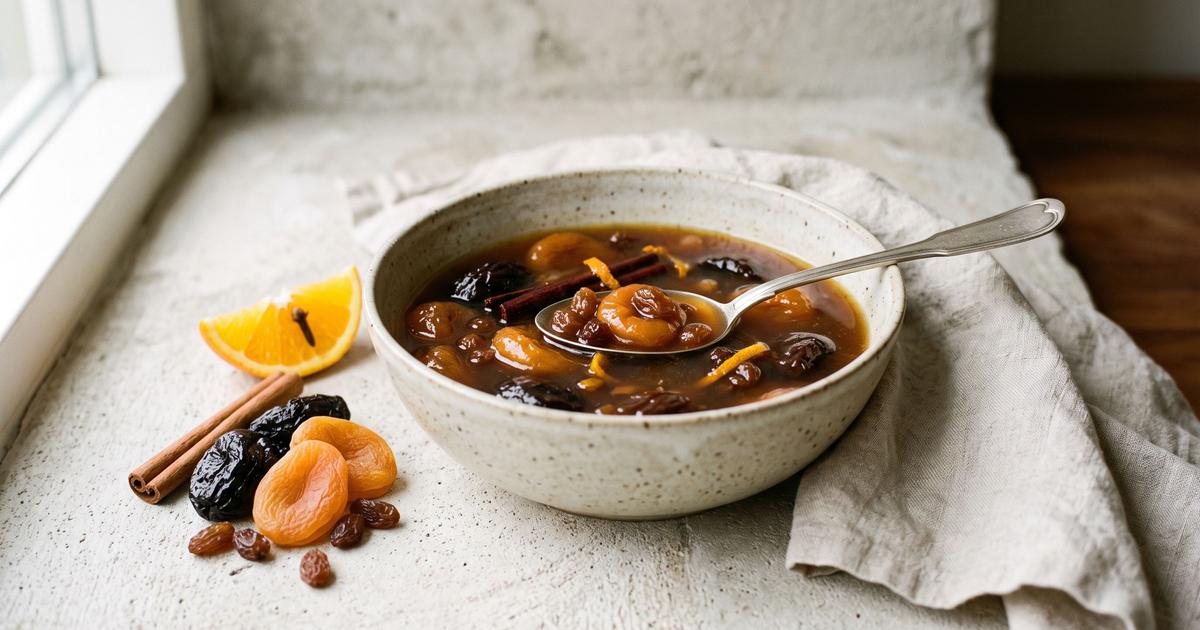
Zwetschgenkompott is the plum compote Bavarian and Austrian cooks spoon over dumplings, porridge, and puddings, or eat cold straight from the bowl. The fruit of choice is the Zwetschge, the small oval prune-plum that turns almost black and jammy when cooked; out of its short late-summer season, dried plums give the same brooding, winey depth and are always on the shelf. It is sweetened by nothing but the fruit, thickened by a diced apple melting into the syrup, and scented with the classic German trio of cinnamon, clove, and star anise. Orange and lemon at the end keep it bright. Make a big batch, since it keeps for a week and gets better after a day.
Ingredients
- 2 cups Prunes
- 1 whole Apples, peeled and diced
- 1 whole Oranges, 1 strip of zest, plus the juice
- 1 whole cassia cinnamon, stick
- 2 wholes Cloves
- 1 whole Star anise
- 1 tbsp Lemon juice
Method
- Combine the prunes, diced apple, orange zest strip, cinnamon stick, cloves, and star anise in a pot with 1.5 cups (360 ml) water. Bring to a gentle simmer. Fresh Italian prune-plums, Zwetschgen, are the traditional fruit; good dried plums carry the same deep, winey flavor and are in the pantry year round.
- Simmer, uncovered, until the prunes are very soft and the apple has started to break down and thicken the syrup, about 20 minutes. As it cooks the fruit gives up its own sugars into the liquid, which is why this needs no added sweetener; the diced apple melts in and does the thickening.
- Pour in the orange juice and simmer 2 minutes more, then fish out the cinnamon, cloves, star anise, and zest. Warm spices are the soul of a German fruit compote, but leaving them in too long turns everything medicinal, so pull them once the perfume is there.
- Stir in the lemon juice off the heat. Plums are sweet and dark, and the acid is what keeps the compote lively rather than heavy, the balancing role salt plays in a savory pot. Serve warm or cold, spooned over oat porridge or plant yogurt.
Nutrition
Estimated per serving: 140 calories, 2 g protein, 4 g fiber, 10 mg sodium. Computed from USDA FoodData Central reference values for the main ingredients. This is an approximation, not a laboratory measurement. How these are computed.
Cost per serving is estimated from US national-average retail prices for cheap staple forms, using BLS dried-bean prices and USDA produce prices. Prices vary by store and season, so treat it as a guide, not a receipt. How this is computed.