Spiced Dried Fruit Compote
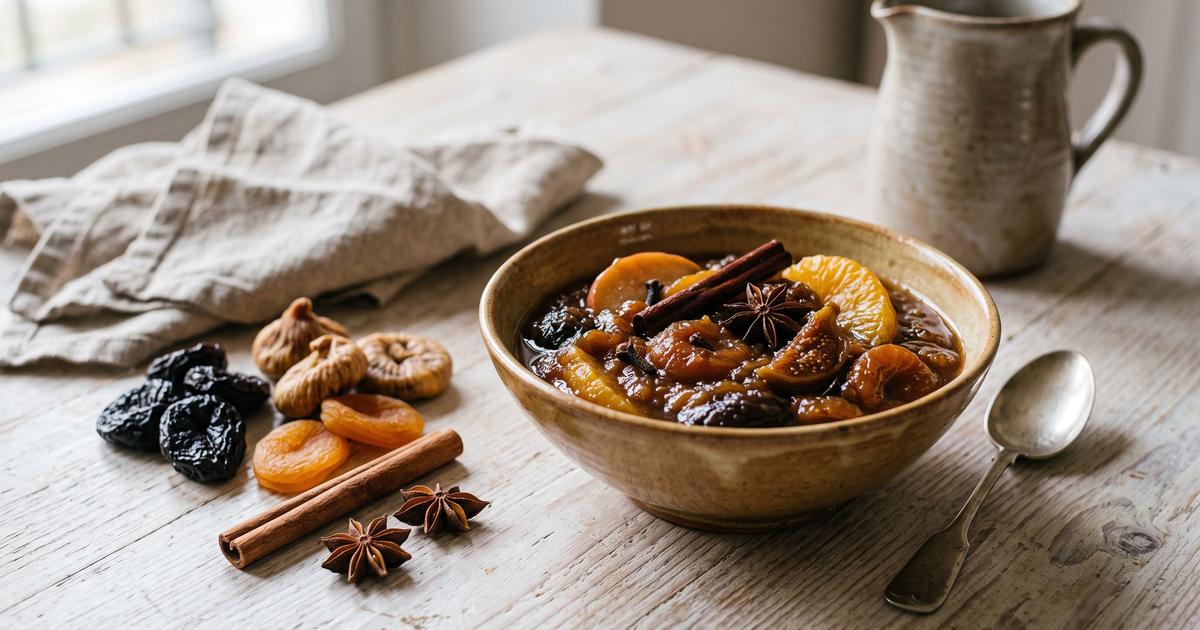
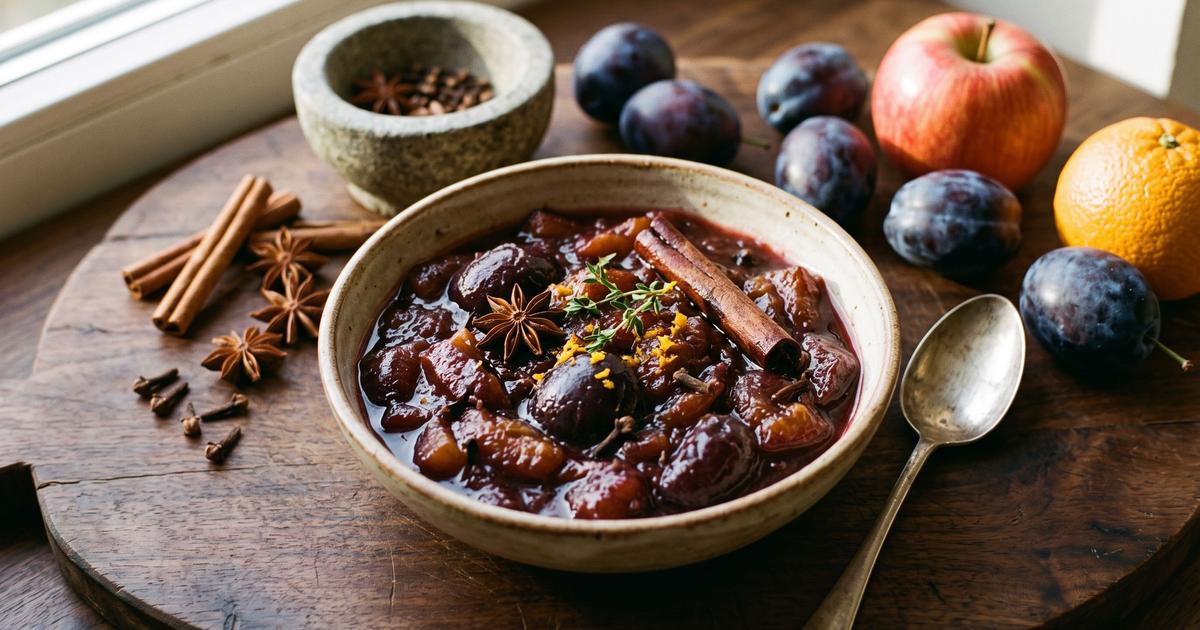
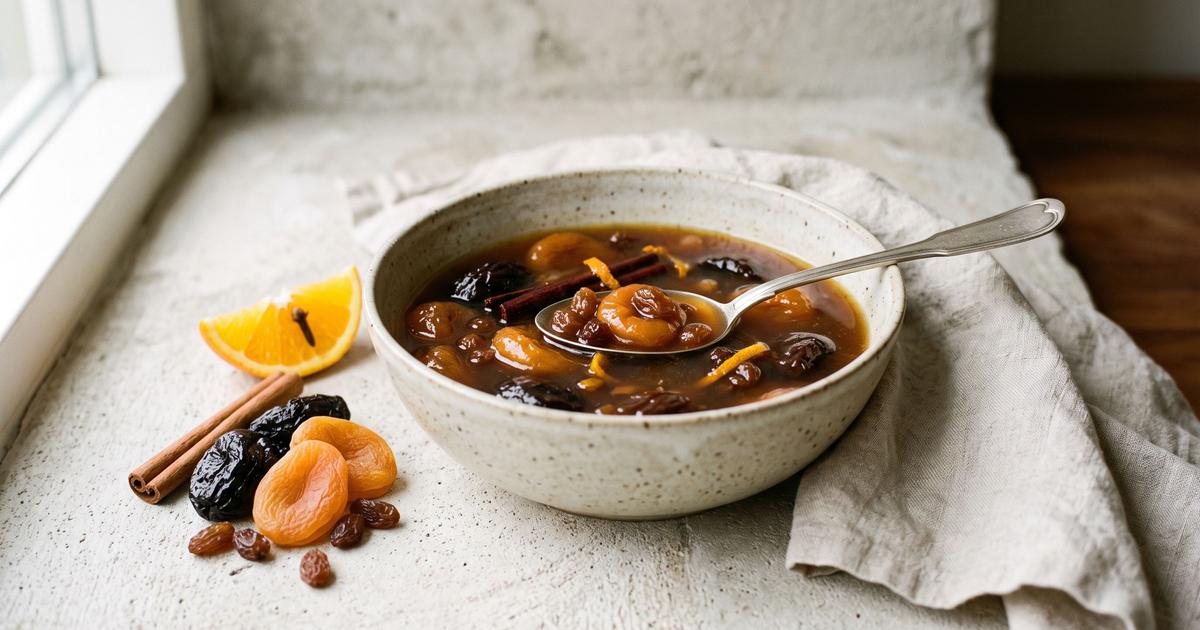
A pot of dried fruit stewed with warm spice turns up all across Europe in winter, from the Scandinavian fruit soups to the Central European Christmas compotes, with no single country owning it. It is the oldest kind of dessert: fruit and water and time. Prunes, apricots, and figs give up their sugar as they plump, an apple thrown in lends pectin that sets the syrup, and orange and lemon at the end keep it from going cloying. Cinnamon, star anise, and cloves do the seasoning. Pull the whole spices before they turn the pot bitter, and serve it warm or chilled, on its own or spooned over morning oats.
Ingredients
- 1/2 cup Prunes
- 1/2 cup Dried apricots
- 1/2 cup Dried figs, halved
- 1/4 cup Raisins
- 1 whole Apples, peeled and cubed
- 1 whole Oranges, juice and a strip of peel
- 1 stick cassia cinnamon
- 1 whole Star anise
- 2 wholes Cloves
- 1 tbsp Lemon juice, fresh
Method
- Combine the dried fruit, apple, a strip of orange peel, cinnamon, star anise, and cloves in a pot with 3 cups (710 ml) water. Starting everything in cold water lets the dried fruit plump slowly and give up its sweetness into the liquid as it heats.
- Bring to a bare simmer and cook uncovered 25 to 30 minutes until the fruit is soft and the liquid has reduced by half. The slow reduction concentrates the fruit sugars into a light syrup, so no sweetener is needed.
- Squeeze in the orange and lemon juice near the end. Adding the fresh juice late keeps its brightness, which cuts the deep sweetness of the dried fruit and keeps the compote from tasting flat or cloying.
- Fish out the whole spices before serving. The cinnamon, star anise, and cloves have given all the warmth they will, and left in they turn the compote bitter and medicinal overnight.
- Serve warm, or chill it and let it thicken. The pectin from the apple sets the syrup as it cools, so a cold compote spoons up almost jammy, good over oats or on its own.
Nutrition
Estimated per serving: 180 calories, 2 g protein, 6 g fiber, 12 mg sodium. Computed from USDA FoodData Central reference values for the main ingredients. This is an approximation, not a laboratory measurement. How these are computed.
Cost per serving is estimated from US national-average retail prices for cheap staple forms, using BLS dried-bean prices and USDA produce prices. Prices vary by store and season, so treat it as a guide, not a receipt. How this is computed.