Kompot, European Fruit Compote Drink
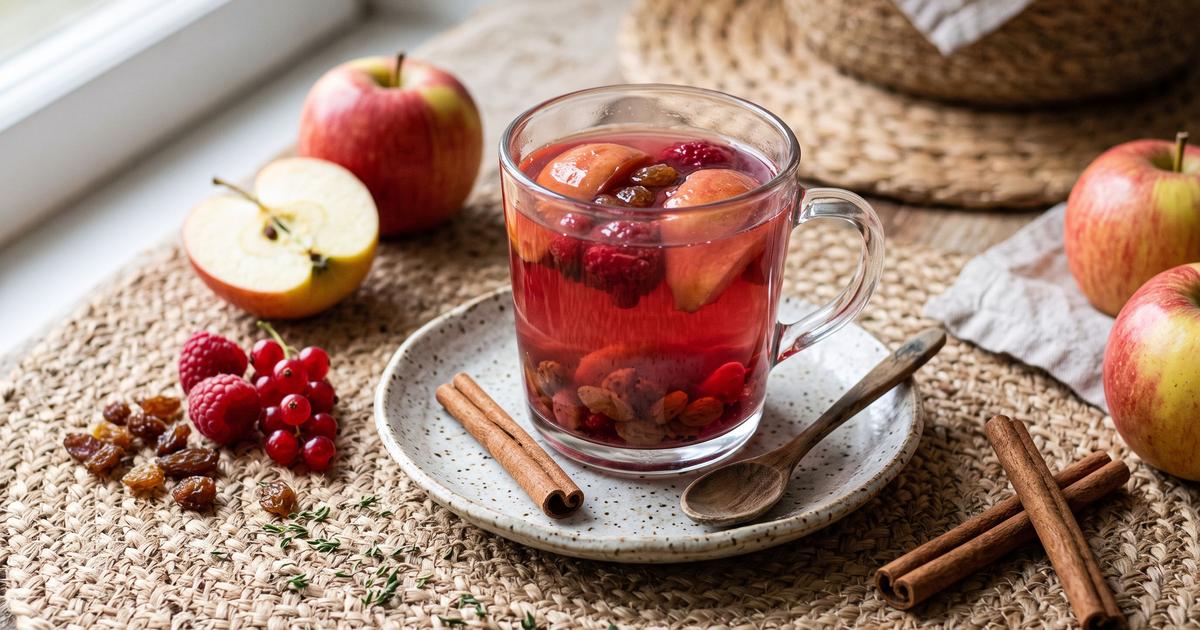
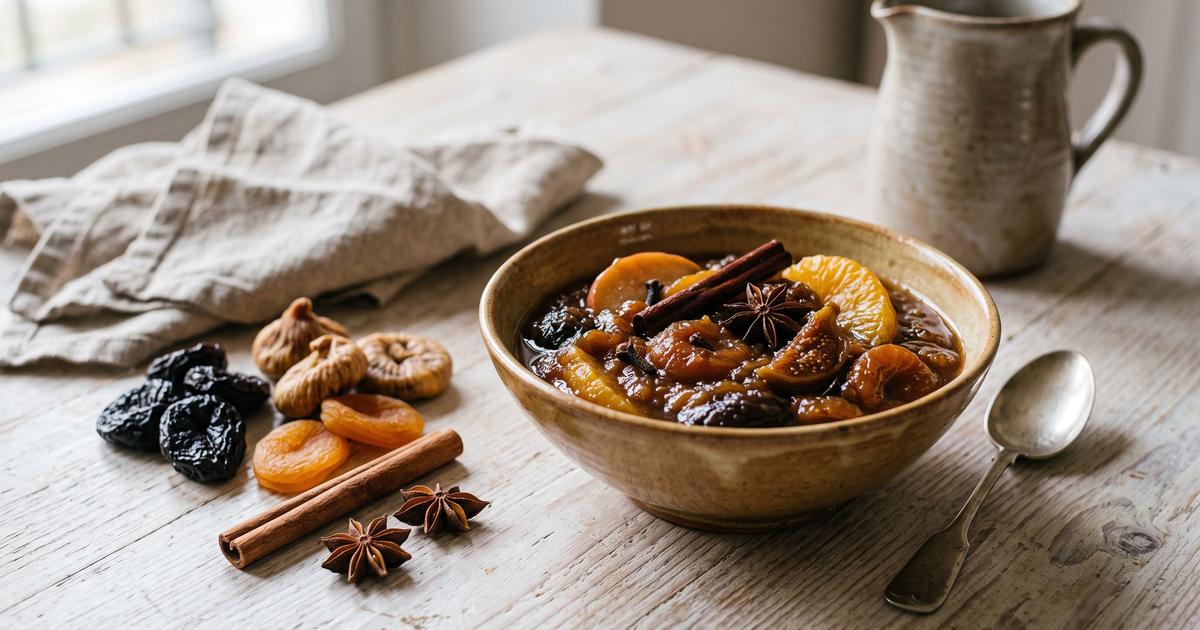
Kompot is the fruit drink that sits on kitchen tables across Poland, Ukraine, Russia, and much of Central and Eastern Europe, a homemade alternative to juice made by simmering whatever fruit is around in a big pot of water. Because it belongs to the whole region rather than any one country, it lives here under the pan-European label. Unlike a thick spoon compote, kompot is loose and drinkable, and the fruit itself does all the sweetening: apples and dried fruit simmered long enough will turn plain water sweet and fragrant with no sugar at all. Berries add color and a tartness that balances it, and the citrus goes in off the heat to stay bright. Serve it warm on a cold day or chilled through in summer, and eat the soft fruit along with the liquid.
Ingredients
- 3 wholes Apples, cored and cut in chunks
- 1 1/2 cups Frozen mixed berries
- 1/3 cup Raisins
- 4 wholes Dried apricots, halved
- 1 stick cassia cinnamon
- 3 wholes Cloves
- 1 whole Oranges, a peel strip plus the juice
- 1/2 whole Lemons, juiced
Method
- Put the apples, raisins, dried apricots, cinnamon stick, cloves, and the strip of orange peel in a pot with 6 cups (1.4 L) water. Bring to a boil, then simmer 20 minutes. The dried fruit is the whole sweetener, so it needs time in the simmering water to give up its sugar and turn the liquid sweet; there is no sugar coming to help it.
- Add the frozen berries and simmer 5 minutes more. They stain the kompot a deep pink and add a tartness that keeps all that fruit sweetness from turning cloying.
- Take the pot off the heat and stir in the orange and lemon juice. Adding the fresh citrus at the end keeps it bright, since long boiling would cook the lift right out of it.
- Cover and let it steep for at least 15 minutes, then fish out the cinnamon, cloves, and orange peel. Serve it warm in winter or well chilled in summer, ladling the softened fruit into each glass or straining it clear as a drink.
Nutrition
Estimated per serving: 95 calories, 1 g protein, 3 g fiber, 5 mg sodium. Computed from USDA FoodData Central reference values for the main ingredients. This is an approximation, not a laboratory measurement. How these are computed.
Cost per serving is estimated from US national-average retail prices for cheap staple forms, using BLS dried-bean prices and USDA produce prices. Prices vary by store and season, so treat it as a guide, not a receipt. How this is computed.