Bircher Muesli
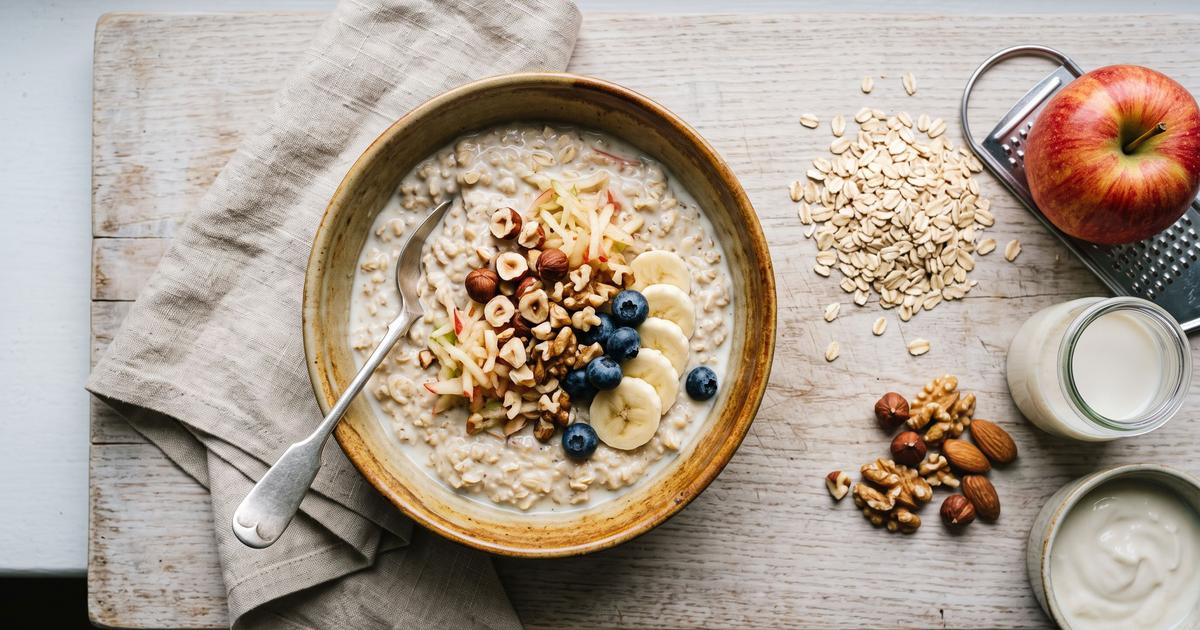
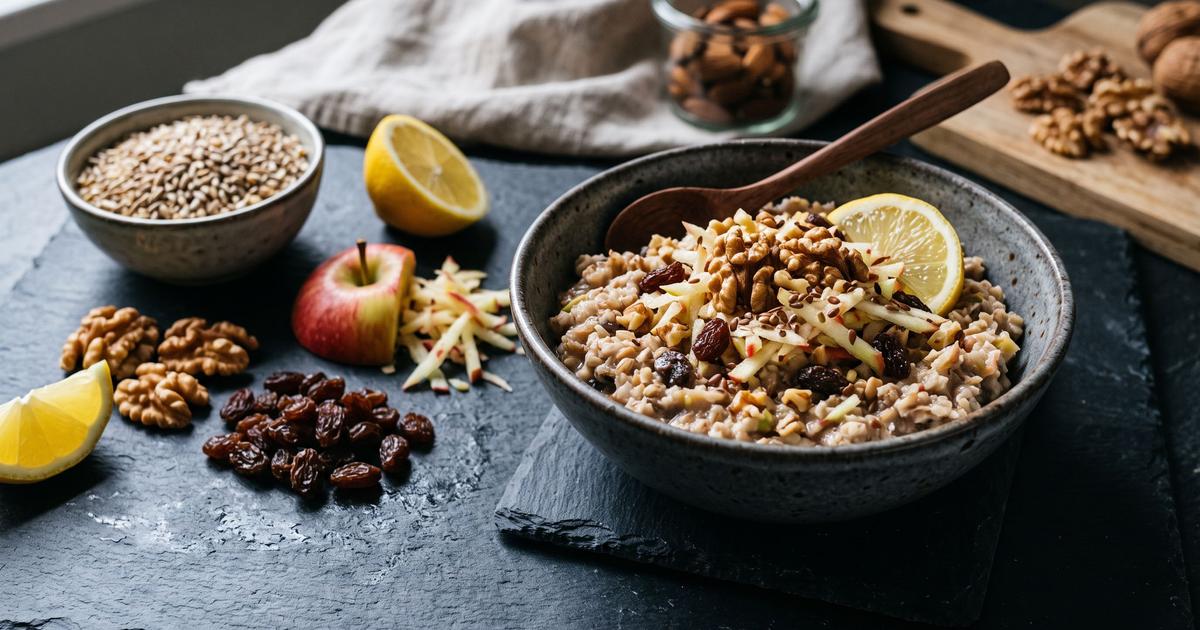
Bircher muesli is the ancestor of every jar of overnight oats sold today, worked out around 1900 by the Swiss physician Maximilian Bircher-Benner, who wanted a raw fruit and grain dish people would actually eat at breakfast. The method is the whole point: rolled oats soften by soaking, not by cooking, so they keep their bite, and a grated apple left to sit overnight sweetens the entire bowl from the inside. Lemon juice keeps the apple pale and sharpens the flavor, soy milk and yogurt add the protein that makes it a meal, and a handful of toasted nuts is the fat that makes it feel like more than cold cereal. Mix it before bed and four breakfasts are already done.
Ingredients
- 1 1/2 cups Rolled oats
- 1 1/2 cups Unsweetened soy milk
- 1/2 cup Plain plant yogurt
- 2 wholes Apples, 1 grated, 1 diced
- 1 whole Lemons, zest and juice
- 1/3 cup Raisins
- 1/3 cup Walnuts, toasted and chopped
- 1/4 cup Almonds, toasted and chopped
- 2 tbsp Ground flaxseed
- 1/2 tsp cassia cinnamon
Method
- Stir the rolled oats, soy milk, yogurt, flaxseed, and cinnamon together in a bowl. Use soy milk rather than a thinner nut milk here: it carries real protein, so the bowl holds you past mid-morning instead of spiking and fading.
- Grate one apple straight into the mix, skin and all. As the oats sit overnight the grated apple bleeds its sugars through the whole batch, which is why muesli tastes sweet with no sugar added: the fruit is the sweetener, spread evenly instead of sitting in one spot.
- Squeeze in the lemon juice and add the zest. The acid keeps the grated apple from browning and lifts the flavor so the bowl tastes bright rather than flat, the same job a pinch of salt would do somewhere else.
- Fold in the raisins, cover, and chill at least 6 hours or overnight. The oats drink up the liquid and soften without cooking, and the raisins plump into pockets of concentrated sweetness.
- In the morning, loosen with a splash of soy milk if it set too thick, then top each bowl with the diced apple for crunch and the toasted walnuts and almonds. Toasting the nuts first in a dry pan until they smell nutty is what keeps them from tasting raw against the soft oats.
Nutrition
Estimated per serving: 320 calories, 12 g protein, 9 g fiber, 45 mg sodium. Computed from USDA FoodData Central reference values for the main ingredients. This is an approximation, not a laboratory measurement. How these are computed.
Cost per serving is estimated from US national-average retail prices for cheap staple forms, using BLS dried-bean prices and USDA produce prices. Prices vary by store and season, so treat it as a guide, not a receipt. How this is computed.