Frumenty, Spiced Cracked-Wheat Breakfast Porridge

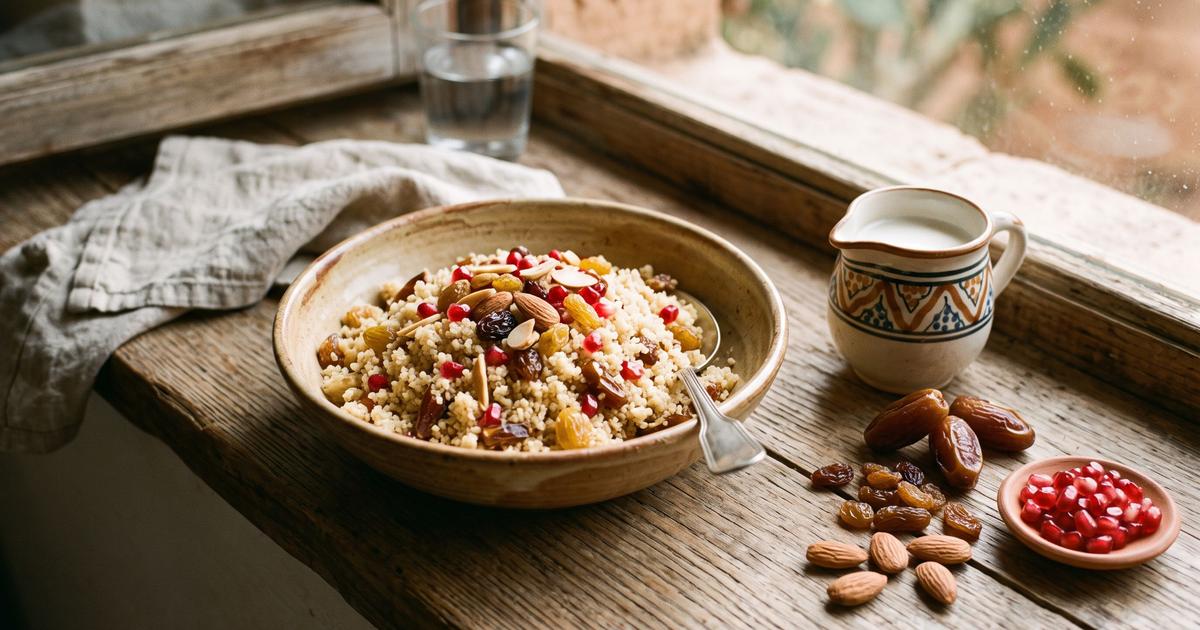
Frumenty is one of the oldest dishes in the European kitchen, a spiced wheat porridge eaten from medieval England across the continent, historically cooked from cracked wheat simmered slowly in milk and gilded with saffron. It was both a breakfast and a feast-day dish, and the saffron was as much for its golden color as its scent. This version uses bulgur, which is wheat cracked and parboiled, so what once took an hour is ready in a fraction of the time, and unsweetened almond milk stands in for the dairy. Raisins plumped in the hot pot sweeten it with no sugar added, and orange zest and toasted almonds finish it the way dried fruit and nuts have always finished it. Make a batch and reheat through the week with an extra splash of milk.
Ingredients
- 1 cup Bulgur
- 2 1/2 cups Unsweetened almond milk
- 1 pinch Saffron
- 1/2 tsp cassia cinnamon
- 1/3 cup Raisins
- 1 whole Oranges
- 1/3 cup Almonds, toasted, chopped
Method
- Crush the saffron threads between your fingers and steep them in a splash of warm almond milk while you gather everything else. Saffron gives up its color and honeyed aroma only to warm liquid, and this short soak is what turns the whole pot a pale gold, the way medieval frumenty was prized for looking.
- Simmer the bulgur in the rest of the almond milk with the cinnamon, the raisins, and the steeped saffron milk, covered and low, for about 12 minutes. Bulgur is wheat that has already been parboiled and cracked, so it softens quickly and drinks up the spiced milk without the hour whole wheat berries would need.
- As the raisins plump in the hot milk they sweeten the pot from within, which is why frumenty needs no sugar. Grate the zest of the orange in at the end, off the heat, so its oils stay bright rather than cooking away.
- Let it stand a few minutes to thicken, then spoon it out and top with the toasted almonds and the orange in segments. It thickens further as it cools, so loosen next-day bowls with a splash more milk before reheating.
Nutrition
Estimated per serving: 280 calories, 8 g protein, 7 g fiber, 60 mg sodium. Computed from USDA FoodData Central reference values for the main ingredients. This is an approximation, not a laboratory measurement. How these are computed.
Cost per serving is estimated from US national-average retail prices for cheap staple forms, using BLS dried-bean prices and USDA produce prices. Prices vary by store and season, so treat it as a guide, not a receipt. How this is computed.